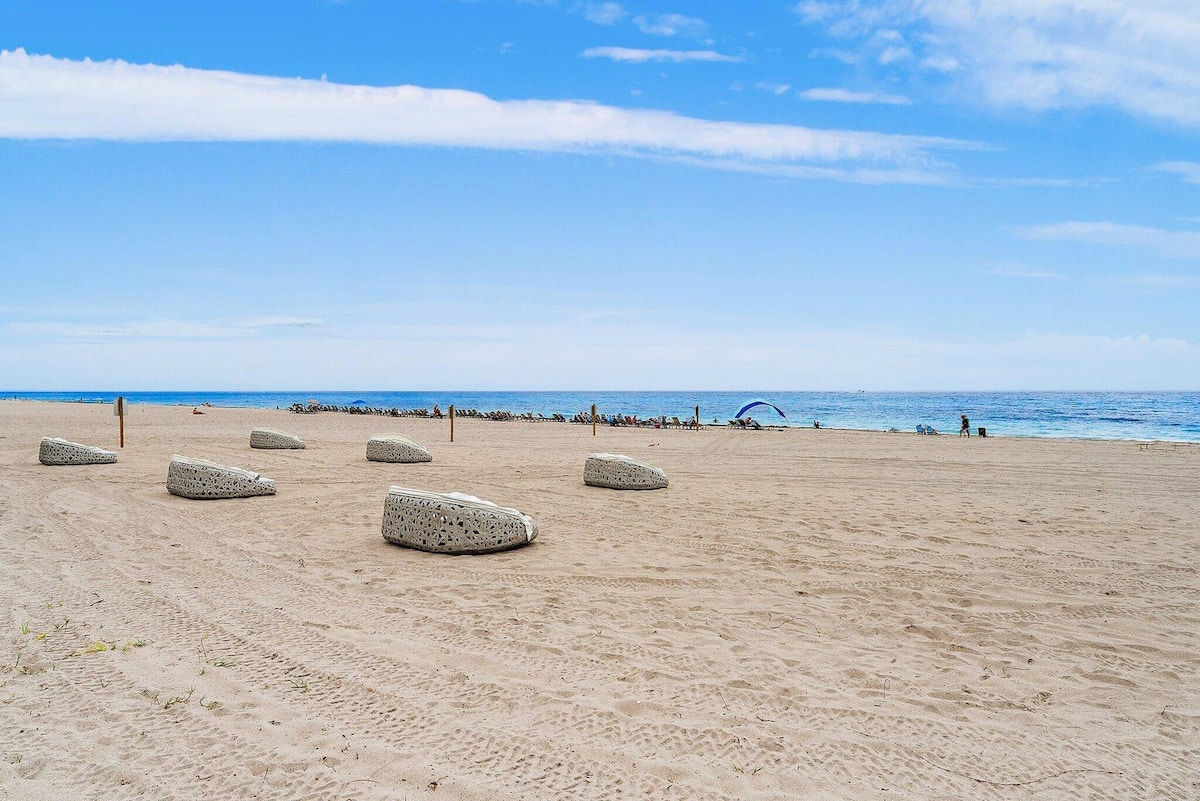
The Singer Island Beaches Guide
Singer Island packs a private beach, a county park with a natural reef, a guarded municipal strand and a state park into a few miles of sand. Here is how to read each one, where to park, how to stay safe in the surf, and which beach fits which kind of morning.
01The lay of the sand
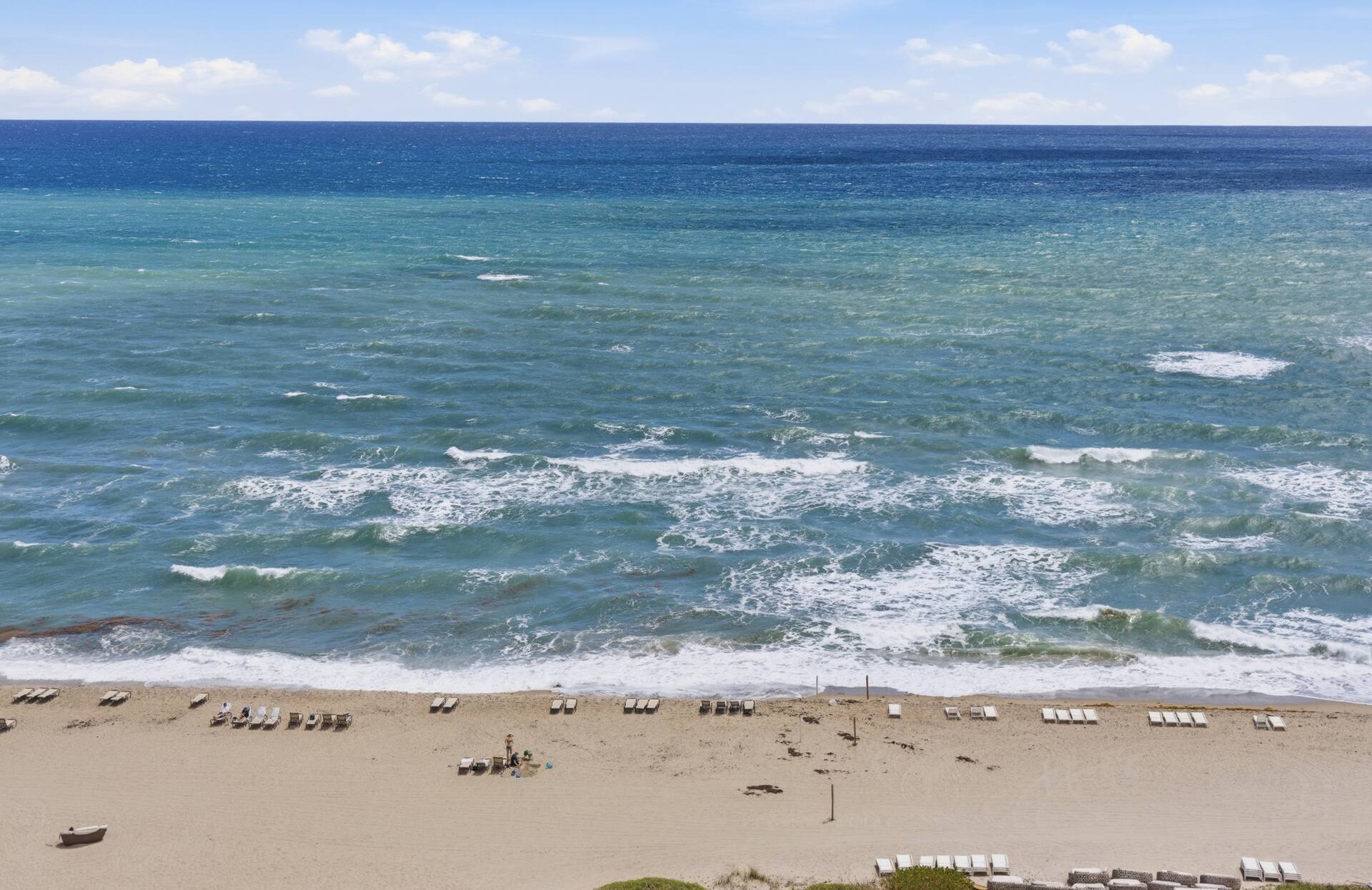
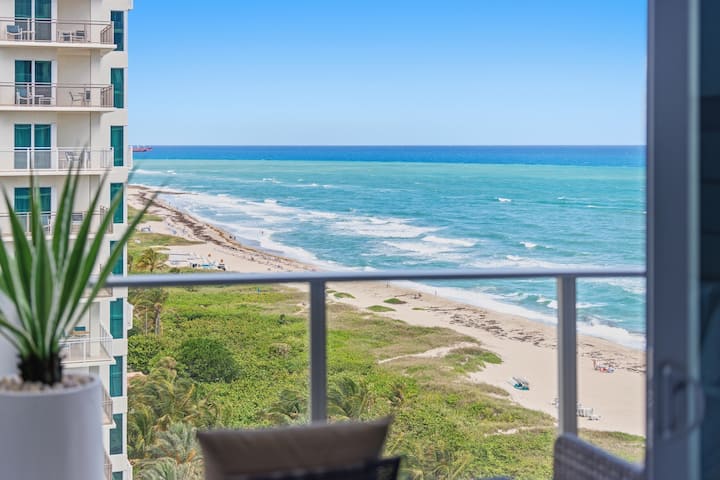
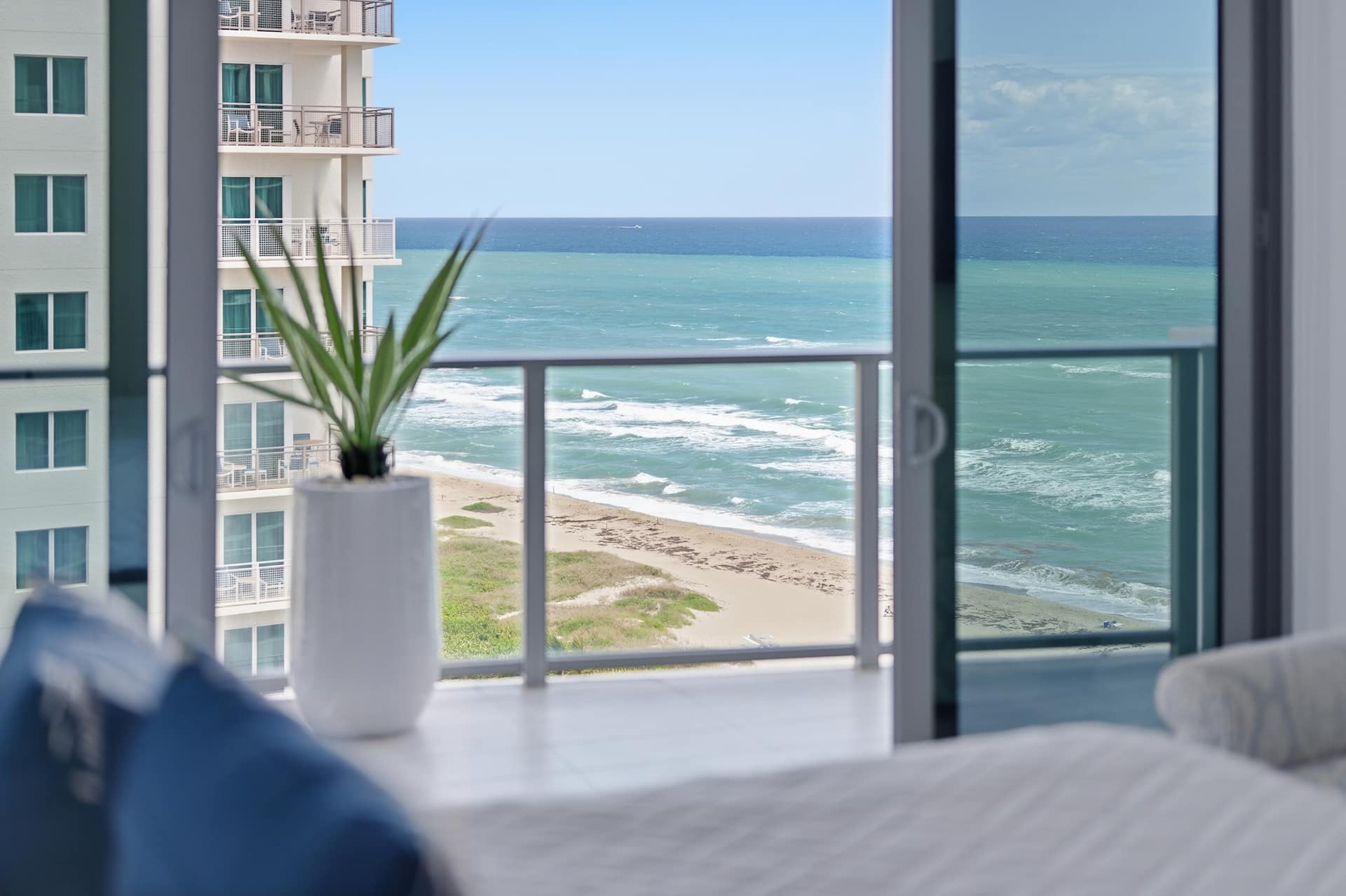
Singer Island is a barrier island, which means it is a long, thin ribbon of sand with the Atlantic on one side and the Intracoastal Waterway on the other. The residence sits about halfway down it, on roughly seven beachfront acres, high on the twelfth floor with water in nearly every direction. From up there you can see the whole logic of the place at once: the open ocean to the east, the calm inland water to the west, and a run of beaches north and south that changes character every mile or so.
What that gives you is range. You do not have to choose one beach for a week. Within a short drive you can spend a morning on the residence’s own private sand, an afternoon snorkeling a natural reef at a county park, and an evening watching the light go soft over a guarded municipal beach with a burger and a cold drink close at hand. Just to the north, past the end of the island, a state park keeps a piece of old Florida almost exactly as it was. Most of these beaches sit within a few miles of one another, so switching from one to the next is a matter of minutes, not a day trip, and it is easy to sample two or three of them across a single day if the mood takes you.
Here are the beaches this guide covers, roughly in order of how far you have to go to reach them:
- The private beach at the residence — your home base, with chair-and-towel service and the resort pools a few steps back from the sand.
- Ocean Reef Park — a Palm Beach County park a short drive south, with a natural rock reef close enough to shore to snorkel, plus restrooms, showers, picnic pavilions and a playground.
- Singer Island Municipal Beach at the Ocean Mall — a guarded public beach with casual food and a lively, easygoing crowd.
- John D. MacArthur Beach State Park — just north of the island, the county’s only state park, with an ancient reef, a nature center and kayaking through a quiet estuary.
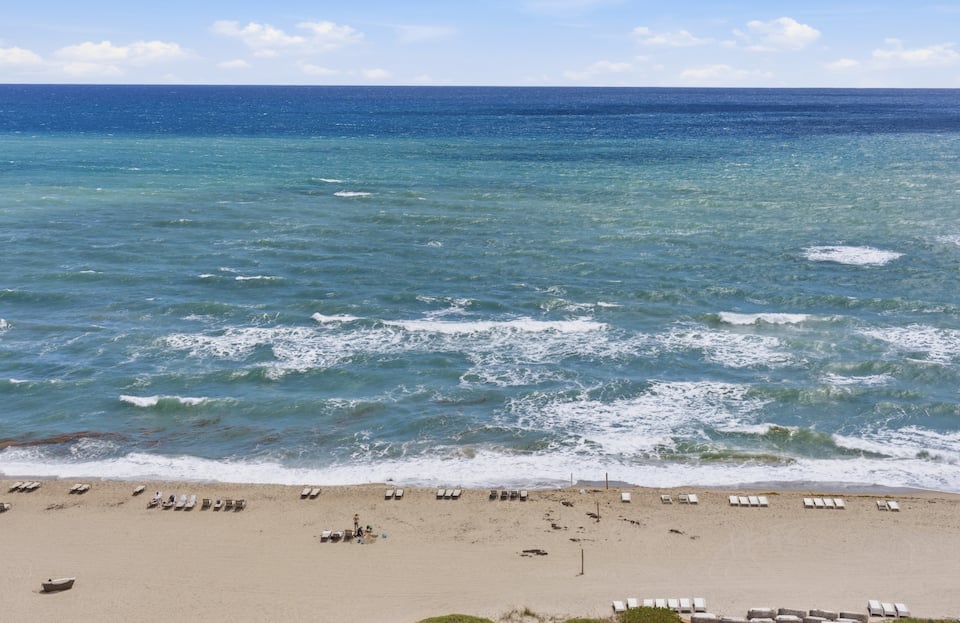
A few things hold true up and down the island. The sand is pale and soft, the water runs from clear turquoise to deep blue depending on the day and the wind, and it stays warm enough to swim for most of the year — comfortably so from spring through late fall. Mornings are calm and quiet, afternoons get busier and, in summer, often bring a short thunderstorm that clears as fast as it came. You can walk a long way along the sand at low tide, and the beach stays open and public below the high-water line even where towers and condos line the dune behind it. And because this stretch of coast is a serious sea-turtle nesting ground, the beaches follow some simple nighttime rules from spring into fall that are worth knowing before you go, and that we come back to further down.
The rest of this guide walks each beach one at a time, then covers the practical things that make or break a beach day here: where to park, what the lifeguard flags mean, how to handle the Florida sun, and how to share the sand with nesting turtles. At the end there is a short section that matches a beach to a mood, for when you already know what kind of morning you want and just need to be pointed at the right patch of sand.
02The private beach at the residence
The private beach is the easiest beach day you will ever have, because most of the effort has been taken out of it. The residence sits on about seven beachfront acres, and the sand directly in front of it is tended and served rather than left to fend for itself. You come down from the twelfth floor, walk out, and the setup is already waiting.
Here is how a morning tends to go. A beach attendant sets you up with loungers and an umbrella, brings towels, and comes by to check on you through the day. You do not haul a cooler, wrestle with a rental umbrella, or hunt for a spot — the chairs are already placed, angled at the water. When the sun gets high you retreat to the shade or step back to the pools, and when you want the ocean again it is a few steps away. It is a quieter, more cushioned version of a public beach, with fewer people and no logistics.
The pools and the sand together
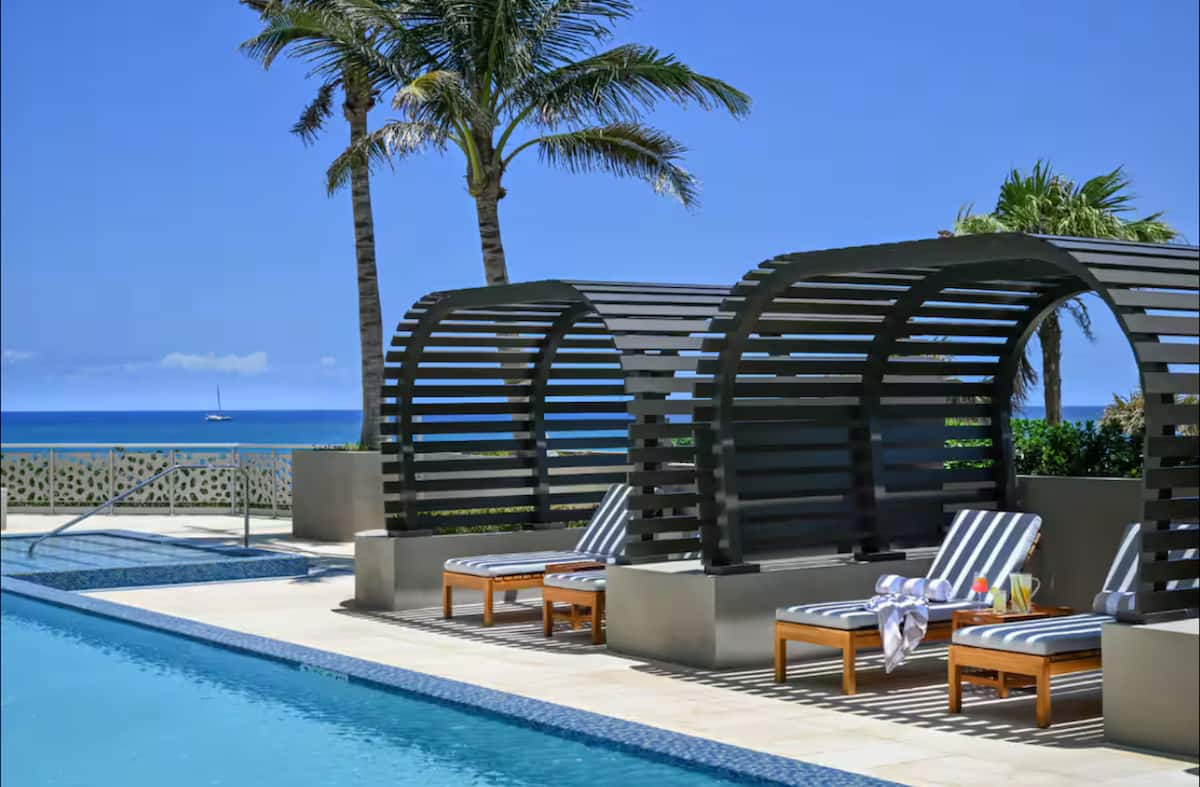
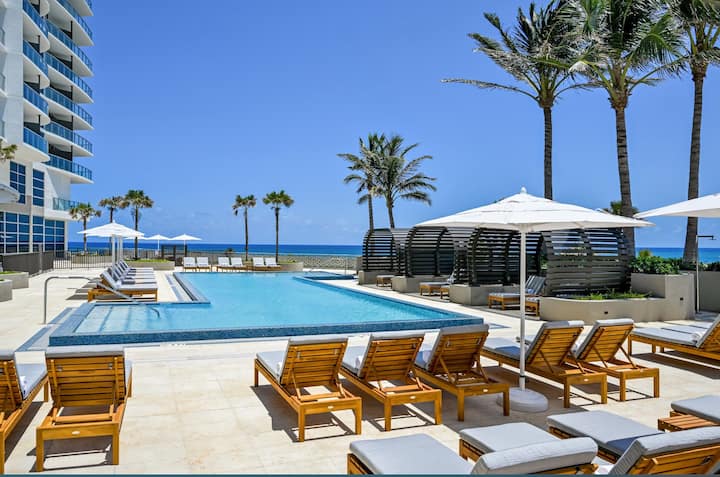
The private beach does not stand alone. Set back from it are the resort’s pools and whirlpools, so a single stretch of the day can move between salt water and fresh without anyone having to get in a car or pack up. That combination is the real luxury of staying here: you can start with a swim in the ocean, rinse off and stretch out by a pool, drift back to the sand for the afternoon light, and never once feel like you are commuting between your comforts.
A few things to know about using it well:
- Go early for the best of it. The sand faces the Atlantic, so the morning light is the prettiest and the sand is coolest and least crowded before mid-morning.
- Bring less than you think. Towels and chairs are handled, so you mostly need sunscreen, water, a hat and something to read.
- Mind the same rules as everywhere. This is still the open Atlantic; the surf, the sun and the tides behave the same as on any beach here, so the safety notes later in this guide apply just as much on private sand.
- Access follows the resort’s terms. Beach and pool service is part of staying at the residence, run under the resort’s policies and hours.
Because the residence is privately owned and not operated by the resort, the exact details of chair service, pool access and hours are set by the resort and can change season to season. The simplest approach is to treat the front desk and the beach staff as your source of truth on the day you arrive: ask what is included, where to go, and when the pools open and close. Once you have that, the private beach becomes the anchor of the whole stay — the default place you drift back to between everything else this guide sends you off to do.
For many guests, especially families with young children or anyone who just wants to switch off, the honest truth is that they barely leave it. There is no shame in that. The whole point of a private beach with service is that the best beach day can also be the least complicated one.
03Ocean Reef Park and the shore reef
Ocean Reef Park is the local favorite for a reason, and it is the first place to head when you want a public beach with real amenities and something to do in the water. It is a Palm Beach County park on the ocean side of Singer Island, a short drive south of the residence, and it is built for a full, easy beach day rather than a quick stop.
The name is not decoration. Just off the beach lies a natural rock reef close enough to shore that you can swim out to it and snorkel without a boat. On a calm, clear day you can float over the rocks and find small fish, the occasional larger visitor passing through, and the kind of low-key underwater life that makes kids and first-time snorkelers light up. It is not the famous, advanced site — that is the Blue Heron Bridge, which the snorkeling & diving guide covers in full — but it is the best true shore snorkeling on Singer Island itself, and you do not need anything more than a mask, fins and a settled day.
What you will find on land
Above the waterline, the park has the things that make a beach day work with a group or a family:
- Restrooms and outdoor showers to rinse the salt and sand off before the drive home.
- Picnic pavilions and tables with shade, which are worth arriving early for on a busy weekend.
- A playground set back from the sand, so younger kids have somewhere to burn energy when they have had enough of the water.
- Grassy areas and natural dune between the parking and the beach, which keeps it feeling green and unhurried rather than paved over.
- Free parking, the way county parks tend to be, though the lot fills on weekends and holidays.
Because it is a county park rather than a resort or a busy commercial beach, the mood at Ocean Reef Park is relaxed and local. You will see families with coolers and canopies, snorkelers waxing masks at the tailgate, retirees walking the sand at first light, and the occasional fishing rod. There are not lifeguards at every hour or in every season the way there are at the busiest municipal beaches, so read the conditions honestly, keep an eye on children in the water, and do not swim out to the reef if the surf is up or the water is churned and cloudy.
A good plan is to make Ocean Reef Park your snorkeling morning: arrive early while the lot is open and the water is calmest, claim a pavilion, snorkel the reef before the wind picks up, then break for a picnic lunch and let the kids hit the playground while the strong midday sun passes. Bring your own water and food, since this is a park and not a beach with a bar. Reef-safe sunscreen is the right call anywhere near these rocks, and there is more on that in the safety section below. When you are done, the showers mean you get in the car clean instead of gritty. One practical tip: the reef sits a little way out, so it suits confident swimmers and floats more than toddlers, and a pair of fins makes the swim out and back far easier against any current. If the water is flat and clear, it is one of the most rewarding hours the island offers for the price of a tank of gas and a mask.
04The Municipal Beach and the Ocean Mall
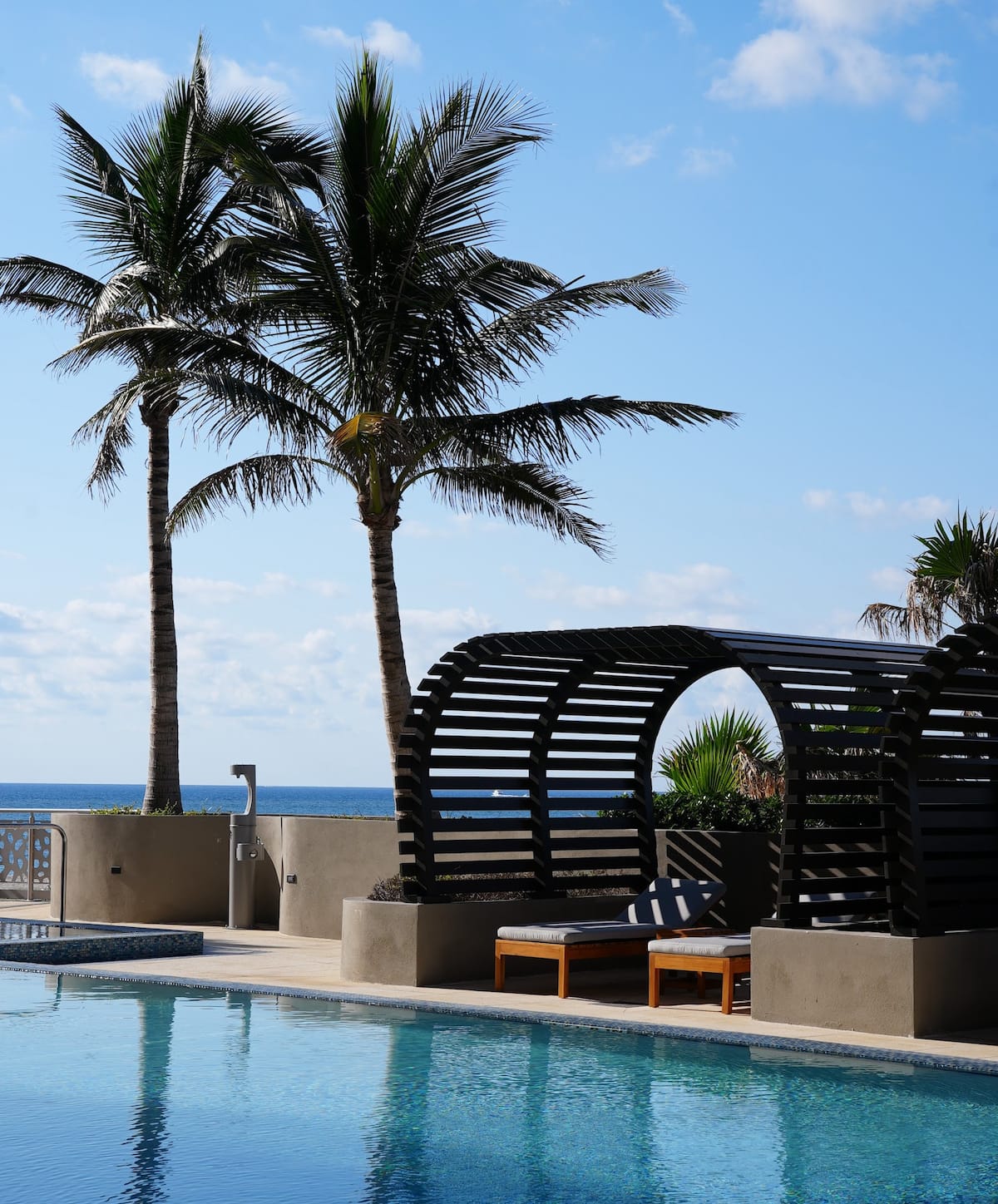
The Singer Island Municipal Beach is the island’s social beach — the one with lifeguards, easy food and a steady, friendly crowd. It sits at the Ocean Mall, a low-slung cluster of shops and casual restaurants right behind the sand, so it is the beach to pick when you want the day to include a proper meal, a cold drink and a little life around you rather than pure quiet.
The beach itself is a wide, guarded public strand. Because it is lifeguarded through the main hours, it is a sensible choice for families and for anyone who wants the reassurance of a trained eye on the water — watch for the flags flying at the lifeguard stands, which tell you the day’s conditions at a glance. The sand is roomy, the swimming is straightforward on a calm day, and the whole thing has the unfussy, sun-and-salt feeling of a classic Florida town beach.
Food and drink right off the sand
The Ocean Mall is what sets this beach apart from the county park. You can walk off the sand and be at a table in minutes:
- Johnny Longboats is the anchor — beachfront casual seafood with oysters, mahi sandwiches and a lively bar scene, the kind of place where lunch slides into an afternoon drink without anyone deciding it should.
- Other casual spots and shops around the mall cover ice cream, beach gear you forgot, sunscreen, a coffee, or a quick bite between swims.
That mix — guarded sand plus food and shade a few steps away — makes the Municipal Beach the low-effort default when you want to be out among people. It is the beach for the day you did not plan much, when you want to park once, swim, eat, and let the afternoon take care of itself. It also works well for a mixed group where not everyone wants the same thing: the swimmers get their water and their lifeguard, and the ones who would rather sit in the shade with a plate of oysters get that within sight of the sand.
Parking here is paid rather than free — there is a lot at the Ocean Mall and metered spots nearby — and it can get tight in the middle of a high-season afternoon, so come earlier rather than later on a busy day. Bring a little cash or a card for parking, and keep in mind that this is the busiest of the everyday beaches, which is exactly its appeal on some days and exactly what you might want to avoid on others. If you are after calm and space, one of the quieter beaches in this guide will serve you better; if you want the easy, sociable version of a beach day, this is the one.
For a sunset, the Municipal Beach and the Ocean Mall pair nicely with dinner: swim late in the afternoon, rinse off, and walk straight to a waterfront table as the light goes gold. It is one of the simplest good evenings the island offers, and it asks almost nothing of you to pull off. On a quick trip, or a day when you cannot decide what you feel like, this is the beach that never disappoints and never asks much in return.
The island gives you two shorelines in one — the cushioned quiet of a private beach, and, ten minutes away, a rock reef you can snorkel straight off the sand.
On the beaches of Singer Island
05MacArthur Beach, just north
Just north of Singer Island, the road runs into John D. MacArthur Beach State Park, and it is worth crossing off the island to see. This is the only state park in Palm Beach County, and it protects a piece of coast that looks much the way this whole shoreline did before any of the towers went up: sea grape and mangrove, a quiet estuary, a boardwalk over the water, and a beach with an ancient reef lying just offshore.
The headline underwater feature is the Anastasia limestone reef, a formation roughly 125,000 years old that sits in shallow water close to the beach. On a calm day you can snorkel out and drift over it looking for reef squid, small tropical fish, snook and whatever else is working the rocks. Because it is shallow and near shore, it is a gentle, forgiving snorkel when the ocean cooperates — and, like every reef here, best on a settled day with clear water and light surf. The beach itself is quieter and more natural than the town beaches, with dune plants growing right down toward the sand and far fewer buildings in view, so it feels a world away from the condos even though it is only a few minutes up the road.
More than a beach
What makes MacArthur different from the island’s other beaches is everything behind the sand:
- The William T. Kirby Nature Center, where you can see live loggerhead sea turtles and learn how this coast’s ecosystems fit together before you walk out to see them.
- A long boardwalk that carries you over the estuary to the beach, with wading birds and fish below and a real sense of crossing from the inland water to the ocean.
- Kayak rentals, single and double, generally available in the daytime, that let you paddle the estuary and out toward Munyon Island — a calm, protected way to see the park from the water.
- Trails and shaded picnic spots that make it easy to turn a beach visit into a half-day of gentle exploring.
There is a per-vehicle entrance fee to get into the state park, which is normal for Florida’s parks and pays for keeping the place as unspoiled as it is. Once inside, plan on it being a slower, more natural outing than a town beach: fewer amenities in the commercial sense, more nature, and a strong sense that the wild coast is being actively looked after. It is the best spot on this stretch to combine a swim, a snorkel over the old reef, a paddle and a bit of learning in one trip — especially good with kids who like animals, or for anyone who wants their beach day to come with a little wonder attached. Time your visit for the morning, both to beat the heat and because the estuary and the kayak launch are at their calmest then, and check the kayak hours before you count on a paddle, since they run through the middle of the day rather than dawn to dusk.
Because there is so much to it, MacArthur Beach has its own full guide. If it sounds like your kind of morning, read the MacArthur Beach guide for the details on the nature center, the kayaking, the reef and the sea-turtle programs, and for how to time a visit around the tides and the seasons. For the purposes of this guide, know simply that it is there, it is close, and it is the one beach nearby that doubles as a nature preserve.
06Where to snorkel straight from the beach
You can get in the water and see something almost anywhere here, which is not true of every beach town. This stretch of coast is unusual for how much good snorkeling sits within reach of the sand, without a boat and without a long drive. This section is the quick map of where to look; the snorkeling & diving guide goes deep on the tides, the marine life and the dive shops.
Starting from the beaches in this guide and working outward, here is where to put your mask in the water:
Straight off the island
- Ocean Reef Park is the best shore snorkel on Singer Island itself. The natural rock reef sits close in, and on a calm morning you can swim out and float over it. This is the one to do without any planning beyond checking that the water is clear and settled.
- MacArthur Beach’s ancient reef, just north, is the other shallow, near-shore reef worth swimming out to, with the bonus of the nature center and the estuary around it.
A short drive away
- Blue Heron Bridge at Phil Foster Park, on the Intracoastal side minutes from the island, is one of the best shore dives anywhere in the world for small, strange marine life, and it has an easy snorkel trail of boulders in shallow water. The catch is timing: it is only good around high slack tide, when the water is clear and the current is calm, so it needs a little planning. The snorkeling guide explains exactly how to read the tide chart for it.
- Peanut Island, out in the inlet and reachable by a short shuttle from the Riviera Beach Marina, has a protected snorkeling lagoon that is best at high tide.
A few honest ground rules apply to all of it. Snorkeling here depends entirely on conditions: clear, calm water with light surf is safe and rewarding, while churned-up, cloudy water after wind or a storm is both disappointing and more dangerous, and the reef is not worth swimming out to on a rough day. Always snorkel with a buddy, keep track of how far the current has carried you, and give the rocks and any marine life room — look, do not touch. Coral and reef creatures are fragile, and some of what looks like a rock is alive.
One more point that matters on a reef coast: wear reef-safe sunscreen, or better yet cover up with a rash guard so you need less of it. The chemicals in some standard sunscreens are hard on reef life, and since the whole appeal here is that the reefs are close and healthy, it is worth protecting them. There is more on sun protection in the safety section just below.
If you did not travel with gear, it is easy to sort out here. Dive shops on and around Singer Island, including Pura Vida Divers on the island itself, rent masks, fins and snorkels, run guided trips, and can steer you to whichever site is best on the day you ask. A guided snorkel is money well spent your first time out, both for the local knowledge and because someone is watching the water while you look down at it.
Put simply: for a no-fuss shore snorkel, go to Ocean Reef Park. For something wilder, read the dedicated guide and plan a trip to Blue Heron Bridge around the tide. Either way, the water here rewards curiosity in a way most beaches never do.
07Parking, facilities and dogs
The practical details are what turn a good beach idea into an easy morning, so here is the plain version of parking, facilities and what to bring at each of the beaches this guide covers. None of it is complicated once you know it, and most of it comes down to going a little earlier than you think you need to.
Parking, beach by beach
- The residence’s private beach is the simplest of all: there is valet parking at the residence, and the beach is right there, so there is no lot to find and no walk to speak of.
- Ocean Reef Park has a free lot, as county parks tend to, but it fills on weekends and holidays — arrive in the morning to be sure of a spot and a shaded pavilion.
- Singer Island Municipal Beach at the Ocean Mall has paid parking, in a lot and at meters nearby, and it gets tight on busy afternoons. Bring a card or a little cash and come early on a high-season day.
- MacArthur Beach State Park charges a per-vehicle entrance fee and has its own lot inside the gate; on the best winter weekends it can reach capacity, so a morning arrival is the safe move.
Facilities and what to bring
The public beaches here are well set up. Ocean Reef Park and MacArthur both have restrooms and showers, and the Municipal Beach has facilities and food right at the Ocean Mall. The private beach has service, so towels and chairs are handled for you. What you need to carry depends on where you are going:
- For the private beach: sunscreen, water, a hat and something to read. Chairs, umbrellas and towels are taken care of.
- For Ocean Reef Park or MacArthur: bring your own water and food, since these are parks without a bar, plus your snorkel gear, a canopy or umbrella for shade, and reef-safe sunscreen.
- For the Municipal Beach: the least to carry of the public options, since food, drinks and shade are steps away at the mall — just bring parking money and sunscreen.
A note on dogs
Most of the guarded and public beaches on and around Singer Island do not allow dogs on the sand, which is standard for this part of Florida and is partly about protecting nesting sea turtles and shorebirds. If you are traveling with a dog, do not assume you can bring it to the beach here; check the current rules for the specific beach before you go, and look north toward Jupiter, where there is a well-known dog-friendly stretch of beach, if a beach day with your dog is a must. Rules change and are enforced, so it is worth a quick check rather than a fine or a turned-around trip.
Beyond that, the usual courtesies keep these beaches nice: pack out what you pack in, do not leave anything on the sand overnight during turtle season (more on that next), and fill in any large holes you dig before you leave. The beaches here are clean and well cared for, and they stay that way because most people treat them gently.
08Flags, rip currents and the Florida sun
The ocean here is beautiful and, most days, benign — but it is still the open Atlantic, and a few minutes of knowing what to look for keeps a beach day easy. The two things worth understanding before you get in the water are the lifeguard flag system and the Florida sun, and neither takes long to learn.
Reading the beach flags
Guarded beaches here fly colored flags to tell you the day’s conditions. It is a national system, and it is the single most useful thing to check when you walk on:
- Green — calm conditions, low hazard. Still swim with care.
- Yellow — moderate surf or current; take more care and keep a close eye on weaker swimmers.
- Red — high hazard, strong surf or current; stay in shallow water or out of it entirely.
- Double red — the water is closed. Do not go in.
- Purple — dangerous marine life has been spotted, such as jellyfish; the water may still be open, but be aware.
The single biggest ocean hazard here, as on most Florida beaches, is a rip current — a channel of water pulling away from shore. If you are ever caught in one, the rule is simple and life-saving: do not fight it by swimming straight back to the beach. Stay calm, float, and swim parallel to the shore until you are out of the pull, then angle back in. Better still, swim near a lifeguard, ask them about conditions, and keep children within arm’s reach in the surf. Not every beach in this guide is guarded at every hour, so on an unguarded morning you are your own lifeguard — respect a rough day and stay in shallow water. The good news is that most days here are calm and green-flag simple; the flag system exists so you can tell the easy days from the few that call for caution without having to guess.
The sun and the heat
Singer Island sits in the subtropics, and the sun is stronger than visitors from the north expect, even on a hazy day and even in winter. A few habits prevent the classic first-day burn that ruins the second day:
- Reapply sunscreen often, and reach for reef-safe formulas near the reefs. A rash guard or a light long-sleeve does more than any lotion.
- Take shade at midday. The hours around noon are the fiercest; a pavilion, an umbrella or a break back at the pool goes a long way.
- Drink more water than you think you need, especially in summer, when the heat and humidity climb into the nineties and afternoon thunderstorms roll through. If you hear thunder, get off the sand and out of the water.
- Mind the timing of storms. Summer afternoons often bring a short, sharp storm that passes quickly; mornings are the safer, calmer bet for a long beach session in the warm months.
None of this is meant to make the ocean sound dangerous, because it usually is not. Read the flag, respect a rough day, cover up against the sun, and drink your water, and the beaches here give you exactly what you came for. If you want the full picture of how the weather and water change through the year, the when to visit guide breaks it down month by month.
09Sharing the sand with nesting turtles
From spring into fall, these beaches belong partly to the sea turtles, and it changes how you use them — mostly at night, and mostly in small, easy ways. Singer Island and the coast around it are a genuine nesting ground for loggerhead, green and leatherback turtles, and the females come ashore under cover of darkness to dig their nests and lay their eggs in the dune.
Nesting season runs roughly March through October. During those months, the single most important thing you can do is keep the beach dark at night. Female turtles are wary of light and may turn back to the sea without nesting if the beach is lit; worse, hatchlings find their way to the water by heading toward the brightest horizon, which for millions of years was the moon and stars over the ocean. Artificial light draws them the wrong way, inland, where they exhaust themselves and do not survive. It is not a small local concern, either: this stretch of Florida coast is one of the most important nesting grounds in the whole hemisphere, and thousands of nests are laid within a short drive of the island every summer, so the darkness you keep matters.
The simple rules that make the difference
- No flashlights, phone lights or flash photography on the beach at night during the season, and especially not near a nesting turtle or a marked nest.
- Keep beachfront lights low. If your windows face the ocean, close the curtains after dark so indoor light does not spill onto the sand — this coast follows lighting rules for exactly this reason.
- Give nests a wide berth. Marked nests are staked and taped off; do not disturb them, and keep children and dogs (which are not allowed on these beaches anyway) away.
- Leave the beach the way turtles need it. Fill in any holes you dug, knock down sandcastles, and take your chairs, umbrellas and gear off the sand at the end of the day. A hole or a beach chair is a trap a nesting female or a hatchling can get stuck in.
- If you find a turtle or hatchlings, keep your distance and do not touch them or shine light on them. Let them do what they came to do.
The flip side of all this care is one of the best experiences the coast offers. In the peak months, roughly May through July, permitted guides lead nighttime turtle walks that, with luck, let you watch a loggerhead nest — a slow, ancient, quietly moving thing to witness, done in a way that does not harm her. These fill up and are run on the turtles’ schedule, not yours, so if it appeals, look into it early in your stay.
None of these rules make the beach less enjoyable by day. You swim, snorkel and sunbathe exactly as always; nesting and hatching happen mostly at night. The season simply asks for a little darkness after sundown and a clean, flat beach at bedtime — a small price for sharing the sand with animals that have been coming to this coast far longer than any of the buildings behind it. If you are choosing your dates and want to weigh nesting season against the weather and the crowds, the when to visit guide lays out how the months compare. And if you do come across a hatchling in trouble by day, or a nest that has been disturbed, the local sea-turtle groups run rescue lines — the resort staff can point you to the right one rather than you handling the animal yourself.
10The best beach for each mood
Sometimes you already know the kind of morning you want and just need to be pointed at the right beach. This is the shortcut. Match your mood to the sand and go.
If you want to snorkel
Go to Ocean Reef Park for the easiest shore snorkel on the island, straight out to the natural rock reef on a calm day. For something more ambitious, plan a trip to Blue Heron Bridge around high slack tide, or snorkel the ancient reef at MacArthur Beach. The snorkeling & diving guide has the tide tips and the gear talk.
If you have kids
The Singer Island Municipal Beach is the family default: lifeguards on the water, food and shade at the Ocean Mall, and no complicated logistics. Ocean Reef Park is a close second, with a playground, pavilions and the gentle reef for older kids who want to try a mask. And the private beach at the residence, with its chair service and the pools right behind it, is the lowest-stress option of all for little ones.
If you want a scene
The Municipal Beach and the Ocean Mall are where the island is most sociable — a guarded beach, a bar and a plate of oysters at Johnny Longboats a few steps from the sand, and an easygoing crowd. It is the beach for the day you want company and a cold drink in reach, not solitude.
If you want quiet
Head to MacArthur Beach State Park, where the natural setting and the entrance gate keep the crowds thinner and the mood calmer, or claim your spot on the private beach early, before the day warms up. On any beach here, the early morning is the quiet time — the sand is coolest, the light is soft, and you often have long stretches nearly to yourself.
If you want the sunrise
This is the easy one: every beach on Singer Island faces east, straight at the Atlantic, so the sunrise is the show. You do not need to go anywhere special — the private beach below the residence, or any patch of east-facing sand, will do. Come down before first light with a coffee, and watch the sky go from grey to pink to gold over the ocean. It is the best free thing the island offers, and in the warm months it is also the coolest, calmest part of the day. Sunsets, by contrast, happen on the Intracoastal side — over the marina and the inlet — which is why so many of the island’s evening tables face west across the water.
If you want a full, easy day out
Pick Ocean Reef Park and stay put: snorkel in the morning, picnic under a pavilion at midday, let the kids run to the playground, and rinse off in the showers before you drive home. It is the beach that does the most for the least effort once you are there, and it captures, in a single stop, most of what makes the beaches of Singer Island worth the trip.
If you cannot decide
Start on the private beach in the morning, when it is coolest and quietest, and let the day tell you what it wants to be. If the water is glassy, drive to Ocean Reef Park for a snorkel; if you want company and a meal, head to the Municipal Beach; if you want to get away from all of it, point the car north to MacArthur. The whole point of staying here is that none of these choices is more than a few minutes apart, so you can follow the weather and your mood rather than committing to a plan you made the night before.
Common questions
Is there a beach right at the residence, or do I have to drive?
There is a private beach directly in front of the residence, with chair-and-towel service and the resort pools a few steps back from the sand, so the easiest beach day never requires a car. When you want more — a natural reef, a guarded public beach, a state park — the other beaches in this guide are a short drive away.
Where is the best snorkeling straight from the sand?
Can I bring my dog to the beach here?
Most of the public and guarded beaches on and around Singer Island do not allow dogs on the sand, which is common in this part of Florida and partly protects nesting sea turtles and shorebirds. Check the current rules for the specific beach before you go, and look north toward Jupiter, which has a well-known dog-friendly stretch of beach.
Are the beaches lifeguarded, and how do the warning flags work?
The <strong>Singer Island Municipal Beach</strong> at the Ocean Mall is lifeguarded through the main hours; parks like Ocean Reef are not guarded at all times. Guarded beaches fly flags: green means calm, yellow moderate, red high hazard, double red closed, and purple dangerous marine life. Rip currents are the main risk — if caught, float and swim parallel to shore rather than fighting straight back in.
Your quiet address above the Atlantic
OASENA is a private two-bedroom home on the twelfth floor of the Happiness Tower — floor-to-ceiling ocean views, a sweeping balcony, and this entire wellness world an elevator ride below.
OASENA is a privately owned residence within Amrit Ocean Resort & Residences and is not operated by, affiliated with, or endorsed by the resort. See credits & notes.