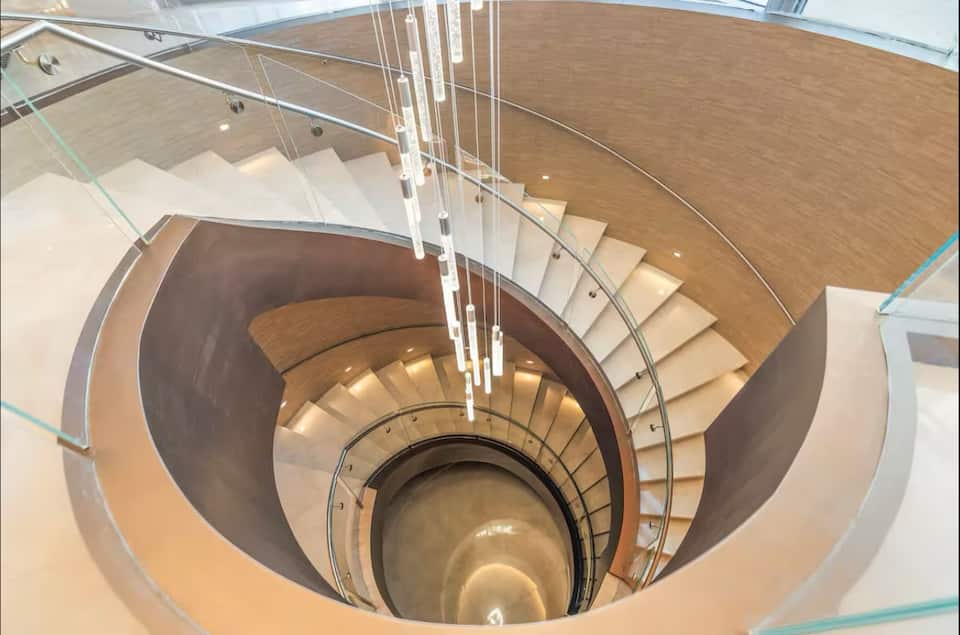
The Amrit Spa & Wellness Guide: Everything Below the Residence
A short elevator ride below the residence sits a 100,000-square-foot wellness centre — a hydrothermal circuit, twenty-two treatment rooms, a suite of regenerative therapies and a set of movement studios. Here is the whole of it, in plain language, and how to use it.
01The idea of a spa below your floor
The unusual thing about the wellness centre at Amrit is not any single machine or pool. It is the address. A hundred thousand square feet of hydrothermal bathing, treatment rooms, regenerative therapies and movement studios sit a short elevator ride below OASENA, which means the whole of it is available to you the way a hotel gym is available — on your own schedule, without a car, and without a drive home while your muscles are still loose from a massage. You can go down in a robe at seven in the morning, come back up for breakfast on the balcony, and return in the afternoon for something else entirely.
The resort names its wellness philosophy with the Sanskrit word Aayush, which points at longevity and vitality — the length and quality of a life rather than a quick fix for a single ache. In practice that translates into a building organized around a simple, old idea: that heat and cold, water and rest, touch and movement, taken in an unhurried sequence, leave the body calmer and the mind quieter than any one of them would alone. Nothing here is a cure. Most of it is not even medicine. It is the careful, well-appointed version of things people have done for their health for a very long time.
This guide is the map. It walks through everything downstairs, roughly in the order you would meet it, so you can decide what to try and how to string it together. It is honest about what each thing is and is not, and it links out to a fuller guide for every therapy so you can read as deep as you like before you book.
What is down there
- The Aayush hydrothermal circuit — a self-guided loop of hot and cold plunge pools, saunas, a salt inhalation chamber, an arctic chill fountain, an effusion shower and a hydro-reflexology path.
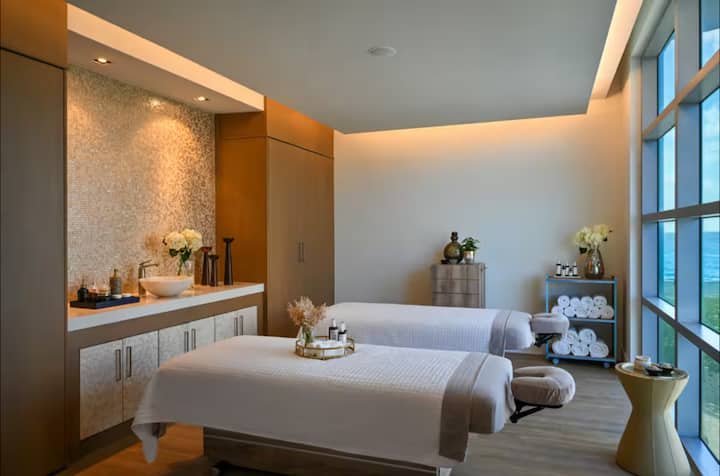
- Twenty-two treatment rooms for massage, bodywork and facials, including couples suites and a Moroccan hammam.
- A regenerative suite for the touchless, technology-led therapies: IV nutrient drips, hyperbaric oxygen, red light, PEMF, dry flotation and the Ammortal Chamber.
- A fitness and movement world — a gym, a spin studio, and studios for yoga and meditation.
You do not have to use all of it. Plenty of guests come down once, spend ninety minutes drifting through the circuit, and never book a single treatment. Others build a whole rhythm around the place: a morning bathe, an afternoon massage, a red-light session before dinner. Either way, the point of this page is to make the building legible, so nothing feels off-limits or mysterious. Read it once before your stay and you will know exactly what you are walking into and, just as usefully, what you can safely skip.
A word on how to read this
A wellness centre this large collects the whole spectrum of the field, from practices with centuries of tradition and real research behind them to newer, technology-led therapies that are still finding their evidence. This guide, and every therapy guide it links to, tries to be straight with you about which is which. Nothing downstairs is a cure, none of it replaces the care of a doctor, and the honest pitch for the entire floor is comfort, rest and recovery rather than transformation. That is not a small thing. A week of genuine rest, good sleep, warm water and unhurried movement changes how you feel in a way no single miracle treatment ever could — and that, quietly, is the whole idea of the place.
02Walking the Aayush hydrothermal circuit
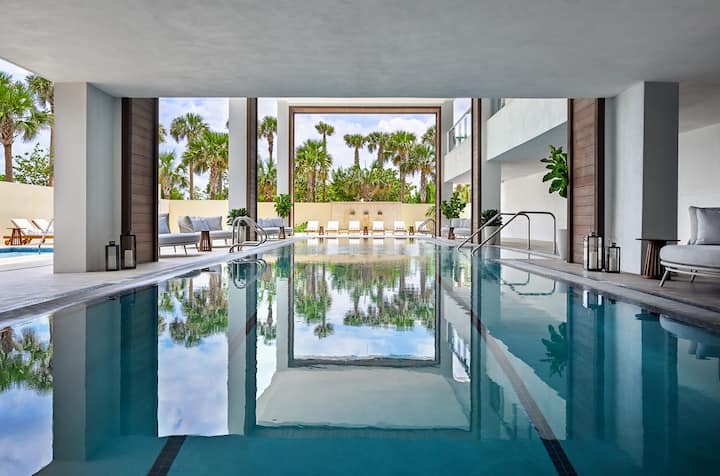
The heart of the wellness centre is the Aayush Hydrothermal Experience, a self-guided bathing circuit you move through at your own pace. The resort suggests ninety minutes to two hours for the full loop, which sounds like a lot until you are in it and realize the whole design is asking you to slow down. There is no attendant marching you from station to station and no clock you have to watch. You warm up, you cool down, you rest, and you repeat, and the sequence does most of the work for you.
Contrast bathing like this is one of the oldest wellness practices there is — the Romans, the Nordic sauna cultures, the Turkish hammam and the Japanese onsen all arrived at some version of hot, then cold, then rest. What Amrit has done is gather the whole tradition into one climate-controlled floor. Here is a sensible order to walk it.
The stations, in order
- Warm the body first. Begin in the sauna or the warm plunge pool for ten to fifteen minutes, until you are , deeply warm. This is the part your muscles have been waiting for. Do not rush it.
- Then the cold. Step into the cold plunge or stand under the arctic chill fountain for anywhere from a few breaths to a couple of minutes. The jolt is the point; your breathing will want to go ragged, so slow it down on purpose.
- Rest and let it settle. Sit, breathe, drink water. The swing between hot and cold is doing something to your circulation, and the pause is where you feel it land.
- The hydro-reflexology path. A shallow aquatic walk where jets and textured surfaces work the soles of your feet as you wade. It is gentle and oddly addictive.
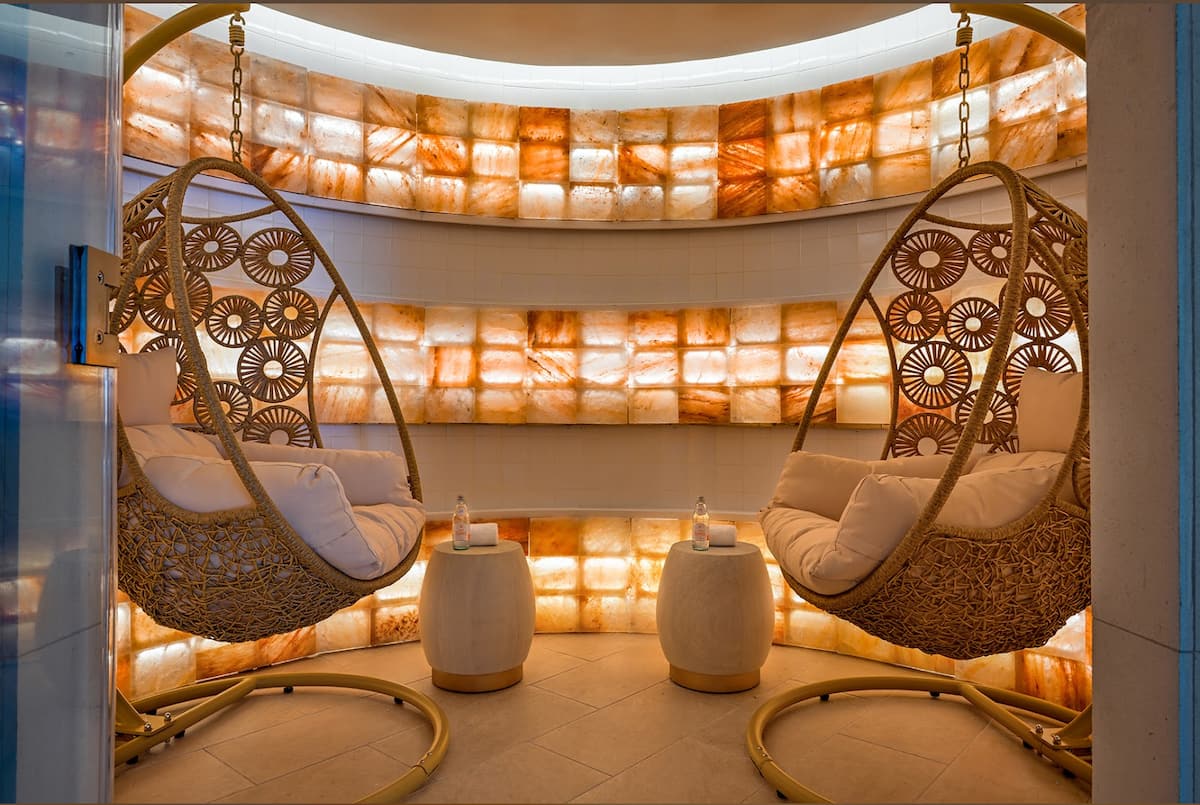
- The salt chamber. A quiet room of backlit salt brick where you simply sit and breathe air carrying a fine dry mineral mist. Read the full halotherapy guide if you want the history and the honest science.
- The effusion shower. A theatrical rinse of water, sometimes with light and scent, to close one loop before you start the next.
Then you go around again. Most people manage two or three full cycles inside that ninety-minute-to-two-hour window before their body tells them it has had enough, which it will. A few rules keep it pleasant rather than punishing: hydrate constantly, never make the cold a competition, and leave if you feel lightheaded rather than pushing through. The circuit is designed to be repeated across your stay, not conquered in one heroic session. On a longer visit, a slow morning in the water two or three times through the week is a far better use of it than one exhausting marathon on day one.
Who should take it gently
The circuit is safe and pleasant for most healthy adults, but the swings of heat and cold do ask something of your heart and your blood pressure. If you are pregnant, if you have a heart condition or uncontrolled blood pressure, if you are prone to fainting, or if you have had a recent illness or surgery, treat the hot rooms and the cold plunge with real caution and ask the wellness staff or your doctor before you dive in. Skip the sauna and the cold plunge after alcohol or a heavy meal, when your body is already working. And go with someone if you can; the cold in particular is one of those things best not done entirely alone. Read the cold immersion guide and the sauna guide for the fuller picture on each — both are honest about the real, well-studied benefits and the situations where the sensible move is to stay out.
03The regenerative therapies
Beyond the water sits a suite of what the resort calls regenerative or touchless therapies — the technology-led sessions where a device, not a therapist, does the work. These are the most talked-about and the most oversold part of any modern wellness centre, so it is worth being clear-eyed. Some rest on solid evidence for specific uses; several are early, proprietary, or backed mostly by enthusiasm. Each one below gets a fuller, honest guide of its own. Here is the short version of what each is.
What each therapy is
- IV nutrient therapy and NAD+. Vitamins, minerals and fluids delivered by a drip, including a NAD+ longevity infusion, given by clinical staff. Hydration is real; many of the vitamin claims are thin unless you are deficient. The full IV therapy guide lays out what the evidence supports and who should be cautious.
- The Ammortal Chamber. A single-person chamber that combines light, sound and vibration, guided breathwork, molecular hydrogen and PEMF into one twenty-to-thirty-minute session. The framing is longevity and bioenergetics; the independent evidence is still early. The Ammortal Chamber guide takes a clear-eyed look at what it is.
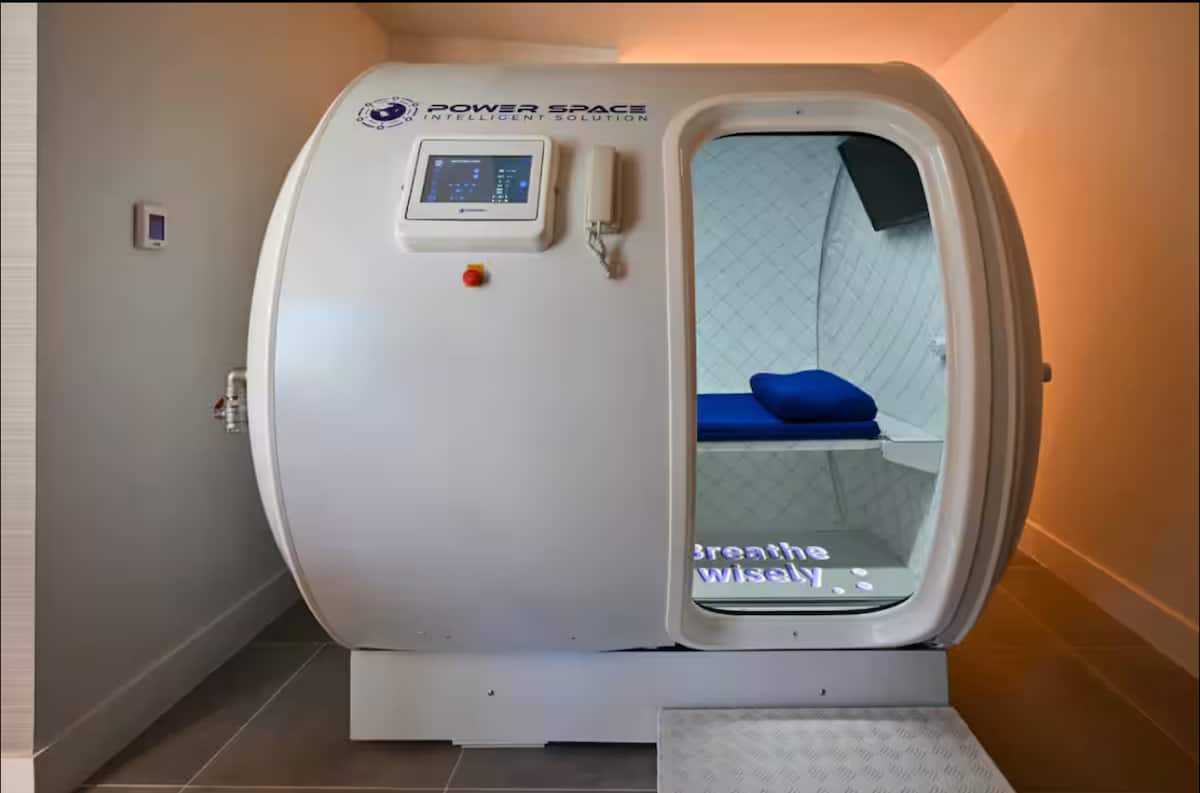
- Hyperbaric oxygen therapy. You breathe oxygen inside a pressurized chamber, which dissolves more of it into your blood. It is medical for certain conditions and more speculative as a general wellness or recovery tool — a distinction the HBOT guide is careful to draw.
- Red light therapy. Also called photobiomodulation. You sit or lie under panels of red and near-infrared light for ten to twenty minutes. The evidence is best for skin and some muscle recovery, and thinner elsewhere. See the red light therapy guide.
- Dry flotation. You lie on a membrane suspended over warm water and float without ever getting wet — the deep rest of a float tank without the enclosed, salty pod. Promising for stress and sleep in small studies. The floatation guide covers who loves it and who does not.
- PEMF mat therapy. You rest on a mat that delivers pulsed electromagnetic fields, a technology with real roots in bone-healing medicine and softer support for general wellness. The PEMF guide explains the mechanism and the cautions.
How to approach the whole category
A word of guidance on the whole category: treat these as pleasant, well-supervised experiments rather than treatments you are counting on. None replaces medical care. If you are pregnant, manage a heart, lung or kidney condition, wear a pacemaker, or take medication that these might interact with, ask the clinical staff and your own doctor before you book. Used sensibly, they are a restful, curious way to spend an hour. Sold as miracles, they are not, and no reputable therapist here will pretend otherwise.
If you are new to all of it and want a place to start, the gentler, purely restful options are the easiest first steps: red light and dry flotation ask nothing of you but to lie still, and neither carries the pressure changes of a hyperbaric chamber or the needle of an IV. Save the more involved sessions — the drips, the oxygen chamber, the Ammortal Chamber — for once you have a feel for what you enjoy. A useful rule of thumb: pick one new regenerative therapy per stay, read its guide beforehand so nothing surprises you, and let it be a curiosity rather than the centrepiece of your week. The steady, well-evidenced things — the water, the movement, the massage table — are what most people end up returning to anyway.
04Massage and the twenty-two treatment rooms
For all the technology downstairs, the busiest rooms are still the ones with a table, a warm sheet and a pair of skilled hands. The wellness centre holds twenty-two treatment rooms, including couples suites, and the deepest, most consistent evidence for anything in the building sits right here. Therapeutic massage has real, repeatable research behind it for easing muscular pain, lowering stress and improving sleep. It is also, simply, one of the best things you can do with an hour on a vacation.
The menu runs the full range of styles, and choosing well is mostly about knowing what you want out of the session.
How to choose your massage
- Swedish — long, flowing, moderate-pressure strokes. The default choice for relaxation and circulation, and the right pick if you are not sure.
- Deep tissue — slower and firmer, working the deeper layers of muscle. Good for chronic knots and stubborn tension, though it can leave you tender the next day.
- Sports — targeted work around the muscles you use, ideal after a run on the beach or a hard round of golf.
- Prenatal — adapted for pregnancy, with safe positioning and gentler pressure. Always tell them how far along you are when you book.
- Myofascial release — sustained, gliding pressure that works the connective tissue rather than the muscle belly.
- Craniosacral therapy — a very light, still, almost imperceptible touch that many people find deeply calming. The craniosacral and myofascial guide is honest that the science here is weak even where the relaxation is real.
The single most useful thing you can do is talk to your therapist. Tell them where you hold tension, whether you want to drift off or work something out, and how firm you like the pressure — and speak up mid-session if it is too much or too little. A good massage therapist wants that feedback; the pressure that changes your week is the one you asked for.
Couples suites and treating together
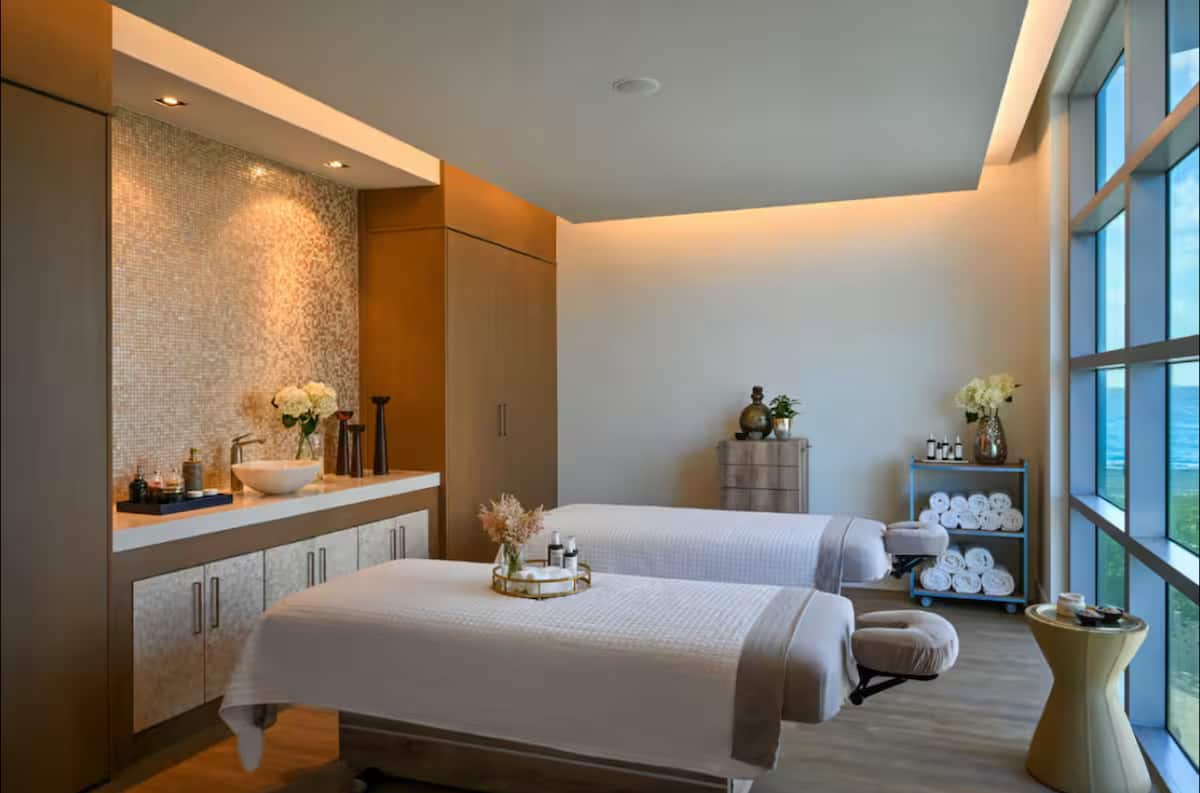
Several of the twenty-two rooms are couples suites, built so two people can have their treatments side by side. It is a nice way to share the experience without either of you having to disappear for an hour on a trip meant to be spent together, and it is popular enough on weekends and in high season that it is worth booking well ahead. The same goes for the hammam and any treatment you want at a particular time; the good slots go first.
A few practical notes. Book the longer session if your body is knotted; fifty minutes goes fast once you have undressed and settled. Arrive early enough to use the hydrothermal circuit first, because warm, loosened muscles take the work far better than cold ones. Drink water afterward and give yourself somewhere soft to land rather than rushing straight back to the beach — the calm of a good massage keeps working for an hour if you let it. And know the ordinary contraindications: if you have blood clots, are running a fever, have a fresh injury or a skin infection, or are in the early weeks of pregnancy, check first — deep pressure is not always the right idea, and a good spa will steer you gently toward what is. Tell them about any recent surgery or medical condition when you book, so the therapist can adapt the work rather than discover the problem mid-session.
The unusual thing here is not any single machine or pool. It is the address: a whole wellness centre a short elevator ride below your own floor, open to you on your own schedule.
On the spa below OASENA
05Facials, the Moroccan hammam and ICOONE
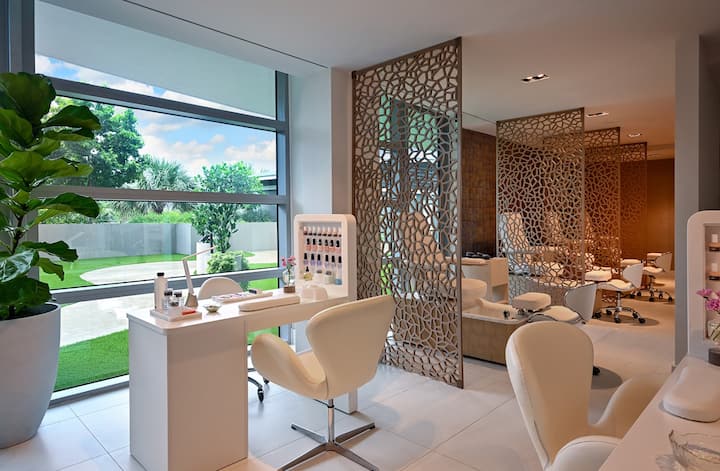
The centre also holds the treatments people tend to file under skin and body care — the facials, the ritual bathing and the contouring work. None of it is medical, all of it is relaxing, and a couple of the offerings are unusual enough to be worth planning around rather than stumbling into.
Advanced facials
The facial menu runs from a straightforward cleanse-and-hydrate to more involved treatments that layer massage, masks, and various devices. A good facial does three honest things: it cleans and exfoliates skin that travel, sun and air-conditioning have dulled; it delivers a long soothing face-and-scalp massage; and it sends you out looking rested. Be a little skeptical of promises that reach much further than that. If you have reactive skin or a specific condition, say so at the start and ask them to keep it simple. And if you are booking a facial and a beach day on the same afternoon, do the facial after the sun, not before — freshly exfoliated skin and midday Florida sun are a poor match.
The Moroccan hammam
The hammam is the one to plan for. It is a ritual as much as a treatment: a traditional Moroccan steam-and-cleanse built around warmth, black soap, and a vigorous exfoliation with a kessa mitt that sloughs away a startling amount of dull skin, usually finished with a rinse and an oil or clay application. You leave feeling scrubbed down to something newer. It is warm, wet, hands-on and communal in spirit rather than clinical, and it pairs beautifully with a slow turn through the hydrothermal circuit either side of it. If you have never done one, this is a good place to start.
ICOONE body contouring
ICOONE is a device-based body and skin treatment that uses rollers and micro-stimulation across the surface of the skin. It is marketed for the look of skin texture, circulation and body contouring, and it feels like a firm, mechanical massage. Set your expectations sensibly: this is a cosmetic, feel-good treatment, not a medical or weight-loss procedure, and any effect on appearance tends to be modest and temporary, building over a course rather than a single visit. Enjoyed for what it is — an hour of stimulating, methodical bodywork — it is a pleasant addition to a wellness day. Understood as a shortcut to permanent change, it will disappoint. As with everything in this part of the centre, the honest pitch is comfort and a bit of polish, not transformation, and that is plenty.
How to fit these into a stay
These treatments reward a little sequencing. A hammam is best early in a stay, because the deep exfoliation leaves your skin primed for everything that follows — the oils of a massage, the warmth of the circuit, even the sun, once your skin has settled for a day. A facial sits well on a quieter afternoon, away from the beach, and pairs nicely with a lighter body treatment rather than a deep-tissue massage on the same day. If you are trying ICOONE, think of it as one relaxing session in a broader week rather than a course you need to complete. And across all of it, drink water and go gently on the sun afterward; freshly cleaned and exfoliated skin is more sensitive than usual, and Florida is not shy. None of this is complicated. It just goes better when the order makes sense, and the therapists downstairs are happy to help you plan it.
06The fitness and movement world
Not everything downstairs is about lying still. A good half of the wellness idea here is movement, and the centre keeps a proper fitness and studio world for it. This is the part guests most often forget is included, then use every single day once they find it. On a stay where the beach and the balcony conspire to keep you horizontal, a morning that starts with the body working changes the whole tone of the day.
What the movement side includes
- The gym. A full fitness floor with cardio machines and strength equipment, open on the flexible, come-when-you-like schedule you would want from a resort gym. It is the easy way to hold on to a training routine while you travel, and it sits a short elevator ride from your bed.
- The spin studio. A dedicated indoor-cycling room for a hard, sweaty, time-efficient cardio session — the sort of class that earns you a long, guiltless afternoon doing nothing at all.
- Yoga. Studio space for yoga, from gentle, restorative sessions that pair naturally with a slow spa day to stronger, more athletic flows if you want to work.
- Meditation. A quiet space for guided meditation and breathwork — the mental counterpart to everything the water and the massage table are doing for the body.
The reason to fold movement into a wellness stay is not discipline for its own sake. It is that the two halves make each other better. A yoga session or a spin class before the hydrothermal circuit means you arrive at the sauna already warm and worked, and the heat and cold land differently on a body that has moved. A meditation session after a massage extends the calm well past the treatment room. Even a short, easy workout tends to make the rest, the food and the sleep that follow it noticeably better.
Meditation deserves its own small note, because it is the piece most people skip and the one that often does the most. A guided session or a few minutes of breathwork is the mental equivalent of the cold plunge — a deliberate reset that makes everything after it feel clearer. You do not need to be good at it or to have done it before. Sitting in a quiet room and being walked through it for twenty minutes is enough, and on a stay built around slowing down, it fits the mood exactly.
Two practical notes. First, movement and heat both pull water out of you, so if you are pairing a workout with the sauna or a cold plunge, drink more than you think you need across the whole stretch. Second, keep it in proportion to a vacation. This is a place to maintain a rhythm and clear your head, not to break personal records. A gentle daily habit — a morning walk on the beach, a yoga session, an easy turn on the bike — will serve a week here far better than one punishing session that leaves you too sore to enjoy the water. The building is generous enough that you can do a little every day and never feel you have overreached, and the beach downstairs is a far better reward for a light morning workout than a sore afternoon is for a hard one.
07Planning a half-day versus a whole week
How you use the wellness centre depends entirely on how long you have and what you came for. Because everything is a short elevator ride below the residence, there is no travel time to budget and no reason to over-plan. The right approach is to match the ambition to the stay. Here are two honest templates.
If you only have a half-day
Keep it simple and do not try to sample everything. The single best half-day is a long, unhurried turn through the Aayush hydrothermal circuit — give it the full ninety minutes to two hours it is designed for — followed by one booked treatment, most often a massage. That is it. The circuit warms and loosens you, the massage does its deepest work on a body that is already open, and you finish reset in an afternoon. If you would rather something quiet and touchless, swap the massage for a red light or dry flotation session. Resist the urge to cram in three treatments; the rushing undoes the point.
If you have a whole week
A week is where the place really rewards you, because you can spread things out and let each day have a theme rather than a checklist.
- Circuit days. Two or three slow mornings in the hydrothermal circuit across the week, rather than one marathon. Your body adapts, and each visit feels better than the last.
- A bodywork day. Build one day around a longer massage or the Moroccan hammam, with the circuit either side of it.
- A curiosity day. Try one of the regenerative therapies you have never done — the Ammortal Chamber, hyperbaric oxygen, an IV drip — and read its guide first so you know what you are walking into.
- Movement days. Fold a yoga session, a spin class or the gym into the mornings you are not bathing, and let the beach have the afternoons.
A middle path: the weekend
If you have two or three nights rather than a full week, split the difference. Give one morning to the hydrothermal circuit and a booked massage, keep another for the beach and an easy movement session, and pick a single regenerative therapy to try if you are curious. That is enough to feel the benefit without turning a short stay into a spa itinerary you are racing to finish. The elevator does the heavy lifting; because there is no travel time, even a compact stay leaves room for a proper spa half-day and still gives the ocean its due.
The mistake people make is treating a week as a reason to do everything twice. It is not. The better instinct is to find the two or three things you love in the first couple of days — the circuit, a particular therapist, the salt room — and return to them. A wellness week works by repetition and rest, not by novelty. Leave room in every day for the actual reason you are here, which is the twelfth-floor balcony and the Atlantic in front of it. The spa is a support to the stay, not a second job, and the best weeks are the ones where the two blur together and you stop keeping count.
08Etiquette and booking, made easy
None of this is complicated, but a little knowledge makes the whole experience smoother, especially if you have not spent much time in a full hydrothermal spa before. Here is what is worth knowing before you go down.
Booking
- Reserve treatments ahead. The self-guided circuit and the movement studios are come-as-you-please within the centre's hours, but massages, facials, the hammam and the regenerative therapies are appointments. Book them early in your stay, particularly on weekends and during the busy November-to-April season, when the best times fill up.
- Flag anything medical when you book, not when you arrive. Pregnancy, injuries, heart or blood-pressure conditions, recent surgery, a pacemaker, medications — mention them up front so they can adapt the treatment or steer you to a better one.
- Give yourself a buffer. Arrive fifteen to twenty minutes before a treatment so you can change, use the circuit, and settle. Arriving flustered eats into the calm you came for.
Etiquette in the circuit
- Shower before you get in the water, as you would at any shared bathing facility. It is basic courtesy in a communal circuit.
- Keep your voice down. The whole floor runs on quiet. Phones stay away; conversations stay to a murmur. If you are there with someone, match the hush of the room.
- Mind the heat and cold honestly. Do not treat the cold plunge as a dare or the sauna as an endurance test. Leave when your body says so, and never push through dizziness.
- Follow the resort's rules on swimwear, robes and quiet zones, which are posted and which the staff will happily explain.
A few sensible cautions
The wellness centre is a place to feel better, and the surest way to spoil that is to overdo it. Hydrate more than feels necessary; heat, cold and movement all dehydrate you, and Florida does the rest. Do not go straight from a big meal or a couple of drinks into the sauna or a cold plunge. And take the medical guidance in each therapy's guide seriously — these are wellness services, not medical treatments, and if you have a serious condition or are pregnant, a quick word with your own doctor before your stay is the responsible move. The staff downstairs would rather you ask than assume.
What to bring, and what not to
Practically speaking, you need very little. The resort provides robes, towels and slippers, so all you truly have to carry down is swimwear for the circuit and a water bottle you keep refilling. Leave the jewelry and the watch in the residence — heat, cold and salt are unkind to them, and the whole point is to be untethered for an hour or two. Phones are better left upstairs entirely; if you bring one, keep it silent and out of sight, both for your own sake and out of respect for a floor that runs on quiet. If you wear contact lenses, be aware that steam, salt and cold water can bother them, so pack a case if that is a concern. Everything else — products, tools, the equipment for each treatment — is already there waiting. The lightest possible arrival is the right one.
09How access works for residence guests
Here is the practical heart of it, and the reason a wellness page belongs on a page about a private residence at all. The whole centre — the hydrothermal circuit, the treatment rooms, the regenerative suite, the gym and the studios — belongs to the resort, and staying in OASENA gives you access to it at preferred rates, subject to the resort's terms. That is the arrangement in one sentence. It is worth unpacking what it does and does not mean, so there are no surprises.
What that means in practice
- You do not have to leave the building. Everything is a short elevator ride below your floor. No car, no drive, no booking a spa across town. You go down when you feel like it and come back up when you are done.
- Preferred rates apply to residence guests, which makes the wellness centre an usable, everyday part of the stay rather than a once-in-the-trip splurge. The exact rates and any inclusions are set by the resort and change over time, so confirm the current details with them when you plan — this page does not quote prices, because they move.
- Access follows the resort's terms. Hours, booking policies, age rules for certain areas, and which therapies require a health screening are all the resort's to set. The staff will walk you through anything that applies to what you want to do.
One important clarification
OASENA is a privately owned home. It is not operated by, affiliated with, or endorsed by the resort. What you are getting is a private, independently hosted residence on the twelfth floor with access to the resort's wellness facilities on the resort's terms — an unusual combination, and the single best reason to read the rest of these guides before you arrive. Knowing the building, knowing which therapies you want to try, and booking the appointments early turns a good amenity into the backbone of a restorative week.
Why the arrangement is worth planning around
The reason to think this through before you arrive is that it changes what a stay can be. A normal spa is a treat you schedule once, drive to, and build a whole afternoon around. Here the spa is downstairs, at preferred rates, on an open schedule — which means it stops being an event and becomes a habit. You can bathe every morning before the beach. You can drop in for twenty minutes in the salt room on a rainy afternoon. You can book a massage for the day your body needs one rather than the day the calendar allowed. That shift, from occasion to routine, is the whole value, and it only works if you know what is available and reserve the appointments early.
The simplest way to think about it: the residence gives you the privacy and space of a home, and the elevator gives you a hundred-thousand-square-foot wellness centre downstairs, at preferred rates, whenever you want it. Very few places let you have both. Use it well and it becomes the part of the stay you talk about long after you have gone home.
10A sample wellness day, hour by hour
To make all of this concrete, here is one gentle, realistic day that uses the centre without turning a vacation into a schedule. Treat it as a template to bend, not a plan to follow to the minute. The whole point of having the spa an elevator ride away is that you can improvise.
A slow day, downstairs and back up
- Morning, on the balcony. Coffee and the ocean first, in no hurry. Let the day open before you move.
- Mid-morning, movement. Head down for a gentle yoga session, an easy turn on the gym floor, or a walk on the private beach. Nothing heroic — just enough to wake the body up before the water.
- Late morning, the circuit. Give the Aayush hydrothermal circuit the ninety minutes to two hours it deserves. Warm in the sauna, brave the cold plunge, rest, wander the reflexology path, sit in the salt room, and go around again. Hydrate the whole way through.
- Midday, back up. Return to the residence, eat something light, and rest on the balcony out of the midday sun. This pause is not wasted time; it is where the morning settles.
- Afternoon, one booked treatment. A long massage on muscles already loosened by the morning, or, if you would rather stay touchless, a red light or dry flotation session. Just one. Do not stack them.
- Late afternoon, the beach. The reason you came. Toes in the sand, the sun lower and kinder now, the work of the day already done.
- Evening, wind down. Dinner in, or out on the water at one of the marina tables, then a short meditation or an early night. A body treated this well tends to sleep like a stone.
The evening version, for a different mood
Some days you will want to flip it. Give the morning entirely to the beach while the sun is gentle, keep the middle of the day for a long lunch and the shade, and take the wellness centre in the late afternoon and evening instead. A quiet turn through the circuit as the day cools, one treatment, and a meditation session before dinner make a lovely wind-down, and the centre is often at its most peaceful once the beach crowd has drifted off. There is no wrong order. The building is yours to arrange around the weather, your energy and whatever the ocean is doing that day.
You will notice what the day is not: it is not six treatments and a race between them. It is two, maybe three, deliberate things with real rest between them and the ocean bracketing the whole. That is the rhythm the wellness centre is built for, and the one that leaves you feeling different at the end of a week. Come down when you want to, do less than you think you should, drink more water than you expect to need, and let the building — and the twelfth-floor view above it — do the rest.
Common questions
Do I have to leave the residence to use the spa?
No. The entire 100,000-square-foot wellness centre — the Aayush hydrothermal circuit, the 22 treatment rooms, the regenerative suite, the gym and the studios — is a short elevator ride below OASENA. You can go down in a robe and be back up for breakfast, with no car and no drive involved.
How much does it cost, and is it included?
Residence guests receive <strong>preferred rates</strong> at the wellness centre, subject to the resort's terms. Exact rates, inclusions and hours are set by the resort and change over time, so confirm the current details with them when you plan. As a privately hosted residence, this site does not quote spa prices.
How long should I set aside for the wellness centre?
The Aayush hydrothermal circuit is designed to take <strong>90 to 120 minutes</strong> at your own pace, and most treatments run from twenty minutes up to a couple of hours. A relaxed half-day — the circuit plus one booked treatment — is the sweet spot; on a week-long stay, spreading two or three spa sessions across the week works far better than one marathon.
Are these treatments medical, and do I need to check with a doctor?
These are wellness services, <strong>not medical treatments</strong>, and none of them replaces medical care. If you are pregnant, manage a serious heart, lung or kidney condition, wear a pacemaker, or take medication that could interact, tell the wellness staff when you book and ask your own doctor first. Each therapy has its own guide with the specific cautions.
A note on wellness & health
This guide is general information about therapies offered at the resort spa, not medical advice, diagnosis or treatment. Wellness services are elective and results vary from person to person. Talk with a qualified healthcare professional before starting any new therapy, especially if you are pregnant or managing a medical condition. OASENA is privately owned and is not operated by, affiliated with, or endorsed by Amrit Ocean Resort & Residences. Spa access is offered to residence guests at preferred rates, subject to the resort’s terms and availability.
Your quiet address above the Atlantic
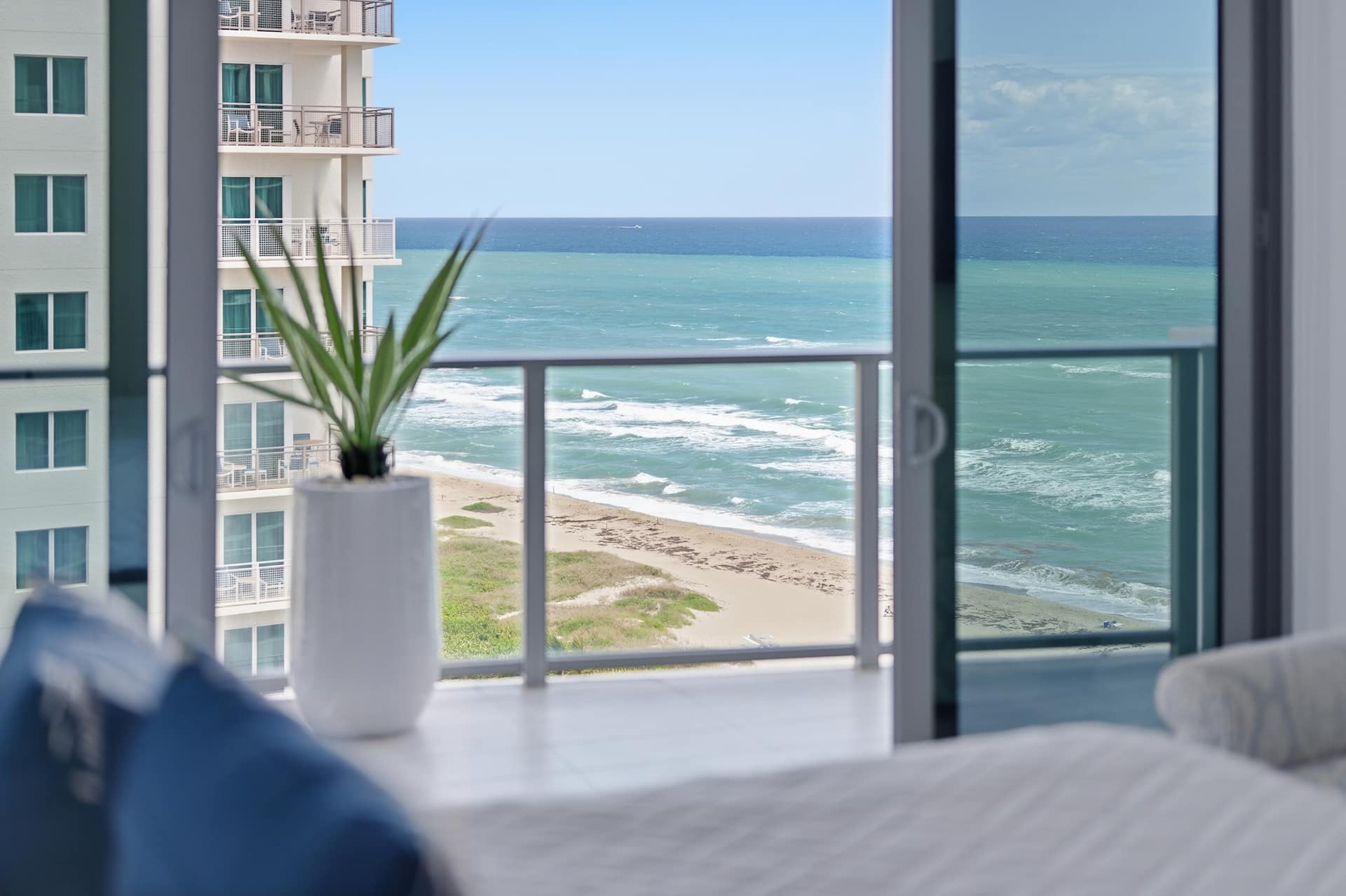
OASENA is a private two-bedroom home on the twelfth floor of the Happiness Tower — floor-to-ceiling ocean views, a sweeping balcony, and this entire wellness world an elevator ride below.
OASENA is a privately owned residence within Amrit Ocean Resort & Residences and is not operated by, affiliated with, or endorsed by the resort. See credits & notes.