Art and Culture in the Palm Beaches
About twenty minutes south of the beach, the Palm Beaches carry a major art museum, a four-stage theater, a gardened cultural society and a downtown full of murals. Here is what to see, when the season peaks, and how to fold it into a day from the residence.
01Culture is a short drive across the bridge
The most surprising thing about staying on Singer Island is how much serious culture sits within a short drive of the sand. Cross the bridge to the mainland and head about twenty minutes south and you reach West Palm Beach and the island town of Palm Beach — two small places that, between them, carry a major art museum, a four-venue performing arts center, a cultural society with its own gardens and library, and a downtown lined with galleries and murals. For a stretch of coast better known for sailfish and sunsets, the Palm Beaches punch well above their weight.
Part of the reason is the calendar. This has been a winter resort for more than a century, and the cultural institutions grew up to serve the people who came down for the season. That history still shapes the year. From roughly November through April, the museums mount their biggest exhibitions, the concert halls fill their nights, and the lecture rooms run at full tilt. Come in summer and you will still find plenty open, but the marquee shows, the touring Broadway runs and the packed opening nights belong to the cooler months.
Two sides of the water
It helps to know the geography before you go. West Palm Beach is the mainland city — bigger, younger, and home to the Norton Museum, the Kravis Center and the bars and galleries of Clematis Street. Palm Beach is the barrier island just across the Intracoastal, the old-money town of Worth Avenue and clipped hedges, and it holds the Society of the Four Arts and its gardens. The two are a five-minute drive apart over a short bridge, so you can easily see one of each in a day without much thought about which side you are on.
This guide walks through the places worth your time:
- The Norton Museum of Art — the anchor, with a collection that runs from Europe to China to the present day, in a building recently enlarged by a famous architect.
- The Kravis Center for the Performing Arts — four stages under one roof, from Broadway tours to symphony nights.
- The Society of the Four Arts — gardens, a library and one of the region’s best lecture and concert series.
- Clematis Street and downtown — galleries, public murals and seasonal art walks you can do on foot.
None of it is far, and almost all of it pairs with a meal or an afternoon of browsing. If you are building a day around it, read this alongside our guides to Palm Beach dining and shopping, since the good tables and the good stores share the same few blocks as the galleries. And if you would rather make culture the spine of a longer excursion, our day trips guide shows how it folds into a wider loop of the county. You do not need to be a scholar to enjoy any of this; you just need an afternoon and a little curiosity.
From the twelfth floor, none of this is a commitment. A museum morning, an early dinner across the bridge, a concert at night — each is close enough that you can do it on a whim and be back with the ocean out the window before bed. The sections that follow take the institutions one at a time, then end with a single, easy day that strings the best of them together.
02The Norton Museum of Art
The Norton is the cultural heart of the Palm Beaches, and the first place to send anyone with a free morning. It was founded in 1941 by Ralph and Elizabeth Norton, a Chicago industrialist and his wife who wintered here and gave the city both their collection and a building to hold it. What started as a modest museum of a few galleries has grown, over eighty years and several expansions, into an institution of real weight — more than eight thousand two hundred works, and exhibitions that draw loans and crowds from well beyond Florida.
The most visible change came recently, when the British firm Foster + Partners — the office of Norman Foster, one of the best-known architects working today — reimagined the campus and added a new West Wing. The redesign moved the main entrance back to its original street, opened up light-filled galleries, wrapped the museum around a garden, and gave it a proper great hall, a restaurant and a shop. The building alone is worth the trip; it is the kind of art space that feels calm and generous rather than grand and tiring, and it changed how the whole city thinks about its museum.
What’s in the collection
The permanent collection is organized around a handful of strengths, and you can see the best of it in a couple of unhurried hours:
- European art — paintings and sculpture that run through the centuries into the modern era, including the French work that anchored the founders’ original taste.
- American art — a strong holding that traces the country’s painters across the nineteenth and twentieth centuries.
- Chinese art — one of the museum’s signature areas, with jades, bronzes and ceramics gathered from the very beginning.
- Contemporary art — the growing, restless part of the collection, and often where the most talked-about temporary shows land.
- Photography — a serious, deep collection that the museum rotates through its galleries and features in changing exhibitions.
Because the museum is a manageable size, you do not have to march through it the way you would a giant national collection. You can pick two of those areas, give them real attention, and leave feeling you saw something rather than everything. The temporary exhibitions are usually the draw in high season, so it is worth checking what is on before you go — the winter slot tends to hold the museum’s biggest show of the year, and those exhibitions are why a lot of people plan the visit at all.
The garden deserves a mention of its own. The Foster redesign put green space at the center of the museum rather than the edge, so the galleries look out onto planting and sculpture, and there is a shaded lawn with mature trees where families spread out on weekends. On a bright Florida day that indoor-outdoor rhythm — a room of paintings, then a bench under the leaves, then another room — is a large part of what makes the place easy to spend time in.
Practical notes: the Norton sits in West Palm Beach, about twenty minutes from the residence, with its own parking. There is a well-regarded restaurant inside if you want to make a leisurely half-day of it, and the sculpture garden where you can sit between galleries. It closes one or two days a week, as most museums do, so glance at the current schedule when you plan. Photography of the permanent collection is generally welcome; special exhibitions sometimes have their own rules.
03Art After Dark: the Norton on Friday nights
The single best time to visit the Norton is a Friday evening. For years the museum has run a weekly after-hours program — long known as Art After Dark — that keeps the galleries open late and turns a quiet art museum into the closest thing West Palm Beach has to a genteel block party. It is the local habit that everyone seems to know: ask anyone in the Palm Beaches where to take out-of-town guests on a Friday, and there is a good chance the Norton comes up before dinner does.
The formula is simple and it works. The doors stay open into the evening, the lights of the great hall come up, and the museum layers a night of programming over the galleries you can already walk. Depending on the week, that might include:
- Live music in the great hall or the garden — jazz, a small ensemble, a singer — giving the whole building a soundtrack.
- Talks and tours that take you into a current exhibition with someone who knows it well.
- Hands-on art-making and pop-up activities, which make it an easy night to bring older children.
- The restaurant and bar open late, so you can turn a gallery visit into dinner or a drink without leaving.
How to do it well
Come on the earlier side if you want to see the art, since the galleries get lively as the evening goes on and the crowd builds. If your aim is the social scene — a glass of wine, live music, people-watching among the sculpture — come later and lean into it. Either way it is a low-commitment, high-reward outing: you are not locked into a two-hour performance, and you can stay for twenty minutes or three hours as the mood takes you.
It also solves a very common vacation problem, which is what to do on a Friday night that feels like an occasion without being a production. You can leave the residence after a beach afternoon, be across the bridge in twenty minutes, wander a strong collection with a drink in hand, hear some live music, and be home by the water before it gets late. Pair it with an early or late dinner from our Palm Beach dining guide and you have a full, unhurried evening with almost no planning.
One note on timing: the after-hours program runs on the museum’s own schedule and can pause for holidays or special events, so it is worth a quick check that it is on the Friday you have in mind before you drive over. And because it is popular with locals, arriving a little before the rush makes both parking and the first gallery easier.
Because it happens most weeks through the season rather than once a year, you do not have to plan a trip around it — if there is a Friday in your stay, there is very likely an Art After Dark waiting. That reliability is part of the charm. It is not a festival you have to catch; it is simply how the museum ends its week, and visitors get folded into a rhythm the town has kept for a long time.
04The Kravis Center for the Performing Arts
If the Norton is where the Palm Beaches keep their art, the Kravis Center is where they keep their nights out. The Raymond F. Kravis Center for the Performing Arts is West Palm Beach’s main stage — a complex of theaters on a rise near downtown that hosts touring Broadway shows, orchestras, concerts, dance, comedy and just about anything else that travels. It opened at the start of the 1990s and has been the engine of the region’s performance calendar ever since.
What makes it flexible is that it is not one theater but four, each sized for a different kind of night:
- The main concert hall — a large, handsome room seating around two thousand, built for Broadway tours, symphony concerts and the biggest touring acts.
- A mid-size playhouse — a flexible space for plays, cabaret, family shows and smaller productions.
- An intimate recital hall — the right room for chamber music, solo recitals and talks.
- An outdoor amphitheater — a stage on the plaza for open-air concerts and events in the mild months.
What you can see
The programming is broad on purpose. In a single season you might find a national tour of a current Broadway musical, a visiting symphony orchestra, a jazz or pop headliner, a stand-up comedian, a ballet company, a lecture series and a run of family shows over the holidays. The center is also home base for the region’s resident performing groups, so the local opera and symphony perform here through the winter alongside the touring acts. Whatever your taste, there is usually something on that fits it.
The season runs heaviest from late fall through spring, which lines up neatly with the resort winter. That is when the touring Broadway series lands its biggest titles and the calendar is thick with concerts several nights a week. Summer is quieter but not dark; you will still find shows, and the outdoor amphitheater comes into its own on pleasant evenings.
A few practical notes. The Kravis sits about twenty minutes from the residence, near downtown West Palm Beach, and popular shows — especially the Broadway runs and marquee concerts — sell out well ahead in high season, so book as soon as you know your dates rather than hoping for the week of. There is on-site parking in an adjacent garage, valet on bigger nights, and plenty of restaurants within a short drive for a pre-show dinner. Dress is generally smart-casual; the Palm Beaches lean a touch dressier than the beach towns, but you will not feel out of place in a jacket or a nice sundress rather than black tie.
The complex itself is worth arriving early for. The plaza and fountains fill up before curtain, the lobbies open onto views of the city, and there is a pleasant ritual to the pre-show crowd that is part of the evening’s pleasure. Give yourself a few extra minutes rather than sprinting in at the bell, and the whole thing feels less like an errand and more like a proper night out. If a show is the centerpiece of your evening, think of it as the anchor and build outward: an early dinner across the bridge, the performance, and a nightcap on the way home.
For a coast most people picture as pure beach, the amount of real culture within a short drive is the happy surprise of a stay here.
On the Palm Beaches' cultural season
05The Society of the Four Arts
Across the water on Palm Beach, the Society of the Four Arts is the quiet counterweight to the big rooms of West Palm Beach. Founded in the 1930s, it takes its name from the four arts it was created to serve — art, music, drama and literature — and it has spent nearly a century bringing lectures, concerts, films and exhibitions to the island, along with two things that make it a genuine pleasure to visit even when nothing is scheduled: a library and a set of gardens.
The gardens
The gardens are the reason to go even if you never step inside for a talk. Laid out as a series of connected garden rooms, they gather the plants that thrive in the South Florida climate into a compact, beautifully kept space — a demonstration of what grows here, and a shaded, fountain-cooled place to walk between the palms and flowering trees. There is a sculpture garden as well, so the stroll doubles as an easy outdoor gallery. Access to the gardens is generally open and casual, and they make a lovely, low-key stop before or after lunch on the island.
The setting matters. This is Palm Beach at its most civilized: hedges, birdsong, a bit of statuary, and the sense that you have stepped off the busy street into somewhere older and calmer. Families with restless children, couples wanting a slow half hour, garden lovers of any stripe — all of them find something here, and none of it demands that you know the first thing about horticulture.
Talks, concerts and the library
The heart of the Society, though, is its program. Through the winter season it runs one of the best lecture series in the region — authors, historians, scientists, journalists and public figures who come to speak to an engaged, curious audience — along with concerts, film screenings and changing art exhibitions in its galleries. If you like the idea of an afternoon talk by someone interesting followed by a walk in the garden, this is your place.
The campus also holds a handsome library, a reading room and a children’s library, all of which speak to the Society’s founding idea: that a resort town deserves real cultural life and not just entertainment. Some programming is aimed at members, and popular lectures can require tickets and sell out, so if a specific talk or concert catches your eye it is worth checking availability ahead rather than turning up cold.
For a visitor, the easiest way to enjoy the Four Arts is to treat the gardens as a drop-in and the programming as a bonus. Walk the garden rooms, see whatever exhibition is hanging, and if the day’s lecture or concert fits your schedule, all the better. It sits within easy reach of Worth Avenue, so it pairs naturally with an afternoon of browsing from our shopping guide and lunch from the Palm Beach dining guide.
A word on the rhythm of it: the Society is busiest and most fully programmed in the high winter months and slows considerably in summer, when the lecture series pauses and the island empties out. If you are here in the cooler part of the year, check what is on the week you visit — there is often more happening than you would guess from such an unassuming set of buildings.
06Clematis Street, galleries and public art
Not all of the culture here lives behind museum doors. Downtown West Palm Beach has a walkable, street-level art life centered on Clematis Street, the old main drag that runs from the waterfront up into the city. It is the social spine of downtown — bars, cafes, restaurants and independent shops — and threaded through it are galleries, studios and a growing collection of large public murals that have turned whole building walls into canvases.
Murals and public art
Over the last decade downtown West Palm Beach has leaned hard into public art, and the result is a district you can tour on foot without paying for a single ticket. Big, bold murals cover the sides of buildings and the walls of alleys and parking structures, painted by artists brought in from around the country and the world. Part of the fun is that you stumble on them: turn a corner off Clematis and there is a three-story portrait or a wall of color you were not expecting. A slow wander with your phone camera out is one of the best free afternoons in the city.
Down at the foot of the street, the waterfront and its commons give you the Intracoastal, a long public dock, open lawns and often a market or an event, with the island of Palm Beach shining across the water. It is a natural place to start or end a downtown walk, and a good spot to let children run while you catch your breath.
Galleries and art walks
The gallery scene is smaller than the mural scene but real, and it clusters in and around downtown and the nearby Northwood and Warehouse districts, where working studios and independent galleries have taken over older buildings. Several times a year the city runs art walks — evenings when galleries and studios open their doors together, artists are on hand, and you move from space to space with the crowd. If your visit lines up with one, it is a lively, low-pressure way to see local work and meet the people making it.
A few landmarks anchor the street and are worth knowing:
- The Harriet Himmel Theater — a restored historic building nearby that hosts events and gatherings and is a handsome piece of the city’s architectural history.
- Pioneer Linens — a family-run shop that has been on the street since 1912, a reminder that this was a real downtown long before it was a nightlife destination.
- The weekly waterfront evenings — a long-running free outdoor music series that brings live bands and a crowd down to the water on a set night each week.
Because everything downtown is close together, this is the part of the region’s culture that asks the least of you. Park once, walk, look up at the walls, dip into a gallery, get a coffee or a drink, and let the evening find you. It also puts you right in the middle of the best of downtown dining and browsing, so read it alongside the Palm Beach dining and shopping guides — the murals, the tables and the shops are all on the same handful of blocks.
07Music and festivals through the year
Live music runs through the Palm Beaches year-round, but it swells in the cooler months into a proper season. Between the concert halls, the resident companies, the free outdoor series and the big annual festivals, there is nearly always something to hear if you know where to look. Here is how the year tends to sound.
The winter season
From late fall through spring, the formal music calendar is at its fullest. The Kravis Center books touring concerts and its Broadway series; the region’s resident opera and symphony mount their staged productions and concert programs; and the Society of the Four Arts runs its own concerts alongside the lectures. This is when you can catch a full orchestra one night, a chamber recital the next, and a touring band or musical the night after that. If serious music is part of why you travel, aim for these months and book ahead.
Free and outdoor music
You do not have to buy a ticket to hear something good. Downtown West Palm Beach runs a long-standing free evening concert series on the waterfront, with live bands on a set night each week and room to bring the family and spread out. Through the season you will also find music at markets, in hotel courtyards, on the restaurant patios along Clematis Street and at Rosemary Square, and at the Norton’s Friday nights. On a mild evening, the easiest plan is often no plan at all — wander downtown and follow the sound. It is a low-cost, low-pressure way to feel the pulse of a place, and it tends to draw a friendly mix of locals and visitors rather than a ticketed crowd. If you have children with you, the waterfront lawns give them somewhere to move while you sit and listen.
The big festivals
The headline event on the calendar is the city’s waterfront music and art festival, held downtown in the spring — a multi-day gathering of national musical acts, an art show and crowds along the Intracoastal that is one of the largest events of its kind in the state. If you are here when it lands, it is worth building a day or two around it, though it does fill the downtown, so plan parking and dining accordingly. Beyond it, the season is dotted with smaller festivals — food and wine events, film screenings, garden and craft fairs, and holiday programming — that come and go through the winter and spring.
A simple way to think about the year:
- November–April — peak season: the halls, the companies and the lecture series all in full swing.
- Spring — the big outdoor festivals arrive while the weather is still fine.
- Summer — quieter and more casual, with outdoor and free music carrying the load and the amphitheater in use.
Because so much of this is seasonal and dated, the one habit that pays off is checking what is on for your exact week before you come, then booking the ticketed things early. The free and outdoor music you can leave to chance; the marquee shows and festival tickets you cannot. For where to eat around any of it, the Palm Beach dining guide covers the ground, and for a wider loop the day trips guide helps you build a full outing.
08The winter cultural season
Everything above shares one rhythm, and it is worth understanding on its own: the Palm Beaches run on a season. For more than a century this coast has been a winter resort, and its cultural life was built to match. When the weather up north turns cold, the town fills, and the museums, halls and societies answer with their biggest and best programming. Knowing how that season works will shape when you come and what you can expect to find.
Why winter is the peak
The pattern goes back to the founding of the resort itself in the Gilded Age, when Henry Flagler’s railroad reached this coast and grand winter hotels went up to draw northerners south for the cold months. The people who wintered here wanted more than sun; they wanted concerts, lectures, libraries and art, and the institutions grew up to provide them. That is why a town this size carries a museum and a performing arts center of real quality: they were built for a seasonal audience with serious tastes, and they still program for it. Over the decades the audience broadened well beyond winter residents, but the shape of the year stuck, and it remains the easiest way to predict what you will find when you arrive.
The practical upshot is that November through April is when the culture is at full strength. In those months you will find:
- The museums’ flagship exhibitions, timed to land while the season crowd is in town.
- The Kravis Center’s heaviest calendar, with the Broadway series and the marquee concerts.
- The Society of the Four Arts’ full lecture and concert program, which largely pauses in summer.
- The spring festivals arriving as the season winds down but the weather holds.
What summer looks like
Come in the warm months and the picture is different, but not empty. The Norton stays open and keeps its Friday nights; the Kravis still books shows and uses its outdoor amphitheater; downtown’s free music and murals carry on. What thins out is the formal, ticketed season — the lecture series, the resident companies’ staged productions, the biggest touring runs. The trade is smaller crowds, easier parking and easier tables, which some travelers prefer. It is simply a quieter, more casual version of the same place.
How to use this:
- If culture is the point of your trip, come between late fall and spring, and book the ticketed things well ahead.
- If you want the beach with culture as a bonus, summer is fine — just lean on the museums, the free music and the outdoor programming rather than the formal season.
- Either way, check the exact-week calendar. The season’s shape means the same Tuesday can be packed with options one month and quiet the next.
This seasonality is the single most useful thing to understand about arts and culture here. It is not that summer is bad; it is that the town keeps a genuine winter season in the old sense, and the closer you come to its heart, the more there is to do. Plan around that and you will catch the Palm Beaches at their most alive.
09A culture-forward day
Here is how to string the best of it into a single, unhurried day — a museum, a good lunch and an evening performance, all within about twenty minutes of the residence and none of it rushed. Treat this as a template rather than a script; swap the pieces to suit your taste and the day’s calendar.
Morning: the museum
Start slow. Have coffee at the residence, let the morning beach crowd thin, and drive across the bridge to the Norton for late morning, when the galleries are quietest. Pick two areas of the collection — say the Chinese galleries and whatever the big temporary exhibition is — and give them real attention rather than trying to see everything. Sit in the garden for a while between rooms. Ninety minutes to two hours is plenty; you want to leave with room in your head and your appetite intact.
Midday: lunch across the bridge
From the Norton you are minutes from the island. Cross to Palm Beach for lunch — a Worth Avenue lunch spot, or something on the water — and if you have the energy, fold in a walk. Two easy options:
- The Society of the Four Arts gardens, for a quiet post-lunch stroll among the palms and sculpture.
- Worth Avenue and its vias, for window-shopping through the courtyard alleys, covered in our shopping guide.
Either way, keep it light. You have a show tonight, and the point of the middle of the day is to rest the feet and enjoy a good table. Our Palm Beach dining guide has the specifics on where to sit.
Late afternoon: back to the water
Go home for a few hours. This is the luxury of staying so close: you can break the day in half, swim or nap at the residence, rinse off the museum and the heat, and dress for the evening without feeling you have wasted driving time. A culture day in a place with no beach makes you power through; here you get to pause in the middle and come back fresh. Even a short swim and a change of clothes resets the whole evening, and you arrive at the show feeling like you have had two days in one.
Evening: dinner and a show
Head back across for the evening. If it is a Friday, the easy move is the Norton’s after-hours night — art, music and a drink with no fixed end time. Any other night, point yourself at the Kravis Center for a Broadway tour, a concert or the symphony, with an early dinner nearby beforehand. Book the show in advance, give yourself time to park and enjoy the plaza before curtain, and plan a late, easy dinner or a nightcap on the way home if the performance runs early.
The whole day covers maybe forty miles of driving and never feels like a march, because the residence sits in the middle of it. You could do a harder version — two museums, a matinee and a concert — but the version above, with a long pause by the ocean built into the middle, is the one most people are glad they chose. If you want to widen it into a full excursion instead, the day trips guide picks up where this one leaves off.
10Practical notes: getting there, tickets and timing
None of the region’s culture is hard to reach, but a little planning makes it smoother. Here are the practical points that come up most, gathered in one place.
Getting there and parking
Almost everything in this guide sits about twenty minutes south of the residence, across the bridge in West Palm Beach or on the island of Palm Beach. A car is the simplest way to do it, and the residence has valet parking to come home to. Specifics by venue:
- The Norton has its own parking on site.
- The Kravis Center has an adjacent garage and valet on bigger nights; arrive early on marquee evenings, when it fills.
- Downtown and Clematis Street have garages and metered street parking; park once and walk, since everything downtown is close.
- Palm Beach and Worth Avenue have street and lot parking; it gets tight in high season, so go earlier in the day when you can.
If you would rather not drive, rideshare is easy for an evening out and saves the parking hunt entirely. For the wider picture on getting around and combining stops, see our day trips guide, which covers the region beyond the immediate neighborhood.
Tickets and booking
The rule of thumb is simple: book the ticketed things early and leave the free things to chance. Broadway runs, marquee concerts and popular lectures sell out in high season, sometimes weeks ahead, so buy as soon as you have firm dates. Museum admission you can usually handle the day of, though timed entry is sometimes used for the biggest exhibitions. The free outdoor music, the murals and the gardens ask nothing of you but showing up. If a show sells out before you get to it, it is worth checking back closer to the date, since returns and released seats sometimes reopen a few days ahead.
When to go
The cultural year peaks from November through April, in step with the resort season. That is when the halls are fullest, the exhibitions are biggest and the calendar is thickest — and also when everything is busiest and needs booking. Summer is quieter and more casual, with outdoor and free programming carrying more of the load and smaller crowds at the museums. Neither is wrong; they are simply different trips.
A few small tips
- Check the calendar for your exact week before you come, and build the ticketed evenings in first.
- Dress a touch up for Palm Beach. The island leans dressier than the beach towns; smart-casual covers almost everything, and you will never be sorry to have a jacket for a concert.
- Pair culture with a meal. The museums, theaters and galleries all sit near good tables — use the Palm Beach dining guide to plan around them, and the shopping guide when browsing is part of the day.
- Give yourself margin. Arrive early for parking and the pre-show plaza; the evening is nicer when you are not sprinting.
Do that much and the Palm Beaches open up easily. For a coast most people picture as pure beach, the amount of real culture within a short drive is the happy surprise of a stay here — and from the twelfth floor, all of it is close enough to enjoy on a whim.
Common questions
How far is the arts scene from Singer Island?
About twenty minutes by car. Nearly everything — the Norton Museum, the Kravis Center, Clematis Street and the Society of the Four Arts — sits just across the bridge in West Palm Beach or on the island of Palm Beach. The residence has <strong>valet parking</strong> to come home to, and rideshare is an easy alternative for an evening out.
When is the best time of year for culture in the Palm Beaches?
What is Art After Dark at the Norton?
It is the Norton Museum’s weekly Friday after-hours night: the galleries stay open late with live music, talks, hands-on activities and the bar and restaurant open. Come earlier if you want to focus on the art, later if you want the social scene. It runs most weeks through the season, but check that it is on the Friday you have in mind before you drive over.
Do I need to book performances ahead?
For the big ones, yes. Touring Broadway shows, marquee concerts and popular lectures sell out in high season, sometimes weeks ahead, so buy as soon as your dates are set. Museum admission, the gardens and the free outdoor music you can usually leave to the day. See our <a href="/guides/palm-beach-dining/">Palm Beach dining</a> guide to plan a meal around whatever you book.
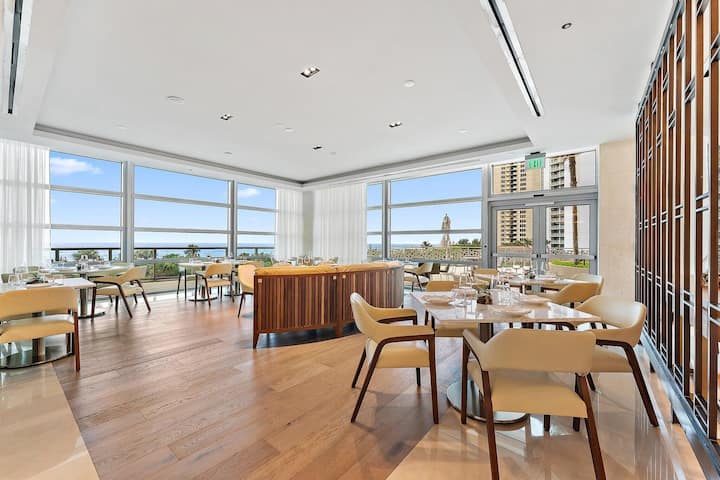
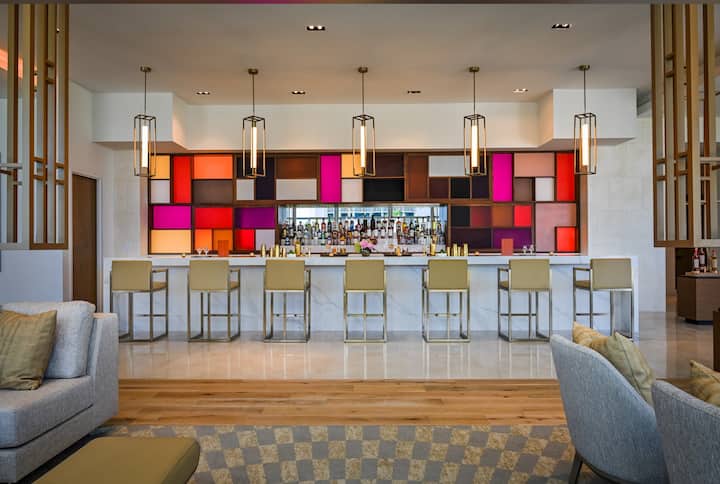
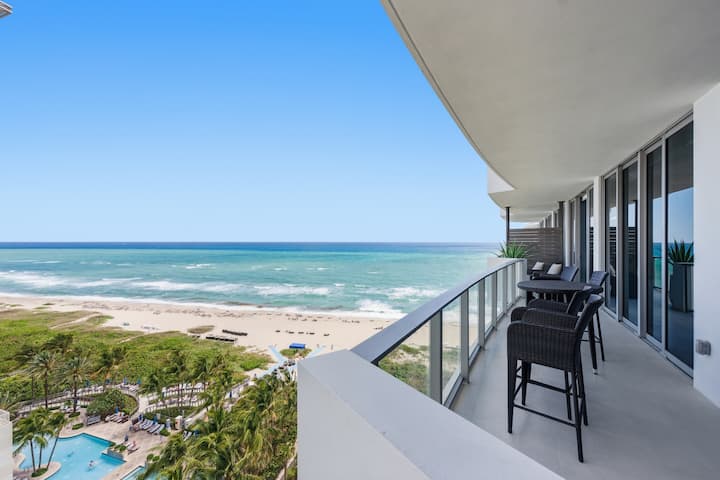
Your quiet address above the Atlantic
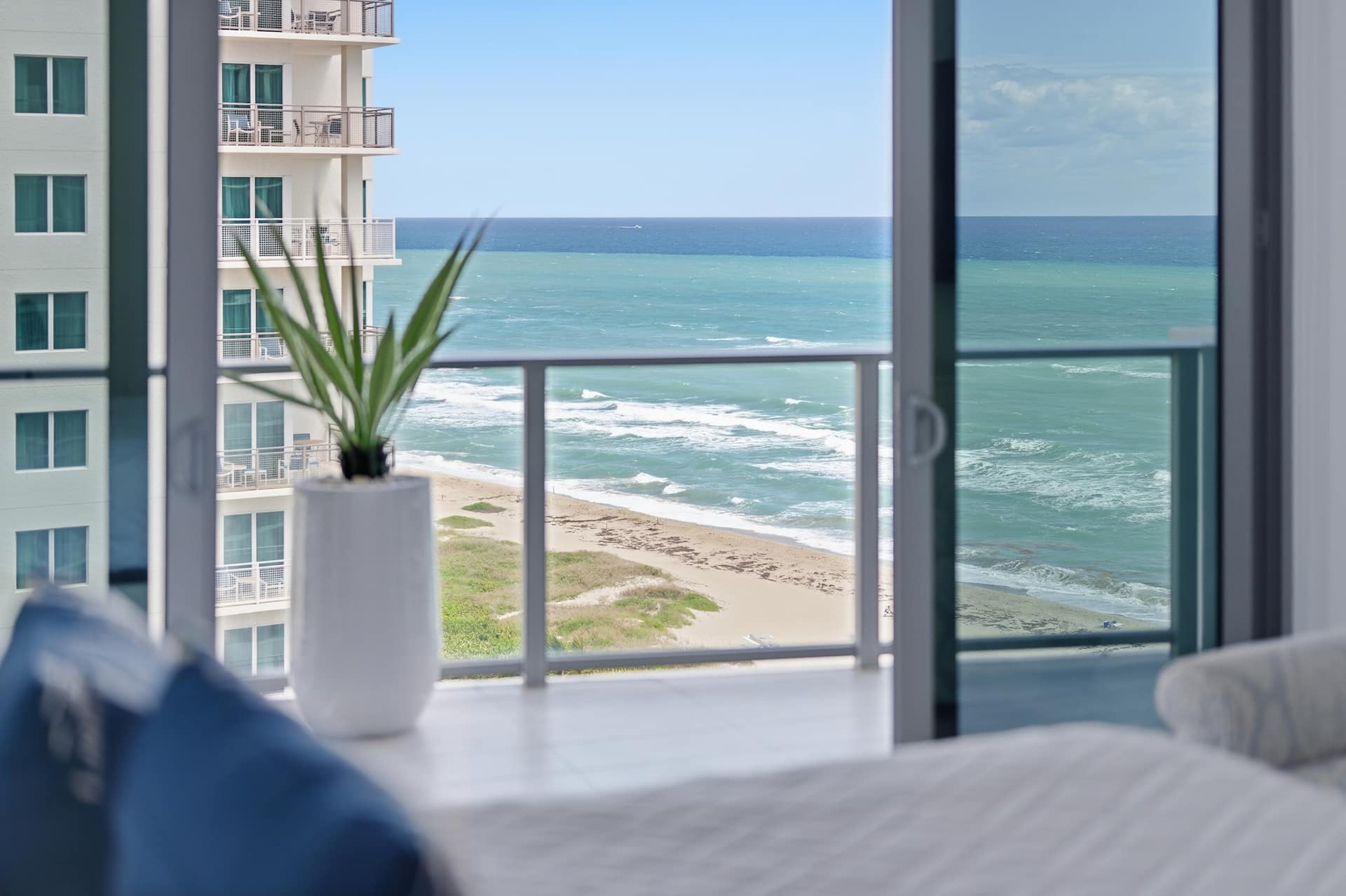
OASENA is a private two-bedroom home on the twelfth floor of the Happiness Tower — floor-to-ceiling ocean views, a sweeping balcony, and this entire wellness world an elevator ride below.
OASENA is a privately owned residence within Amrit Ocean Resort & Residences and is not operated by, affiliated with, or endorsed by the resort. See credits & notes.