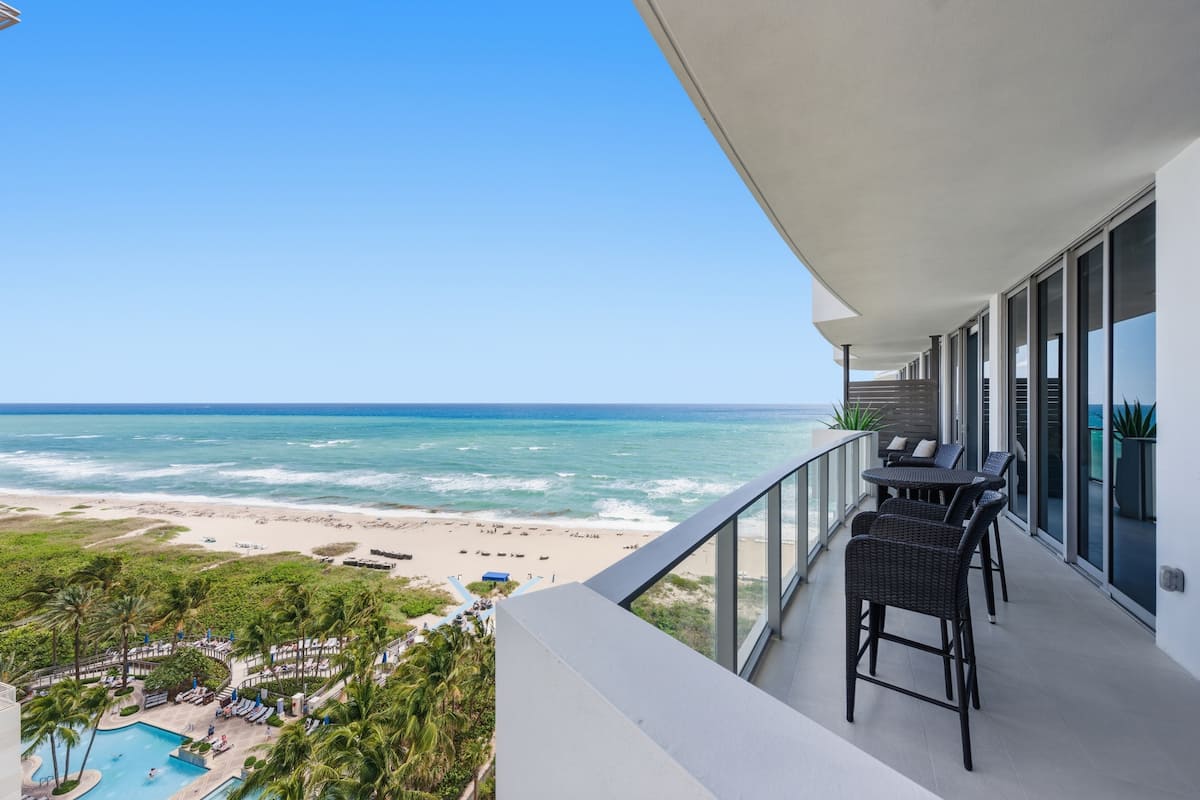
The Best Day Trips from Singer Island
Singer Island puts three very different days within easy reach: sea turtles and a lighthouse to the north, Delray, Boca and Miami to the south, and the Everglades an hour inland. Here is where to go, what to drive versus take the train for, and how to build a day that gets you home by dark.
01The lay of the land
Singer Island sits at a lucky point on the map. Drive north for half an hour and you reach Jupiter and Juno Beach, where the coast turns quiet and the towns grow smaller. Point the car south and you thread past Palm Beach, Delray and Boca before Miami opens up at the end of the line. Turn inland instead, west across flat farm country, and within an hour the pavement gives out at the edge of the Everglades. Three directions, three completely different days, and every one of them close enough that you can leave after a slow breakfast and still be back on the balcony before dark.
The thing to understand about this stretch of Florida is that the good stuff is strung along a thin ribbon of coast, and two roads carry almost all of it. Interstate 95 is the fast lane, running the length of the county a couple of minutes west of the residence. US-1, also called Federal Highway, is the slower parallel road that passes through the middle of every town. And hugging the water is A1A, the two-lane scenic route most people picture when they imagine a Florida beach drive. For a typical day out you take I-95 to cover ground and A1A to enjoy it.
The other way to travel is by train, and it quietly changes the math on the longer trips south. Brightline runs from a station in downtown West Palm Beach, about fifteen to twenty minutes over the bridge from Singer Island. From there you can reach Fort Lauderdale, Aventura, Boca Raton and Miami without touching a steering wheel. For Miami especially the train is the obvious choice: no traffic on the way down, no garage to hunt for, and no tired drive home in the dark after dinner.
How to think about the three directions
- North is the easy, wholesome, family day: sea turtles, a lighthouse, a laid-back beach town. It is a car trip, usually half a day, and it suits just about everyone.
- South is the widest menu. Delray and Boca are short, pleasant drives; Miami is a full day and best done by rail. This direction spans everything from a garden stroll to a big-city night out.
- West is the one that feels like another planet. Airboats, alligators and a slow river of grass, an hour inland by car. It is a half-day adventure that looks like nowhere else in the state.
A few honest ground rules before you set out. Winter is the high season here, so the roads and the popular stops are busier from Thanksgiving through Easter — leave a little earlier than you think you need to. Summer afternoons bring quick, heavy thunderstorms that usually blow through in an hour, which makes the morning the safer half of the day for anything outdoors. And distances that look tiny on a phone map can take longer than expected once you factor in bridges, the occasional drawbridge, and beach-town traffic. None of that is a reason to stay put. It is simply the difference between a smooth day and a stressful one, and the smooth version is always within reach from here.
02North: the sea-turtle hospital at Juno Beach
The single best half-day from the residence, if you ask most families, runs north to Juno Beach and the Loggerhead Marinelife Center. It is roughly a twenty-five to thirty-minute drive up the coast, and it is free to walk in, which still surprises people given how much is there.
The center is a working sea-turtle hospital, not a theme-park version of one. Out back, in a yard of open-air tanks, real patients recover in full view — turtles that arrived tangled in fishing line, struck by boats, or weakened by disease, each tank marked with the animal’s name and the story of how it got there. Inside there are exhibits on the local nesting beaches, a resident tank or two, and staff and volunteers who clearly love explaining the work. Juno Beach and its neighbors host one of the densest concentrations of sea-turtle nests anywhere in the world through the summer, and this place is a large part of why so many of those hatchlings ever reach the water.
Making the most of it
- Give the center an hour or two, then cross to the beach. The Juno Beach Pier sits right there — a long fishing pier you can walk out over the water for a small fee, watch the anglers work, and take in the wide view back down the coast.
- Line it up with turtle season if you can. Nesting runs roughly March through October. In early summer, the center and other local groups run guided evening walks that, with a little luck, let you watch a female loggerhead haul ashore to nest. It is an unforgettable thing to see, and the walks book up fast.
- It is good for children, and it tends to be the sort of place where the adults end up more absorbed than the kids. Bring water and a hat, since a lot of it is outdoors and only shaded in patches.
Because admission is free, leaving a donation at the gift shop is the decent thing to do, and that money goes straight back into rehabilitating the animals you have just been watching. If you are building a longer day, the hospital pairs neatly with the Jupiter Inlet Lighthouse a little farther north, or with a riverside lunch in Jupiter — both just ahead in this guide.
There is a nice connection to make closer to home, too. If the turtle hospital lights a spark, you do not have to drive north to see these animals in the wild. The nature center at MacArthur Beach nature park, minutes from the residence, keeps live loggerheads and sits on a beach that turtles nest on all summer long. The Loggerhead Center is the big, purpose-built telling of that story; MacArthur is the quiet, wild one you can reach before the coffee gets cold.
Who it suits: families with kids of any age, animal lovers, and anyone who would rather have a meaningful, unhurried morning than a manufactured attraction. It is car-only — no train runs up this way — but the drive is short and simple, straight up US-1 or I-95 and over to the coast. Go early, ahead of the heat and the afternoon storms, and the rest of the day stays open for the beach or the pool back home.
03North: Jupiter’s lighthouse and river town
A few minutes past Juno Beach, the coast bends around the Jupiter Inlet Lighthouse, a brick-red tower that has stood over the water since 1860. It is one of the oldest structures in the county and still an active aid to navigation. You can climb it — a little over a hundred steps up a spiral stair — and the reward at the top is a sweeping view over the inlet, the Loxahatchee River and the blue Atlantic beyond. At the base sits a small, well-kept museum on the pioneer and military history of the area, set on a low hill that is itself an ancient shell midden.
Around the lighthouse
- The climb has rules. There is usually a minimum height for children to go up, and the last climb of the day leaves well before closing, so check the day’s times and go earlier rather than later. The grounds and museum are worth the stop even if you skip the tower.
- The setting is the point. Jupiter wraps itself around the inlet and the river, and the lighthouse is the best spot to understand how the town fits together — water on every side, boats coming and going through the cut to the sea.
When it is time to eat, the local answer just up the road is Guanabana’s, an open-air restaurant built like a tiki village under a thick canopy of palm thatch and tropical plants, with a creek running through the middle of it. It is loud, green, unpretentious and deeply loved, the kind of place where you sit in the shade with a fish sandwich or a plate of tacos and feel your shoulders drop. It draws a crowd, especially at weekend lunch, so expect a wait in high season and take it as part of the experience.
Jupiter rewards a wander beyond those two stops. The Jupiter Riverwalk traces the water with a paved path, docks and a handful of waterfront restaurants; the beaches here are broad and, in a local quirk, dog-friendly along a long stretch, so you will see plenty of happy dogs in the surf. If you have anglers or boaters in the group, this is charter and marina country, and the whole town runs on a relaxed, boat-shoes rhythm that is a world away from Miami.
Who it suits: anyone who likes a view earned by a climb, history buffs, and travelers who prefer a small, salty river town to a city. A lighthouse-and-lunch outing folds together beautifully with the turtle hospital for a full northern day — turtles in the morning, the tower at midday, Guanabana’s for a late lunch, and home before the evening. Like the rest of the north, it is a car trip; there is no rail service up here, but the driving is easy and the distances short.
One seasonal note: this end of the coast can be breezy and bright, and the lighthouse grounds offer little shade at the top. A hat, water and sunscreen make the climb far more pleasant, and morning light is kinder for photographs from the tower than the flat glare of midday.
04South: Delray Beach and the Morikami gardens
Head south instead and the first town worth stopping for properly is Delray Beach, a little under an hour down I-95. Delray has done something a lot of Florida beach towns only talk about: it kept a real, walkable downtown. The spine of it is Atlantic Avenue, a long, tree-shaded street of independent restaurants, cafes, galleries and shops that runs from the railroad tracks straight down to the sand. You can park once, walk the whole thing, have lunch, browse, and end with your toes in the water at the public beach at the far end.
Two very different halves of a Delray day
- Atlantic Avenue is the social, strolling half — best in the late afternoon and evening, when the patios fill and the street has a genuine buzz. It is one of the better dinner-and-a-walk destinations in the county.
- The Morikami is the quiet, contemplative half — and it is the reason many people drive down in the first place.
The Morikami Museum and Japanese Gardens, a few minutes inland from downtown, is one of the most unexpected places in South Florida. It grew out of an early-twentieth-century colony of Japanese farmers who tried to build an agricultural settlement here, and today it is a genuine Japanese garden — raked gravel, koi ponds, bonsai, winding paths and still water — set around a museum of Japanese art and culture. You walk a loop through a series of garden styles drawn from different eras of Japanese history, and it is calm in a way that feels almost impossible so close to the interstate. There is a cafe with Japanese-inspired dishes and a schedule of seasonal festivals worth checking before you go.
The two stops pair naturally. Do the Morikami in the cooler morning, when the gardens are quiet and the light is soft, then drive back toward the coast for a long lunch and an afternoon on Atlantic Avenue and the beach. It makes a full, satisfying day that swings from serene to lively without ever feeling rushed.
Getting there and parking is the one wrinkle. Atlantic Avenue fills up on weekend evenings, and the closest lots and garages can be full by dinner, so come earlier, use one of the public garages a block or two off the avenue, and walk in — the whole downtown is compact enough that it hardly matters where you leave the car. Weekday afternoons are far calmer if you would rather sidestep the crush.
Car or train: Delray does not have its own Brightline stop, so this one is easiest by car — the gardens in particular are inland and need wheels. That said, Delray sits between the Boca Raton and Fort Lauderdale stations, and determined car-free travelers do reach Atlantic Avenue by train plus a short rideshare. For the Morikami, though, plan on driving.
Who it suits: couples and friends who want a proper downtown to wander, garden and culture lovers, and anyone looking for a day with more texture than a beach alone. Families do well here too — kids tend to like the koi and the bridges at the Morikami, and the beach at the end of Atlantic Avenue is an easy reward. Give it a full day if you can; Delray is the kind of place people mean to visit for an afternoon and end up staying until the streetlights come on.
Leave after a slow breakfast and you can watch a rescued sea turtle in the morning, climb a lighthouse at noon, and still be back on the balcony for sunset.
On a day trip north from Singer Island
05South: Boca Raton
A little closer than Delray, and easily folded into the same direction, is Boca Raton — polished, green, and built around a very particular 1920s Mediterranean-revival look of arched loggias, red barrel-tile roofs and pink stucco. Boca is less about a single must-see attraction than about a pleasant, upscale day of gardens, shopping and a good beach, and it works well as a shorter trip or as the southern anchor of a longer one.
What to do in Boca
- Mizner Park is the heart of it — an open-air center of shops, restaurants and an amphitheater that hosts concerts and events. It is the natural place to park, eat and walk.
- The Boca Raton Museum of Art sits within Mizner Park and is a real, well-regarded museum, not a token gallery. Pair it with the shopping and you have an easy cultural afternoon.
- Gumbo Limbo Nature Center is the family pick — a coastal nature center with sea-turtle rehabilitation tanks, a boardwalk through the hammock, and aquariums of local marine life. If you have already fallen for the turtles up north, this is another window on the same work.
- The beaches and parks — Red Reef Park and South Beach Park among them — are clean, well-kept and good for a swim, with a shallow reef close to shore at Red Reef for easy snorkeling.
Boca is also where the county’s Mediterranean-revival story really lives, thanks to the architect Addison Mizner, whose 1920s vision shaped a good deal of both Boca and Palm Beach. You do not need to seek out a tour to feel it; it is simply in the water here, in the arches and courtyards and the way the landscaping is kept.
Boca also makes a good rainy-day plan. Between the museum, the shops and restaurants at Mizner Park, and the indoor tanks and exhibits at Gumbo Limbo, you can fill an afternoon without leaning on the weather — useful in a summer of sudden storms, when a beach day can turn on you in minutes.
Car or train: this is one of the more train-friendly southern trips, because Boca Raton has its own Brightline station. From West Palm Beach it is a short hop down the line, and a quick rideshare gets you from the station to Mizner Park or the beach. If you would rather not drive, Boca is a good, low-effort choice.
Timing here is gentle. Boca is only about forty minutes down I-95 in normal traffic, so it does not demand an early start, and much of what you would do — the museum, a shaded lunch at Mizner Park, an hour at the nature center — sits comfortably out of the midday sun. Save the beach for the tail end of the afternoon, when the light softens and the sand cools, and you have a relaxed day that never once felt like a slog.
Who it suits: travelers who like a manicured, easygoing day, families drawn to Gumbo Limbo, and anyone pairing a little art and shopping with beach time. Boca and Delray sit close enough together that energetic day-trippers combine them — the nature center and a Boca beach in the morning, Atlantic Avenue in Delray for the evening — though each can happily fill a day on its own.
06South: Miami, the easy way by train
Miami is the big one, and the single best piece of advice in this whole guide is to take the train. By car it is an hour and a half each way on a good day and a test of patience on a bad one, with expensive, confusing parking at the other end. On Brightline it is roughly seventy minutes of Wi-Fi, a power outlet and a snack, and you step off in the middle of downtown with the whole day ahead of you and no car to worry about.
You catch it at the West Palm Beach station, fifteen to twenty minutes over the bridge from the residence, and arrive at Brightline’s MiamiCentral in the heart of the city. From there, rideshare, the free downtown Metromover loop, and your own two feet reach most of what you came for.
Three Miamis to choose from
- Wynwood is the arts district — warehouse walls turned into a riot of murals, with the Wynwood Walls at the center, plus galleries, breweries, coffee roasters and some of the most creative food in the city. It is the most photogenic few blocks in South Florida and an easy, walkable afternoon.
- Brickell is the sleek, high-rise downtown — rooftop bars, a dense grid of restaurants, and the Brickell City Centre mall. It is where to go for a polished dinner or a night out without straying far from the station.
- South Beach is the classic — the pastel Art Deco district along Ocean Drive, the wide sand, Lincoln Road’s pedestrian mall, and the people-watching that made Miami famous. It is a rideshare from downtown but hard to skip on a first visit.
The trick with Miami on a day trip is to pick one neighborhood and go deep rather than trying to sweep the whole city. Any one of those three fills a day happily on its own. A common, easy plan is Wynwood in the afternoon for the art and a late lunch, then Brickell for dinner before an evening train home — all of it car-free.
If you would rather trade neighborhoods, Little Havana along Calle Ocho is the cultural heart of Cuban Miami — cafecito windows, cigar rollers, domino players and live music — and the Design District is the polished counterpart to Wynwood, all flagship boutiques and public art. Both are a short rideshare from the station and easy to bolt onto a day built around one of the big three.
A word on timing. Trains run through the evening, roughly hourly, so you can stay for dinner and still ride home; just check the last departure before you settle in for a second round, and book your seats ahead, since the popular evening trains fill. Weekends and the winter high season are the busiest in both directions.
Who it suits: almost everyone, at least once — first-time visitors who want to see what the fuss is about, food-and-art travelers who will love Wynwood, and anyone who wants a proper city day without the stress of driving into it. It is less ideal for very young children given the distance and the pace, though the train ride itself is a hit with kids and can be the highlight of their day. If Miami feels like a lot, remember the same train reaches Fort Lauderdale, Aventura and Boca in far less time, each an easier bite of the same coast.
07West: airboats and the edge of the Everglades
Turn away from the ocean and drive west, and within an hour the strip malls thin out, the land flattens, and you arrive at the great wet wilderness that covers the interior of South Florida. This is the day that surprises people most, because nothing on the coast prepares you for the scale and stillness of the Everglades — a slow, shallow river of sawgrass stretching to the horizon, alive with wading birds, alligators and a silence you can feel.
There are two quite different ways to meet it from here.
The airboat version
Out along the county’s western edge, past the town of Loxahatchee and the farm country around it, sit several airboat operators who run tours into the marsh. An airboat is a flat-bottomed boat pushed by a big caged fan, able to skim over water only inches deep, and the ride is a loud, breezy, exhilarating rush out into the grass, usually with stops to cut the engine and drift while the guide points out alligators, herons, turtles and the odd osprey overhead. Trips generally run from a short half-hour blast to longer, more naturalist-minded outings; bring ear protection for small children, since the fan is loud, and know that the animals are wild, so sightings vary with the season and the weather.
The quiet version
If a roaring fan is not your idea of nature, the Arthur R. Marshall Loxahatchee National Wildlife Refuge is the gentle counterpoint. It protects the northernmost remnant of the Everglades, and you experience it on foot and by paddle rather than by engine. There is a visitor center, a couple of easy boardwalk trails — a cypress swamp walk and a marsh trail — and a canoe trail for those who bring or rent a boat. Early morning is the golden hour here: the birding is superb, the light is soft, and the alligators are out sunning on the banks. It is one of the best places in the region for a slow, self-guided morning with a pair of binoculars.
How to choose: take the airboat if you want adventure, speed and a near-reliable thrill, and it is the better pick for teenagers and anyone who wants the classic Florida experience. Choose the refuge if you want calm, birds and a walk, and if loud engines and crowds are not your thing. Some people do both — a boardwalk at dawn, an airboat later in the morning — before the afternoon heat and storms roll in.
Whichever you pick, keep your expectations honest and your camera ready. Alligators are common and easy to spot in the cooler months, when they haul out to bask; wading birds — herons, egrets, ibis, and the occasional roseate spoonbill — are the other reliable stars. This is not a zoo, so no single day promises a particular animal, but a patient hour in the right light almost always turns up something worth the drive.
Who it suits and how to do it: this is a car-only trip, with no train anywhere near, and it is firmly a morning outing — the wildlife is most active early, and summer afternoons out here bring the day’s heaviest storms. Bring water, sun protection and bug spray, especially in the warm months, and go with the understanding that you are visiting a wild place on its own terms. It rewards patience more than any beach does.
08Car or train: choosing how to go
Half the art of a good day trip here is matching the destination to the way you travel. The rule of thumb is simple: north and west are car country; the deep south is train country. Everything in between can go either way, and knowing which is which saves you the two things that spoil a day out — traffic and parking.
When the car wins
- Anything north — Juno Beach, the turtle hospital, the Jupiter lighthouse, Guanabana’s. There is no passenger rail up this way, and the drives are short and easy.
- Anything west — the airboats and the Loxahatchee refuge are inland, off any transit line, and simply require a car.
- The Morikami and other inland stops, which sit away from the coast and the stations.
- Loose, meandering days where you want to chase a beach, a lunch and a shop on your own clock without watching a timetable.
- Big grocery or gear runs tied to a trip — a stock-up at Publix or Whole Foods, or picking up snorkel gear on the way — which are far simpler with a trunk than a train seat.
When the train wins
- Miami, without hesitation — the drive is long and the parking is a headache, while Brightline drops you downtown in about seventy minutes.
- Fort Lauderdale and Aventura, both quick, easy hops down the line with no highway stress.
- Boca Raton, which has its own station a short rideshare from Mizner Park and the beach.
- Any evening out where someone would rather not drive home tired in the dark.
For the train, remember the small chain of steps: a fifteen-to-twenty-minute ride or drive from the residence to the West Palm Beach station, then the train itself. Book seats ahead for the best fares and to promise a spot on busy evening departures, and always note the last train home before you commit to a long dinner. Rideshare is plentiful at the Miami end, so you are never stranded on arrival.
The middle ground is worth naming, because a lot of days fall into it. Fort Lauderdale is the clearest example: you could drive it in well under an hour, but the train spares you the parking and lets you spend the evening on Las Olas Boulevard without a designated driver. When a destination has both a station and a walkable core, the train usually wins on comfort even when the car would be a shade faster door to door.
For the car, the residence has valet parking, so coming and going is painless at the home end. Florida’s toll roads use the SunPass system, and rental agencies offer a toll package that saves you fumbling for change — worth adding if your trips will use the expressways. Fill the tank before the busy stretches, keep an eye on the afternoon forecast in summer, and give yourself a cushion during the winter high season, when the popular roads and beach towns are at their fullest.
One last practical point: rideshare works well for shorter local hops and for the airport run, but it gets expensive fast over the long distances to Miami or the Everglades, and it cannot reach the western wilderness at all. For those trips it is train or car, and the choice comes down to whether your day ends in a city or out in the sawgrass.
09Sample days, start to finish
Sometimes the easiest way to plan is to borrow a day whole. Here are three that regulars come back to, each built to leave after a relaxed breakfast and land you home in the evening.
A northern turtle-and-lighthouse day
- Morning: drive up to Juno Beach and spend an hour or two at the Loggerhead Marinelife Center, then walk out on the Juno Beach Pier for the view back down the coast.
- Midday: continue north to the Jupiter Inlet Lighthouse and climb the tower before the last ascent of the day.
- Afternoon: a late lunch under the palm thatch at Guanabana’s, then a slow wander along the Jupiter Riverwalk.
- Evening: home in well under an hour, in time for a swim or the sunset from the balcony.
A Miami-by-train day
- Late morning: ride over to the West Palm Beach station and catch a Brightline south; relax for seventy minutes with the coast sliding past the window.
- Afternoon: Wynwood for the murals, a gallery or two, coffee and a long, creative lunch among the warehouse walls.
- Early evening: a short rideshare to Brickell for a rooftop drink and dinner downtown.
- Night: an evening train back — booked in advance — and a quiet car ride home from the station.
An Everglades morning
- Dawn: drive west and walk the boardwalks at the Arthur R. Marshall Loxahatchee refuge with the birds and the early light.
- Mid-morning: an airboat tour out into the sawgrass before the heat builds.
- Midday: back toward the coast ahead of the afternoon storms, with the rest of the day left for the beach.
A slow southern day
- Morning: the Morikami gardens near Delray while they are cool and quiet, koi ponds and raked gravel before the day warms.
- Afternoon: back to the coast for lunch and a stroll along Atlantic Avenue, then an hour on the beach at its eastern end.
- Evening: stay for dinner on the avenue as the patios fill, then an easy drive home up I-95.
None of these is a fixed itinerary so much as a shape. Swap the Morikami into a southern version, trade Wynwood for South Beach, or stretch the Everglades morning into a full day with lunch in the farm country on the way back. The point is the rhythm: something worth doing in the cool of the morning, a proper meal in the middle, and an easy path home before the day runs out.
If you have several days, a nice way to space them is to alternate: an active trip, then a slow day at the residence, then another trip. Back-to-back full days on the road wear thin faster than people expect in the Florida heat, and the whole appeal of a base like this is that you never have to keep moving. Pick two or three of these directions across a week, keep a couple of days entirely for the beach and the wellness circuit downstairs, and the trip finds its own comfortable balance.
Two habits make any of them better. First, front-load the outdoors — turtles, lighthouses, airboats, gardens — into the morning, when it is cooler, quieter and, in summer, drier. Second, leave the evening loose. The residence and its beach are a good place to come back to, and there is no shame in cutting a day trip a little short to be on the balcony when the light goes gold over the water.
10Timing, seasons and tips
A day trip lives or dies on small practical choices — when you leave, what you pack, which season you are in. None of it is complicated here, but a little forethought turns a good day into an effortless one.
Season by season
- Winter (November to April) is the prime window: mild, dry and comfortable for anything outdoors, but also the high season, so roads, restaurants and the popular stops are at their busiest. Book train seats and weekend tables ahead, and start earlier than you think you need to.
- Summer (June to August) is hot and humid, with reliable afternoon thunderstorms that usually pass within an hour. It is the best argument for doing your outdoor trips in the morning and keeping the afternoon flexible.
- Shoulder months (April to May, September to October) are the quiet sweet spot — thinner crowds and easier everything, with September the calmest of all.
- Sea-turtle nesting runs March through October, which shapes the northern trips: it is when the guided nesting walks happen and when the beaches are kept dark and protected at night.
What to bring barely changes from trip to trip: water, sun protection, a hat and sunglasses are the constant four. Add bug spray for the Everglades, a light layer for over-air-conditioned trains and museums, and closed shoes for the lighthouse climb. Keep a swimsuit and a towel in the car on any coastal day, because the chance to end at a beach comes up more often than you plan for.
A couple of small logistics smooth the edges. Set up the rental car’s toll package or a SunPass so the expressways stay painless, download the Brightline app to hold your tickets, and keep the residence’s valet in mind for a friction-free return at the end of a long day. Cell coverage is good along every one of these routes except deep in the Everglades, so pull up your directions before you head west.
A note on pace. The most common mistake visitors make is trying to stack two big trips into one day — Miami and the Everglades, or Delray and Jupiter at opposite ends of the county. The distances are deceptive and the heat is real. One direction a day, done well, beats two done in a hurry every time. If you crave more, the closer stops — Boca, Juno Beach, the refuge — are the ones that combine most comfortably.
Finally, let the day trips be the seasoning rather than the meal. The reason to have a base like this is that the ocean, the pool and the wellness circuit are all right here, and the best weeks tend to mix a couple of real adventures with long, unhurried days that never leave Singer Island. For rainier or cooler afternoons, the county’s museums and theaters make a fine fallback — the local arts & culture scene punches well above its weight, and it keeps a gray day from being a wasted one.
Go north for turtles and a lighthouse, south for gardens, art and the pull of Miami, west for the wild grass and the alligators. Then come home to the balcony, put your feet up, and watch the same Atlantic you drove along all day turn silver under the moon. That, in the end, is the luxury of the location: everything worth seeing is close, and none of it keeps you from the thing you came for.
Common questions
What is the single best day trip from Singer Island?
For most first-timers, north to the Loggerhead Marinelife Center and the Jupiter Inlet Lighthouse is the easy winner — short drives, free to visit, and good for every age. If you want a city day instead, take <a href="/guides/brightline-train-guide/">Brightline</a> to Miami; the train removes all the pain of driving there.
Do I need a car for day trips, or can I do them by train?
It depends on direction. North (Jupiter, Juno Beach) and west (the Everglades) are car-only. South is where the train shines: Boca Raton, Fort Lauderdale, Aventura and Miami all sit near Brightline stations. Delray and the Morikami gardens are easiest by car.
How long does it take to get to Miami?
About an hour and a half each way by car in good traffic, or roughly seventy minutes on Brightline from West Palm Beach — plus the fifteen-to-twenty-minute trip to the station. The train is almost always the better call: no parking, no traffic, and you can relax on the way home.
When is the best time of year for day trips?
November through April brings the most comfortable weather but the biggest crowds. Summer is hot with afternoon storms, so do outdoor trips in the morning. The shoulder months, especially September, are the quietest. To see nesting sea turtles up north, aim for the March-to-October season.
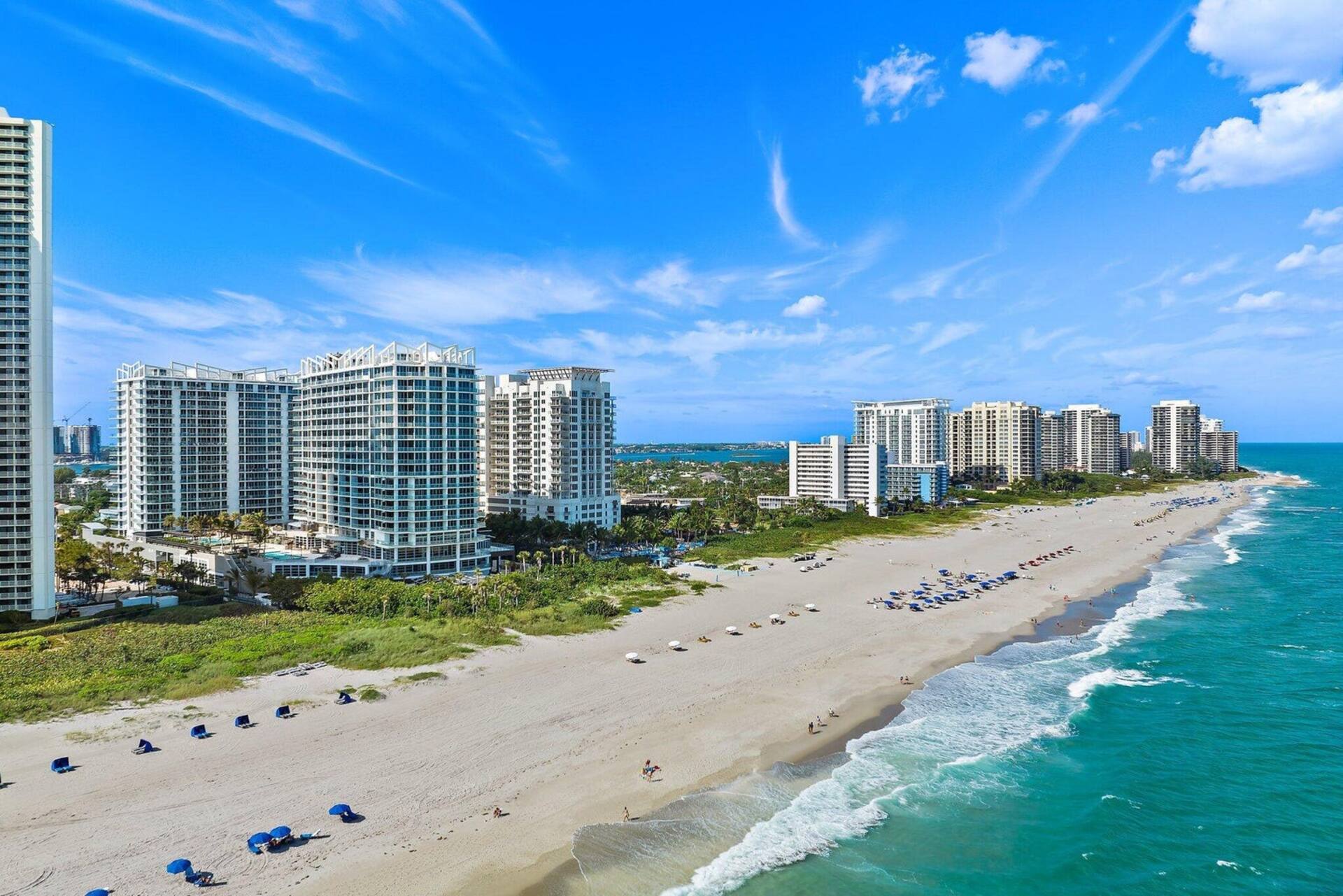
Your quiet address above the Atlantic
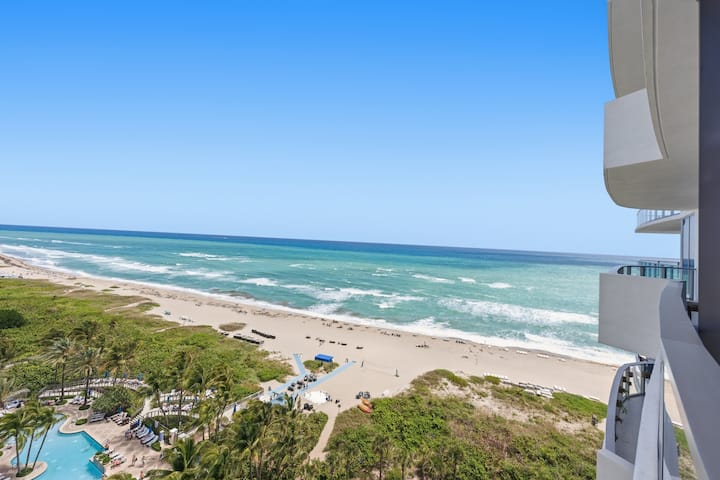
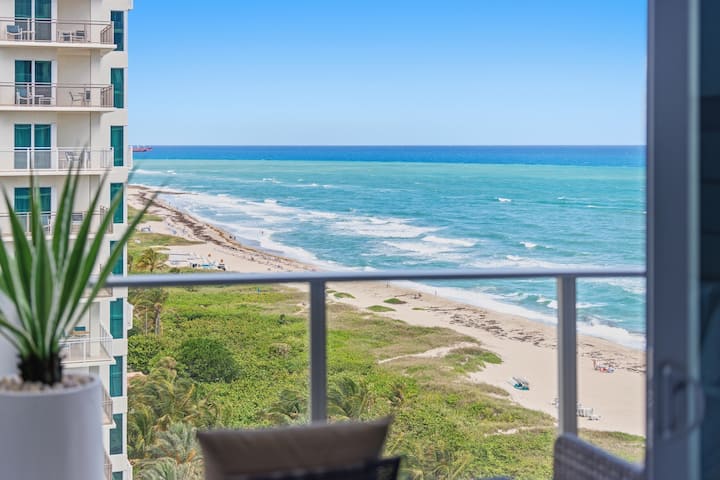
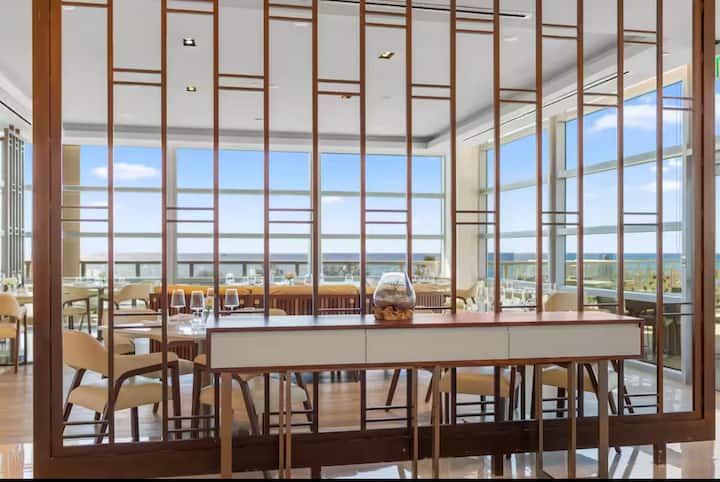
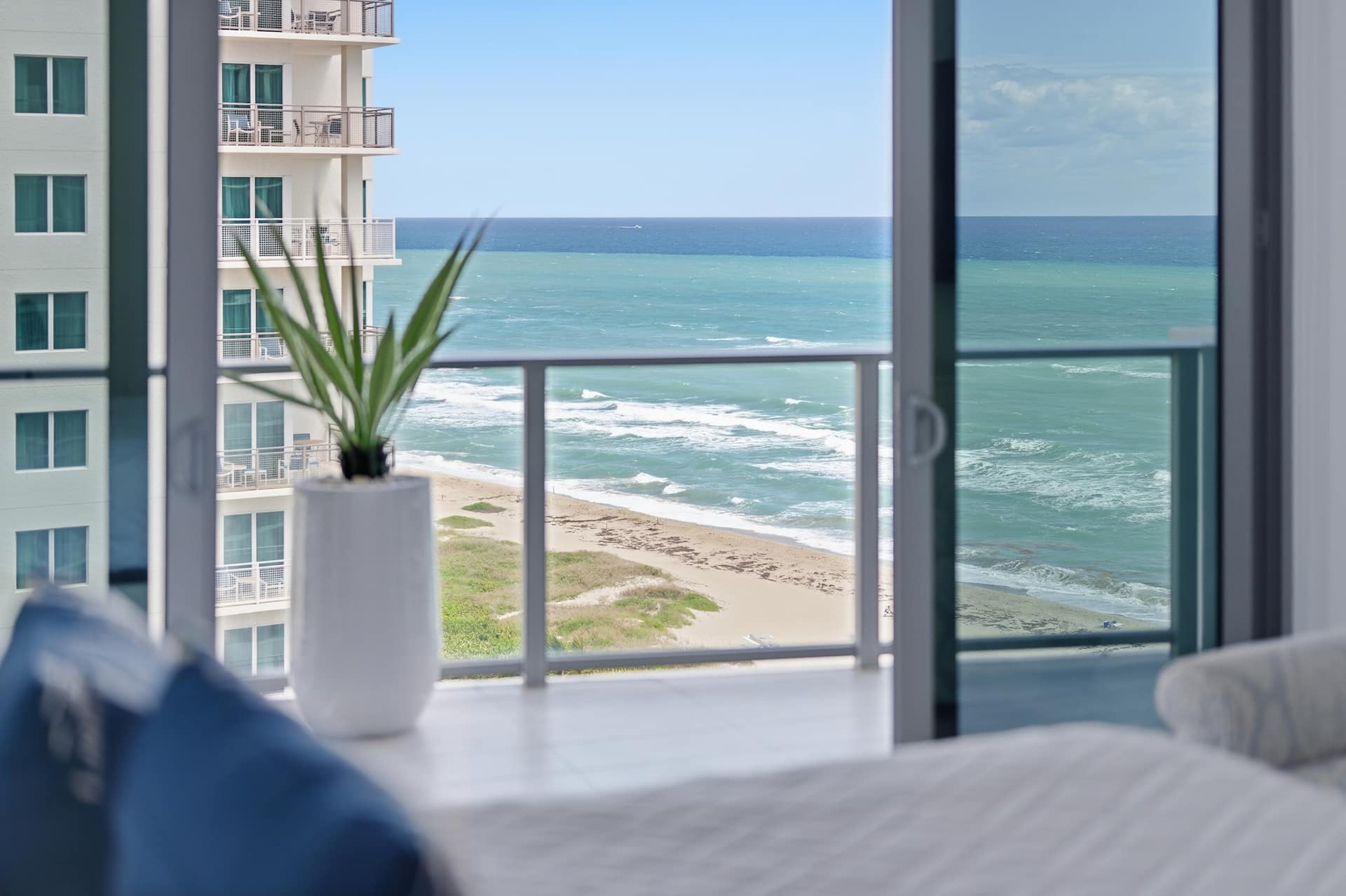
OASENA is a private two-bedroom home on the twelfth floor of the Happiness Tower — floor-to-ceiling ocean views, a sweeping balcony, and this entire wellness world an elevator ride below.
OASENA is a privately owned residence within Amrit Ocean Resort & Residences and is not operated by, affiliated with, or endorsed by the resort. See credits & notes.