Renting a Car in Palm Beach County: A Practical Guide
The short answer is: probably, but not certainly. Here is a plain look at whether to rent a car for a Singer Island stay, where to pick one up at Palm Beach International, and how to drive, park, toll and charge once you have it.
01Do you need a car?
The most useful thing a host can say about renting a car on Singer Island is that it is optional. Plenty of guests come for a week, never sit behind a wheel, and leave rested and happy. Plenty of others pick up a car at the airport and are glad of it every single day. The right choice here is not about what is objectively best — it is about the shape of the trip you want, and it is worth deciding on purpose rather than by default.
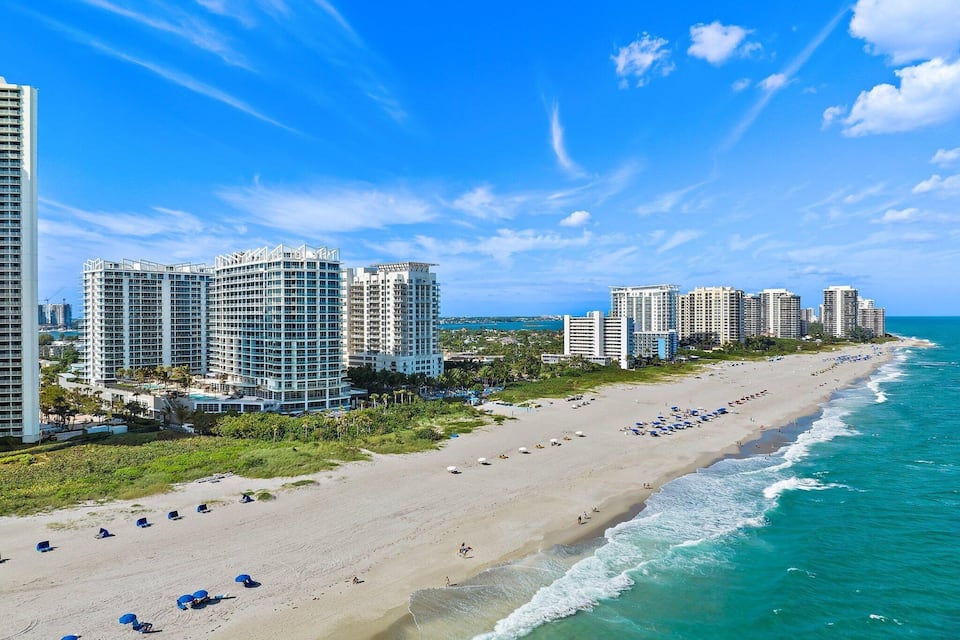
Start with two honest facts. The residence sits on a barrier island, on roughly seven beachfront acres between the Atlantic and the Intracoastal, with the beach, the marina and a handful of restaurants close enough to reach on foot or by bike. And Palm Beach International, the nearest airport, is only about fifteen minutes away, which keeps both the drive from the airport and any rideshare fare short. Those two facts are the reason a car here is a convenience rather than a necessity.
The alternative to renting is no hardship. Uber and Lyft run reliably across the county. The Brightline train, boarding in downtown West Palm Beach about fifteen to twenty minutes from the island, will carry you to Fort Lauderdale, Miami and even Orlando without a steering wheel in sight. A water taxi and a shuttle run from the Riviera Beach Marina, and the Peanut Island trip is one of the nicest half-days you can have without a car. For a stay built around the sand, the wellness centre an elevator ride below the residence, and a few good dinners, you may find you never miss the car at all.
When a car earns its keep
That said, a car changes what a week here can hold. It is the difference between the two or three places you can walk to and the several dozen within twenty minutes. It is what turns a morning at John D. MacArthur Beach State Park, a run up to Jupiter, or a spur-of-the-moment grocery stop into something effortless rather than a small project. Consider renting if any of the following describe your trip:
- You want to explore beyond the island — Jupiter and Juno Beach to the north, Delray and Boca to the south, the Everglades to the west. Our day trips guide lays these out.
- You are traveling with children, beach gear, golf clubs or a lot of luggage, and would rather not load and unload a stranger’s car twice a day.
- You like to eat, shop and wander on your own clock, changing plans on a whim.
- You are staying longer than a few days, where daily rideshare adds up and a car simply feels freer.
There is also the weather to weigh, quietly. In the mild winter months the walkable radius feels bigger, because a stroll across the bridge or down to the marina is a pleasure. In the deep summer heat and the afternoon storms, the same walk feels longer, and a cool car with the air conditioning running becomes its own small comfort. If, on the other hand, you are here to slow right down, the case for going without is strong enough that we gave it its own page: getting around car-free. Read both, then decide. The rest of this guide assumes you have leaned toward renting, and walks you through doing it well.
02How the island changes the math
Singer Island is small, and that is the whole point. It is a barrier island a few miles long, and OASENA sits on the ocean side of it. Understanding what falls inside an easy walk or bike ride, and what sits just far enough to want wheels, is the fastest way to judge whether a car of your own is worth it. Spend five minutes on this before you book, and the rest of the decision tends to make itself.
Within a short walk or an easy cruise on a bike, you have the beach itself, the resort’s own restaurant, the casual sand-and-surf spots near the public beach, and the Riviera Beach Marina, where the water taxi and the Peanut Island shuttle tie up. Many guests find that this radius covers the better part of a relaxed day: a swim, lunch with your feet near the sand, a nap, a drink by the water at sunset. None of it requires a key, and much of it is nicer on foot, when you are not thinking about where to leave a car.
What sits just beyond walking distance
The moment you want more variety, the distances stretch past comfortable walking, especially in summer heat:
- The bridge off the island and the mainland grocery stores and dining just across it — a few minutes by car, a long, warm walk on foot.
- Palm Beach and West Palm Beach, roughly twenty minutes south and west, home to Worth Avenue, Clematis Street and Rosemary Square.
- The county’s other beaches and parks — Ocean Reef Park, John D. MacArthur Beach State Park — which are close by car but awkward to reach by any other means.
- Blue Heron Bridge at Phil Foster Park, one of the finest shore dives anywhere, a five-minute drive but not a natural walk with a bag of dive gear.
This is the real math. On the island, a rented car mostly sits in valet. Off the island, it saves you a rideshare wait every single time you move. If your plans live mostly in that first list, you can skip the car with a clear conscience; if they keep wandering into the second, a car quietly pays for itself in freedom and time. It also helps to think about frequency, not just distance: a single day trip is an easy rideshare or train ride, but four or five outings across a week is where owning the car all along starts to feel simpler. Our day trips guide shows just how much sits within an easy drive.
A quick self-test
Before you book anything, sketch your week honestly. Are you a two-restaurants-and-the-beach traveler, or a see-everything one? Do you prefer set plans or open whims? Are you packing light or heavy, and how many of you are there? Will you be here on the quiet shoulder weeks or in the busy winter season, when parking off-island is tighter and the roads a little fuller? There is no wrong answer to any of that — only a car-shaped week and a car-free one, and it is worth knowing which you are choosing before a rental counter chooses for you.
03Renting a car at Palm Beach International
If you decide to rent, the good news is that Palm Beach International is one of the easier airports in the state to do it in. It is a mid-sized, calm airport — nothing like the sprawl of Miami or Fort Lauderdale — and it is served by American, Delta, United and other major carriers, so most travelers can fly in directly. The residence is only about fifteen miles up the road, so you are on the island within roughly fifteen minutes of pulling out of the lot. That short hop is a real advantage: you go from baggage claim to your own balcony faster than at almost any comparable beach destination.
All of the familiar national rental brands operate here. You will find the usual names among them:
- Alamo and Enterprise, which share a corporate parent and often a counter area.
- Hertz, along with its sister brands.
- Avis and Budget, likewise related.
- National, popular with frequent travelers for its skip-the-counter aisle.
- Other agencies such as Sixt, Dollar and Thrifty depending on the season.
Finding the cars from baggage claim
The rental agencies at PBI are gathered together in one place rather than scattered around town, which keeps the pickup simple. Follow the rental-car signage from baggage claim; the counters and the vehicle lot are clustered close to the terminal, a short, mostly covered walk away. Where an agency uses an off-site or overflow lot, a courtesy shuttle runs on a loop roughly every twenty to thirty minutes, so you are rarely waiting long. If you are unsure, the signs inside the terminal and the agency’s own confirmation email will tell you exactly where to go, and the information desk in the terminal can point you as well.
A word on timing: the walk to the cars is easy, but the counter line is where the minutes go. Early afternoons and the tail of the evening — when several flights land close together — tend to be the busiest. Members of an agency’s loyalty program can often bypass the counter entirely, which is worth the free sign-up if you rent even occasionally. If you land late at night, double-check your agency’s hours; a handful of counters keep shorter overnight staffing, and you want the car waiting rather than a locked booth. Several agencies now let you complete much of the check-in from a phone app before you land, choosing the exact car and skipping straight to the lot, which is the quickest path of all on a busy afternoon.
Should you rent somewhere other than the airport?
Airport counters are the most convenient option by a wide margin, since you land, walk to the car and drive straight to the island. Off-airport neighborhood branches sometimes advertise lower rates, but reaching them means a rideshare from the terminal first, which usually erases the saving and the convenience both. For a stay at the residence, picking up and dropping off at PBI is almost always the sensible choice. If you only need a car for a day or two mid-trip, though, an off-airport branch near the island can be a tidy way to rent just for the days you will drive. For getting from the airport to the residence itself, our getting here guide covers every option, car or no car.
04The pickup: booking, paperwork and small print
Renting a car is routine, but a few details trip people up every season. Getting them right before you travel turns the counter from a negotiation into a formality. Here is the order of operations that keeps it smooth, gathered from the questions guests ask most.
- Book ahead, especially in winter. Palm Beach County fills up from November through April, and rental fleets tighten with it. Reserving early gives you the widest choice of vehicles and the calmest pickup. Most reservations can be changed or cancelled without penalty, so there is little reason to wait, and it is fine to book a refundable rate now and refine it closer to the trip.
- Bring the right documents. You will need a valid driver’s license and, in nearly all cases, a credit card in the main driver’s name for the security hold. A debit card is sometimes accepted but often triggers extra checks; a credit card is far simpler. International visitors should carry their home license and, where their country requires it, an International Driving Permit.
- Mind the age rules. The standard minimum rental age is twenty-five. Drivers under that can usually still rent, but an added young-driver surcharge applies. If two of you will drive, ask whether a second driver can be added at no charge — some programs and memberships include it, and spouses are treated favorably by several agencies.
- Understand the fuel policy. The cleanest option is to return the car with a full tank yourself. Prepaid fuel and refill-on-return services exist for convenience, but you generally pay more for the privilege. There are gas stations on the mainland side of the bridge for a quick top-up before you head back to the airport.
The upgrade dance at the counter
Expect a friendly offer to upgrade your vehicle, add coverage, or prepay fuel. None of it is a trap, but none of it is required either. Decide what you want before you arrive — the class of car, whether you need extra insurance, whether you want a toll pass — and it becomes easy to say a polite yes or no. We cover insurance and tolls in their own sections below so you can walk up already knowing your answers. When an upgrade tempts you, ask for the daily difference clearly and weigh it against how many bags and people you are really carrying.
Returning the car
Give yourself a small buffer on the way out. From the island, the airport is about fifteen minutes in light traffic, but morning and late-afternoon rushes can add time, and returning the car, catching the shuttle if needed and clearing security all take longer than you expect on a travel day. A good rule of thumb is to leave the residence with a comfortable cushion, fuel up just before the bridge, and photograph the car and the fuel gauge at drop-off. It costs a minute and settles any question about the car’s condition later. If you are returning outside staffed hours, ask at pickup exactly where to leave the keys, so you are not hunting for a drop box in the dark.
A car buys you the whole coastline; going without buys you a slower, simpler week. Neither is wrong — the trick is knowing which trip you are taking.
On deciding whether to rent
05Driving to and around Singer Island, and where to park
The drive from the airport to the residence is short, flat and straightforward — a few main roads north and east, across a bridge, and onto the island. Most people navigate it with their phone and never think twice. A few local notes make the driving itself more pleasant, and none of them are complicated.
On the roads here
- The island is easy to drive. Singer Island has essentially one main road running its length, so you will not get lost. Speeds are low, pedestrians and cyclists are common, and the pace is relaxed. Watch for people crossing to and from the beach.
- Bridges and drawbridges. Getting on and off the island means crossing the Intracoastal. Occasionally a drawbridge opening for boat traffic adds a short pause. It is part of the rhythm of a barrier island; build in a couple of extra minutes and enjoy the water view.
- Summer rain. From June into the fall, afternoon storms roll through hard and fast, then clear. If the sky opens while you are driving, slow down, put your lights on, and wait it out — it rarely lasts long.
- Sun and salt. The low morning and evening sun off the water can be dazzling. Sunglasses live in the car here for a reason.
- Traffic has a rhythm. In the winter season the roads across the bridge and into West Palm Beach fill up around the lunch and dinner hours and on weekend mornings. Nothing here is a true jam, but leaving a little early for a reservation keeps the evening calm.
Parking once you arrive
At the residence, parking is the simplest part of the whole trip: there is valet, so you hand over the keys and forget about the car until you want it again. That is one of the quiet luxuries of the building — you get the freedom of a car without the daily hunt for a space or the worry of leaving it in the sun. When you plan to head out, a quick word to the valet a few minutes ahead has the car ready as you come down.
Off the property, parking varies by where you are headed:
- Public beaches and parks such as Ocean Reef Park and the Municipal Beach have their own lots. These fill early on weekends and holidays in high season, so arrive in the morning if you want a spot near the sand.
- John D. MacArthur Beach State Park charges a modest per-vehicle entry and has a dedicated lot; it can reach capacity on the busiest winter days.
- West Palm Beach and Palm Beach offer a mix of metered street parking, public garages and restaurant valet. Downtown WPB garages around the dining and shopping districts are the easy default, and most take payment by app.
- Phil Foster Park, home of the Blue Heron Bridge dive, has a lot that divers fill up fast on a good high tide — another reason to go early.
Everywhere you park in Florida, do the obvious sensible things: lock the car, keep beach bags and valuables out of sight in the trunk, and never leave anything on the seats at a beach lot. It is a safe area, but an empty, tidy interior is the best deterrent there is. A cheap sunshade for the windshield is worth packing too; a dark car parked in the midday sun turns into an oven quickly here.
06SunPass and Florida tolls, without the surprise fees
Florida runs a number of toll roads, and the state has moved almost entirely to electronic, cashless tolling. There are no coin baskets to fumble with; cameras and transponders read your car as you pass at speed. For a visitor, the only real question is how those tolls get paid, and how to avoid a nasty administrative fee showing up weeks after you fly home. It is not complicated once you know the shape of it.
How Florida tolling works
The statewide system is called SunPass. A small transponder in the windshield is read automatically at each tolling point, and the charge is deducted from a linked account. Where a car has no transponder, some gantries fall back to toll-by-plate, which photographs the license plate and mails a bill to the registered owner — in a rental’s case, that is the rental company, which then passes the toll on to you along with its own service charge. That service charge is the part that stings, because it can dwarf the toll itself.
The important thing to know for planning a Singer Island trip: the main route between the airport and the island generally does not require toll roads at all. You mostly meet tolls when you deliberately take a faster highway for a longer drive — heading well north or south, or crossing the state. Many guests never pay a single toll during a beach-focused stay, which makes an expensive toll package easy to decline.
Your options for handling tolls
- The rental company’s toll program. Every major agency offers an all-in-one toll package: the car comes with a transponder, and you pay a daily fee on the days you use it, plus the tolls. It is the most convenient choice and the priciest per day. Read the fine print — some programs charge for any day you drive at all, and some cap the total per rental.
- Toll-by-plate, and settle later. If you expect to hit only a toll or two, you can simply drive and let the rental company bill you afterward. Be aware this usually comes with an administrative fee on top of each toll, so it is only economical for very light toll use.
- Bring your own transponder. If you own a compatible pass from another state, some are accepted on Florida roads. This is niche, but it saves the rental’s daily fee for frequent visitors.
A simple rule of thumb
Match the plan to your itinerary. Staying on and near the island, with the odd trip into West Palm Beach? You can likely skip the toll package entirely and never notice. Planning long highway days — a run down to Miami by car, or up and across the state — and the daily toll package usually pays for itself in convenience and avoided per-toll fees. When in doubt, ask the agent to explain the exact daily charge and whether it applies only on days you use a toll road, then decide with that number in front of you. And if you would rather sidestep the whole question for a day in Miami or Fort Lauderdale, the Brightline train removes tolls, parking and highway driving in one stroke; our day trips guide pairs each outing with the easiest way to reach it.
07Renting an EV and finding a charge
Electric vehicles have become a normal part of rental fleets, and Palm Beach County is a comfortable place to drive one. Distances here are short, the terrain is flat, and charging is increasingly easy to find. If you are curious about renting electric, or you simply get offered one at the counter, here is what to weigh before you say yes.
The case for and against an EV here
- For a beach-focused trip, an EV suits the geography. Your daily driving is short — the island, the bridge, a run into West Palm Beach — so range anxiety barely enters into it. An overnight or every-other-day top-up covers most stays easily.
- For long day trips, plan the charge. If you intend to drive a good distance — south toward Miami, north past Jupiter, or west toward the Everglades — look at where you will charge along the way before you set off, just as you would map fuel stops. The public fast-charging network is good and growing, but a little planning keeps a long day relaxed.
- Know the connector. Charging speed and plug type vary by vehicle. When you collect the car, ask which networks and connectors it uses, and make sure you have the relevant app or card set up before you leave the lot.
Where to charge
Public charging in the Palm Beaches falls into two broad kinds. Level 2 chargers — the slower, top-up-over-a-few-hours sort — are common at shopping centers, parking garages, hotels and public lots, and are ideal to use while you are out to dinner or spending an afternoon somewhere. DC fast chargers — the quick, get-back-on-the-road sort — cluster along the major highways and at dedicated charging stations, and are what you want for a long drive. Mapping apps built for EV drivers will show you live locations and availability, which is more reliable than guessing, and it is worth checking that a station is working and free before you commit a detour to it.
As for charging at the residence itself, arrangements for guest vehicles can change over time, so the short answer is to ask when you book rather than assume. The valet team is the right point of contact for whether on-site charging is available and how it works. If it is not, the density of public charging nearby means an EV is still perfectly practical — you simply fold a charging stop into an outing rather than plugging in at the door. Think of it the way you would a coffee stop: a Level 2 charger while you eat lunch across the bridge often adds all the range a beach week needs.
If in doubt, a hybrid splits the difference
Not ready to commit to a full EV but want to sip fuel? A hybrid is the easy middle path: excellent mileage for all the short local hops, no charging to think about, and a normal gas fill-up before you return it. For many visitors it is the most stress-free choice of all, and rental fleets carry plenty of them. A plug-in hybrid goes a step further, running the short island hops on battery while keeping a gas tank in reserve for the day you decide to drive to Miami, so you never have to plan a charge you did not want to think about.
08Convertible or SUV: choosing the right car for the beach
Half the fun of renting on a coast like this is the small fantasy of the car itself. A convertible with the top down on a warm evening is a genuine pleasure here, and so, in a very different way, is a roomy SUV that swallows every beach bag and cooler you own. The best pick depends less on romance than on who is traveling and what you are carrying, so it helps to be honest with yourself before the counter tempts you.
When a convertible makes sense
- Two of you, traveling light. A convertible is a couples’ car. With a weekend’s luggage and nothing more, it is a joy on the coastal roads and along the drives to Palm Beach.
- You will drop the top. The magic is real at the golden hours — early morning and around sunset — when the light is soft and the air is warm. In the midday summer sun, or during an afternoon downpour, the top stays up and you are in a small, warm car. Sunscreen and a hat are not optional in an open car here.
- You want the trip to feel like a treat. Sometimes that is reason enough. Just be clear-eyed about the trade in trunk space and shade.
When an SUV is the smarter call
- Families and groups. Room for people and gear both, higher seating, and easy loading make an SUV the practical champion for anyone traveling with kids or friends.
- Beach and activity days. Coolers, umbrellas, boogie boards, snorkel gear, a stroller, golf clubs — it all disappears into the back with the seats up, and vanishes entirely with them down.
- Shade and air conditioning. On the hottest days, a well-cooled cabin with tinted glass is its own luxury, and getting in and out of a higher vehicle is easier on backs and knees.
Traveling with children
Two practical notes for families. First, plan car seats ahead. Rental agencies rent infant, toddler and booster seats, but supply is limited, so reserve one when you book rather than hoping at the counter; many parents prefer to bring their own familiar seat, which most airlines carry free of charge. Florida law requires young children to be properly secured, so this is worth sorting before you arrive rather than at the curb. Second, an SUV or minivan with easy-latching seats and doors that clear a car seat saves real frustration on a hot afternoon.
A sensible middle ground
If you cannot decide, a midsize sedan or a compact crossover is the quiet workhorse that handles almost everything: enough room for a small family and a beach day, easy to park across the bridge, and light on fuel. It lacks the drama of a convertible and the swagger of a big SUV, but it will never leave you wishing you had chosen differently on a rainy Tuesday. One universal tip whatever you choose: sand and salt are hard on a car’s interior. Shake out towels before you get in, keep a small trash bag going, and give wet swimsuits a spot on top of a towel rather than straight on the seat. Return the car reasonably tidy and you sidestep any cleaning-fee conversation at drop-off.
09Rental insurance basics, in plain language
Rental insurance is the part of the counter conversation that makes people freeze, partly because it is confusing and partly because it is where the upsell lives. What follows is a plain-language sketch of how the pieces fit together, so you can make a calm decision. Treat it as general orientation and not as legal, financial or insurance advice — your own policies and cards are the final word, and it is worth a five-minute phone call to confirm what you already have before you travel.
The main coverages you will be offered
- Collision damage waiver (sometimes called a loss damage waiver). Strictly speaking it is not insurance but a waiver: if you take it, the rental company agrees not to charge you for most damage to or theft of the car. It is the coverage most people weigh hardest, because repairs are where a rental can get expensive.
- Liability coverage. This is protection if you damage someone else’s property or injure someone. Rentals include a basic legal minimum, and agencies offer to sell more on top.
- Personal accident and personal effects coverage. These cover injury to you and your passengers, and theft of your belongings from the car, respectively.
What you may already have
Before you buy anything, check three places, because doubling up is simply paying twice:
- Your own auto insurance. Many personal car policies extend some coverage to a rental car in the United States. Call your insurer and ask exactly what carries over, and what your deductible would be.
- Your credit card. A number of cards include rental-car coverage as a benefit when you pay for the whole rental with that card and decline the agency’s collision waiver. The details matter enormously — whether it is primary or secondary, what it excludes, how to file — so read your card’s benefits guide or call the number on the back.
- A standalone travel policy. If you bought travel insurance for the trip, it may include rental coverage as well.
A note for international visitors
The picture is a little different if you are visiting from abroad. Your home auto policy and credit-card benefits may not extend to a rental in the United States, and liability limits here are worth taking seriously. Many overseas travelers find that a package which bundles collision and a higher liability limit — whether bought from the agency or as a separate rental-coverage policy before the trip — is the simplest way to be properly protected without guesswork.
How to decide without overthinking it
Here is a reasonable way through. If your own auto policy and credit card between them give you solid, primary coverage that you have confirmed, you may comfortably decline the extras. If you do not own a car, are visiting from abroad, or simply do not want to spend a vacation worrying about a scratch, buying the agency’s coverage for genuine peace of mind is a perfectly rational choice — there is no wrong answer, only an informed one. Whatever you decide, photograph the car all the way around at pickup and again at return, note any existing scratches with the agent, and keep your paperwork until the final charge settles.
10Car or no car: a simple decision framework
By now you have the pieces. Here is how to put them together into a clean decision, so you arrive knowing exactly what you are doing rather than sorting it out jet-lagged at a rental counter. The honest truth is that both choices work beautifully at the residence; it is only a question of matching the choice to your week and the people in it.
Lean toward renting a car if…
- You plan to leave the island often — day trips north to Jupiter, south to Delray or Boca, or west toward the Everglades. Our day trips guide shows how much this opens up.
- You are traveling with family, gear, or on a schedule of your own making, and value being able to move the moment you feel like it.
- You are staying a week or more, where the convenience compounds and daily rideshare loses its appeal.
- You simply enjoy driving a coast like this, and the freedom is part of the holiday for you.
Lean toward going car-free if…
- Your trip centers on the beach, the wellness centre below the residence, and a handful of nearby dinners — all within an easy walk, bike or short rideshare.
- You are here for two or three days, or purely to rest, and the idea of parking and driving anything sounds like work.
- You want to take the Brightline train to Miami or Fort Lauderdale for a day and skip the highway altogether.
- You would rather not think about tolls, valet, fuel or insurance at all. If this is you, our car-free guide maps out an entire week without a rental.
By traveler type
A few common shapes, since most guests recognize themselves in one of them:
- The couple on a slow escape. Usually car-free, with maybe a convertible rented for a single scenic day. The beach, the spa and a couple of sunset dinners rarely need wheels.
- The family with kids. Almost always better with a car — an SUV, a reserved car seat, and the freedom to leave a beach the moment a nap calls.
- The explorers. If your idea of a good trip is five different outings in seven days, rent from the start; the daily flexibility is worth far more than the cost of parking a car in valet.
- The wellness-and-rest traveler. Often happiest car-free, letting the elevator to the wellness centre and the short walk to the sand be the whole itinerary.
A middle path worth knowing
You do not have to choose once and for all. A popular pattern here is to skip the car for the arrival and the slow first days, lean on rideshare and the beach, and then rent a car for just the two or three days you want to roam — picking one up at the airport or a nearby branch, using it hard, and returning it before your last, unhurried days back at the residence. You pay for wheels only when they earn their keep, and you get the best of both weeks. However you come and go, the residence itself makes the logistics easy: valet takes the car off your hands, the airport is minutes away, and every option — rental, rideshare, train or water taxi — is on the table. For the full picture of reaching the island in the first place, start with our getting here guide, then pick the version of the trip that sounds most like you.
Common questions
Do I really need to rent a car to stay on Singer Island?
No. Many guests never rent one. The beach, the marina, the wellness centre below the residence and several restaurants are within an easy walk or bike ride, and <strong>Uber and Lyft, the Brightline train and a water taxi</strong> cover the rest. A car mainly earns its keep if you want to explore beyond the island, travel with a lot of gear, or set your own schedule for day trips. See our <a href="/guides/getting-around-without-a-car/">car-free guide</a> for the full alternative.
Where do I pick up a rental car, and how far is the residence?
The simplest option is <strong>Palm Beach International (PBI)</strong>, where all the major agencies — Alamo, Enterprise, Hertz, Avis and others — are gathered close to the terminal, a short walk from baggage claim, with a courtesy shuttle where an off-site lot is used. From the airport, the residence is only about fifteen minutes away.
Will I have to pay tolls, and how does that work?
Florida uses cashless electronic tolling under the <strong>SunPass</strong> system. The main route between the airport and the island generally has no tolls, so many beach-focused stays never pay one. If you plan long highway drives, you can add the rental company’s toll package, or drive and be billed by plate afterward with a service fee. Ask the agent for the exact daily charge before you decide.
Where do I park at the residence?
There is <strong>valet parking</strong>, so you simply hand over the keys and forget about the car until you want it again. Off the property, public beaches and parks have their own lots that fill early on high-season weekends, and West Palm Beach has garages, metered street parking and restaurant valet. Always lock the car and keep valuables out of sight at beach lots.

Your quiet address above the Atlantic
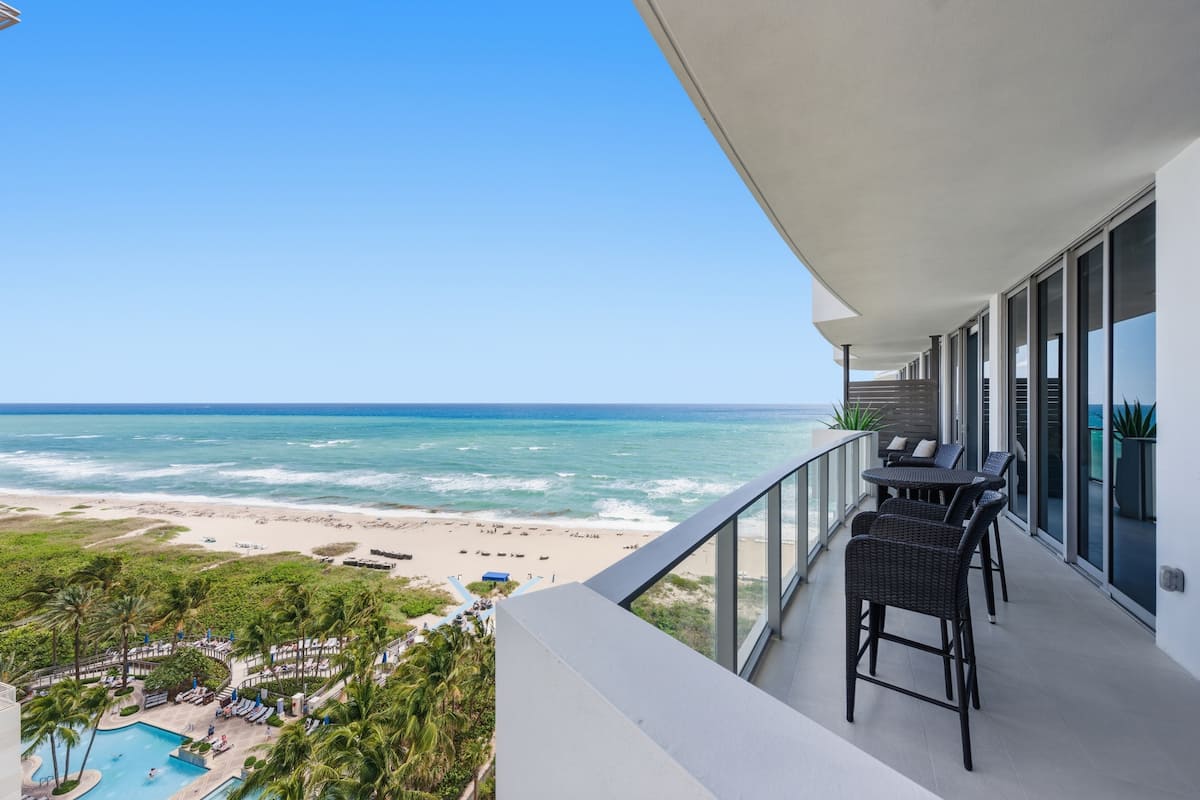
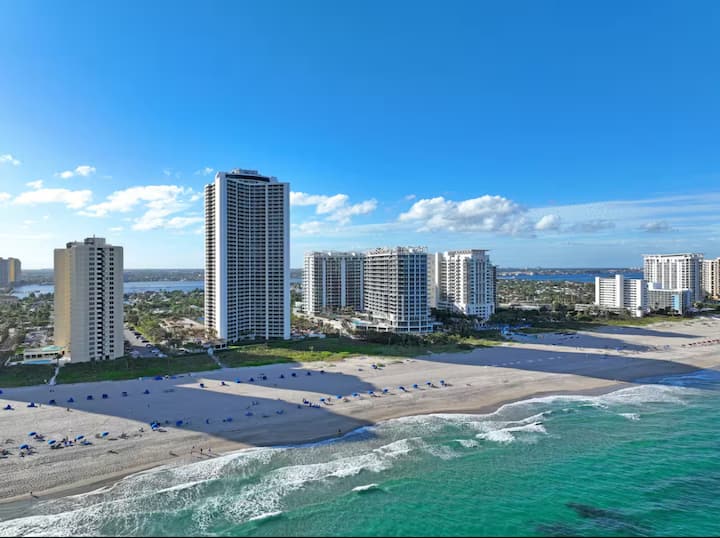
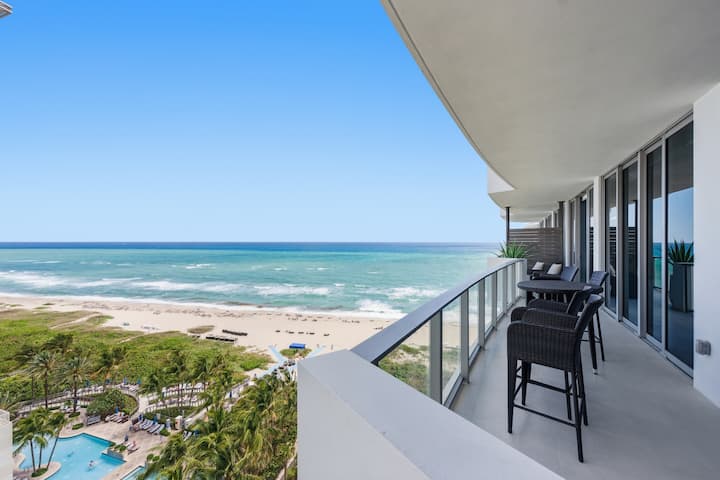
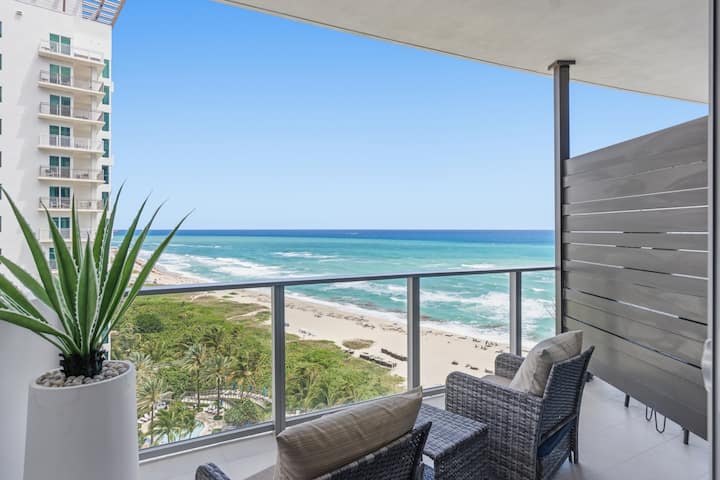
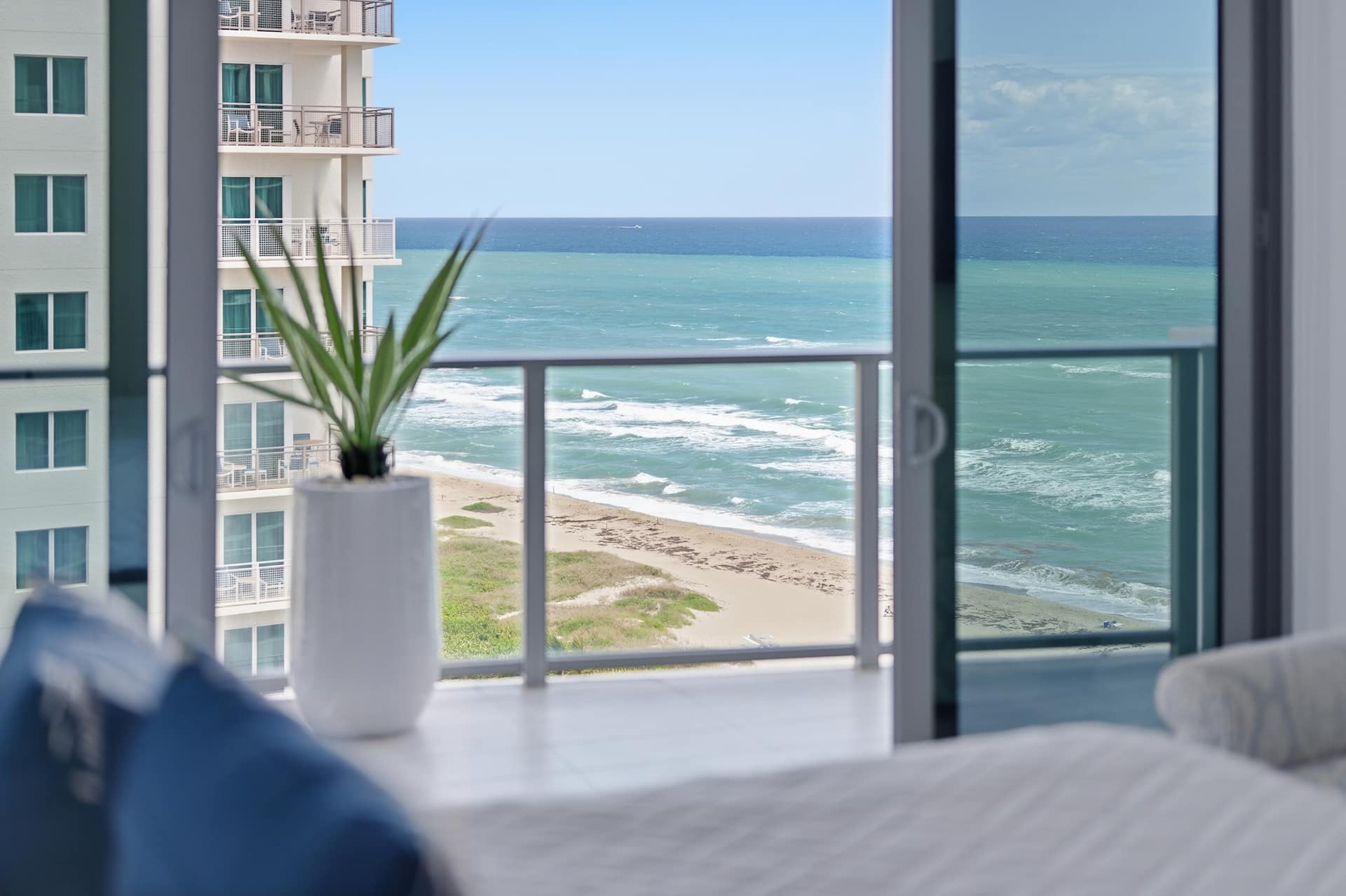
OASENA is a private two-bedroom home on the twelfth floor of the Happiness Tower — floor-to-ceiling ocean views, a sweeping balcony, and this entire wellness world an elevator ride below.
OASENA is a privately owned residence within Amrit Ocean Resort & Residences and is not operated by, affiliated with, or endorsed by the resort. See credits & notes.