
The turtle coast
From spring to fall, three species of sea turtle nest on these beaches, one of Florida's great free spectacles. Here is how to see it responsibly, from night walks to the rescue hospital up the coast.
Each summer, on the dark beaches of the Palm Beaches, one of the oldest rituals on earth plays out night after night: ancient sea turtles haul themselves out of the Atlantic to dig nests and lay their eggs in the sand, exactly as their ancestors have for a hundred million years. This coast is one of the most important sea-turtle nesting grounds in the world, and the beach outside your door is part of it. From guided night walks to a world-famous turtle hospital up the road, there are wonderful ways to witness it — and simple, vital ways to help. Here is everything you need to know.
IOne of the great turtle coasts
Most visitors have no idea they have arrived at one of the planet's great sea-turtle strongholds. The beaches of Palm Beach County host some of the densest sea-turtle nesting in the United States — and, for loggerheads in particular, some of the most significant nesting anywhere on earth. Thousands upon thousands of nests are laid along this coast every year.
That abundance is not an accident. The wide, sandy, relatively dark beaches here — especially the protected stretches like MacArthur Beach and the beaches around Juno — offer exactly the conditions turtles need. Decades of conservation work, nest monitoring, and lighting rules have helped keep this coast hospitable even as Florida has developed around it.
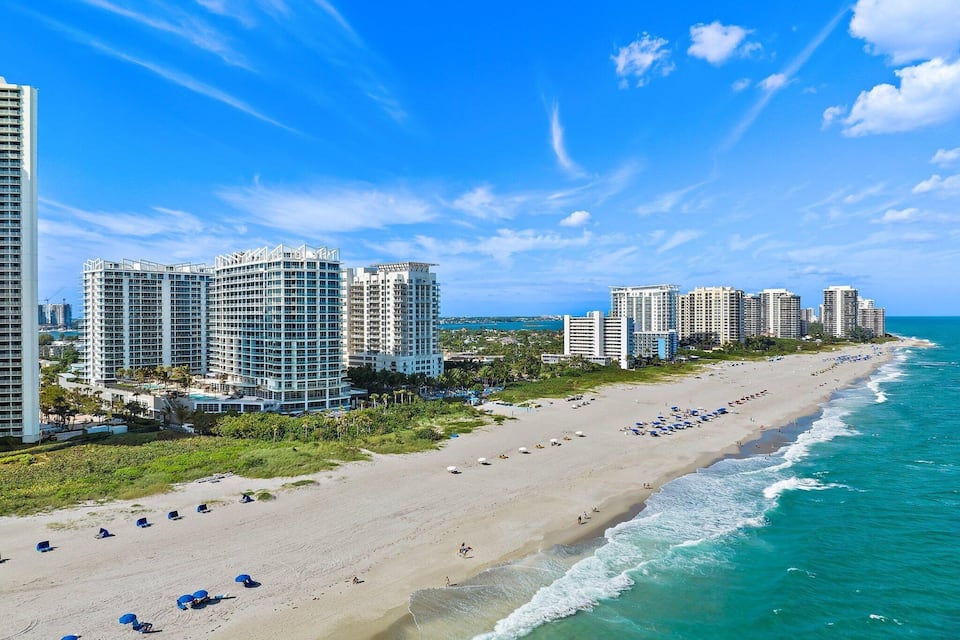
What it means for you is remarkable: from roughly spring through fall, you are staying on an active nesting beach, part of a global phenomenon most people only see on nature documentaries. With a little knowledge and care, you can witness it responsibly — and, just as importantly, avoid unknowingly harming it. Both are the purpose of this guide.
IIThe three species
Three species of sea turtle nest regularly on these beaches, each with its own character and timing.
The loggerhead is by far the most common, a sturdy, reddish-brown turtle with a large head and powerful jaws, and it is the backbone of the local nesting. The green turtle, named for the color of its fat rather than its shell, nests here in strong and growing numbers, generally later in the summer. And the leatherback — the giant of the group, a leathery-shelled behemoth that can exceed a thousand pounds and dive deeper than almost any reptile — nests earliest in the season, in smaller numbers, and seeing one is a rare privilege.
All three are threatened or endangered, protected by law, and part of the same fragile miracle. On a guided walk or at the turtle hospital you will learn to tell them apart and understand their very different lives at sea — from the leatherback's jellyfish-hunting ocean wanderings to the green turtle's seagrass grazing. Each nest on the beach represents one of these ancient travelers returning to where its own life began.
IIIThe nesting season
Sea-turtle activity here runs, broadly, from March through October, and it unfolds in two overlapping phases that are worth understanding.
First comes nesting: through the spring and summer, adult females come ashore at night, haul up the beach, dig a nest chamber, lay around a hundred leathery eggs, cover them, and return to the sea before dawn. Leatherbacks start earliest, loggerheads dominate the peak summer months, and greens carry strongly through late summer. Then comes hatching: about two months after each nest is laid, the hatchlings emerge — usually at night — boil up out of the sand, and scramble en masse to the water. Hatching peaks in the summer and continues into the fall.
So a summer visit puts you squarely in the season for both nesting and hatching, which is why the guided turtle walks run then and why the beach etiquette below matters most in those months. If you are here between roughly late spring and early fall, turtles are almost certainly nesting on the sand you are walking — even if you never see one.
IVFrom nest to sea
The full arc of a sea turtle's early life is astonishing, and knowing it deepens everything you see on the beach.
A female returns, often to the very region where she herself hatched, to lay her eggs above the tide line. She may nest several times in a season. The eggs incubate in the warm sand for about two months, and — remarkably — the temperature of the sand determines the hatchlings' sex, with warmer nests producing more females. When they hatch, the tiny turtles dig upward together and wait just below the surface for the cool of night before erupting out and racing for the sea.
That dash to the water is the most dangerous moment of their lives, and it depends on one thing: light. For a hundred million years, the brightest thing on a natural beach at night was the open horizon over the ocean, and hatchlings evolved to crawl toward it. Only a tiny fraction survive the gauntlet of predators and the ocean to reach adulthood — which is why every single hatchling that makes it matters, and why the artificial lights of the modern beach are so deadly. More on that below.
How you can help — starting tonight
The single most important thing a beachfront visitor can do is manage light during nesting season (March–October): turn off or shield lights visible from the beach, close curtains at night, and never use flashlights, phone lights, or flash photography on the beach after dark — they disorient nesting mothers and send hatchlings crawling the wrong way, toward roads instead of the sea. Also: fill in any holes you dig and knock down sandcastles before you leave (they trap hatchlings and mothers), take beach furniture off the sand at night, keep dogs away from marked nests, and carry out all trash and fishing line. Small acts, real lives saved.
VThe Loggerhead Marinelife Center
If you do one turtle-related thing on this coast, make it the Loggerhead Marinelife Center in nearby Juno Beach — a free sea-turtle hospital and education center that is one of the most beloved attractions in the region, and a short drive up the coast from the island.
The center rescues, rehabilitates, and releases injured sea turtles, and you can walk among the outdoor recovery tanks and meet the current patients — turtles recovering from boat strikes, entanglements, and illness — each with its own name and story. Indoor exhibits explain their biology and the threats they face, and the staff and volunteers are passionate and generous with their knowledge. And it all sits right on Juno Beach, one of the densest loggerhead nesting beaches on the planet.
It is free, deeply moving, and superb for all ages — equal parts aquarium, hospital, and conservation classroom. It is popular, so it can be busy, but it is well worth it. A visit here transforms the abstract idea of "sea turtles nest nearby" into a personal connection with individual animals, and it tends to turn casual visitors into lifelong turtle advocates. See the day trips guide for pairing it with the rest of Juno and Jupiter.
VIGuided turtle walks
The most unforgettable way to experience nesting season is a guided turtle walk — a permitted, after-dark program that, on a lucky night, leads you to witness a nesting loggerhead laying her eggs on the beach.
These walks run in June and July, the peak of loggerhead nesting, and are offered by organizations including the Loggerhead Marinelife Center and state parks such as MacArthur Beach. A typical walk begins with an educational talk while trained spotters scout the beach; when a nesting turtle is found in the right stage, the group is quietly led out to watch from a respectful distance as she lays and covers her nest, illuminated only by carefully managed light.
They are strictly regulated to protect the turtles, spaces are limited, and they fill up fast — book well in advance the moment reservations open. Sightings are never reliable (these are wild animals), but even the wait on a warm, dark beach, full of anticipation, is memorable, and an actual sighting is the kind of experience people remember for the rest of their lives. It is, quite simply, one of the great wildlife encounters in Florida.
VIISeeing nests on the beach
Even without a guided walk, evidence of the turtles is all around you in season, if you know how to look — and how to look without harming anything.
Walk the beach by day in summer and you will spot marked nests: areas staked and taped off, sometimes with a small sign, by the permitted surveyors who patrol these beaches every morning to record and protect each new nest. You may also see the tracks of a nesting turtle — wide, tractor-like trails in the sand leading up from the water and back — a thrilling sign that a giant came ashore in the night right where you are standing.
Admire all of this from a distance and never disturb it: do not enter, dig near, or touch a marked nest, and do not follow or crowd fresh tracks. These markers represent the next generation of turtles incubating beneath the sand. Respecting them is easy — just give them room — and knowing what they are turns an ordinary beach walk into a quiet thrill.
VIIILights out: the biggest way to help
Of everything in this guide, this is the point that matters most, so it gets its own section: artificial light is the greatest everyday threat to sea turtles on a developed beach, and controlling it is the single most effective thing you can do.
Nesting females may abandon a nesting attempt if the beach is brightly lit, retreating to the sea without laying. Far worse, hatchlings emerging at night crawl toward the brightest light on the horizon — which, on a natural beach, is the ocean sky, but on a modern beach can be a condo balcony, a streetlight, or a phone screen. Misled hatchlings crawl inland instead of seaward, where they die of exhaustion, dehydration, predators, or traffic. Whole nests can be lost this way in a single night.
So during nesting season, on the beach and in any beachfront accommodation: keep lights off or shielded and out of view of the sand, close your curtains after dark, and never shine a flashlight, phone, or camera flash on the beach at night. If you must have light on the beach in season, red-spectrum lights are far less harmful — but darkness is best. It costs you nothing and saves lives; it is the easiest good deed on this whole coast.
IXSharing the beach
Beyond lights, a handful of simple habits make you a good neighbour to the turtles all season long.
- Fill in your holes and knock down sandcastles before you leave — hatchlings and even adult turtles can become trapped in them overnight.
- Take beach furniture, tents, and toys off the sand at night; they block and entangle nesting mothers and hatchlings.
- Give marked nests a wide berth, and never dig near them.
- Keep dogs off nesting beaches or strictly leashed and away from nests.
- Pack out all trash and fishing line; plastic and monofilament kill turtles that eat or become tangled in them.
- No flash photography of turtles or hatchlings, ever.
None of this diminishes your beach day in the slightest; it just means leaving the beach as clean and dark and open as you found it. Do it, and you become part of the reason this coast remains one of the world's great turtle nurseries.
XThreats to turtles
Sea turtles have survived since the age of the dinosaurs, but the modern world presses on them from every side, and understanding the threats explains why the etiquette matters so much.
Light pollution and coastal development disrupt nesting and disorient hatchlings. Plastic and marine debris kill turtles that mistake a floating bag for a jellyfish or become entangled in discarded line and netting. Boat strikes injure and kill adults in the busy coastal water, and fishing gear entangles them. Warming sand even skews the sex ratio of hatchlings, and rising seas and storms erode the very beaches they need.
It sounds daunting, but the local conservation effort — nest monitoring, lighting rules, the turtle hospital, education, and the everyday care of residents and visitors — works, and this coast is proof that turtles and people can share a shoreline. Every considerate visitor is part of that success, which is a hopeful thing to carry with you as you walk the beach.
XIA visit with children
Sea turtles are pure magic for children, and the Palm Beaches make it easy to turn that fascination into a real, formative experience.
The Loggerhead Marinelife Center is the perfect starting point: free, hands-on, and full of real turtles with names and stories, it captivates kids and gently teaches conservation at the same time. A summer turtle walk is a bigger commitment — a late night, a wait, no reliable sighting — but for the right age it can be a peak experience of childhood. And simply learning to spot and respect the marked nests on the beach gives children a sense of stewardship and wonder that lasts.
Involving kids in the good habits — filling holes, picking up litter, keeping lights off at night — turns them into little conservationists and makes the lessons stick. Few destinations offer children such an accessible, emotional connection to a wild, endangered animal. It is one of the quiet gifts of a stay on this particular coast.
XIIIf you find a turtle or hatchlings
Occasionally you may encounter a sea turtle directly — a nesting female, a clutch of hatchlings, or an injured or stranded animal. Knowing how to respond protects both you and the turtle.
If you come across a nesting turtle or emerging hatchlings, stay well back, stay quiet, keep all lights off (no flash, no phone), and never touch, handle, or "help" them into the water — human interference does more harm than good, and hatchlings need the crawl to the sea to orient and build strength. Simply watch from a distance and let nature proceed.
If you find an injured, sick, or clearly disoriented turtle or hatchling, do not take matters into your own hands: note the location and call Florida's FWC Wildlife Alert hotline or contact the Loggerhead Marinelife Center, who dispatch trained responders. Reporting is the single most helpful thing you can do, and it is exactly how many rescued turtles end up recovering at the center. When in doubt, keep your distance and make the call.
XIIIMaking a turtle trip of it
Turtle experiences string together naturally into a wonderful day or a running theme through your stay.
A classic plan: visit the Loggerhead Marinelife Center in Juno Beach to meet the patients and learn the story, walk the famous nesting beach out front, and then — if you are here in June or July — book an evening turtle walk at the center or at MacArthur Beach to try for a nesting sighting. Fold in a wild beach day at MacArthur, where the nesting is real and the sand is dark and natural, and you have a rich thread of turtle experiences.
It pairs beautifully with the coast's other gentle-giant encounter, the manatees at Manatee Lagoon, and with the wider natural side of the region in the parks and nature guide. Together they tell the story of a coast still wild enough, and cared-for enough, to shelter some of the ocean's most ancient and remarkable animals.
XIVAstonishing turtle facts
The more you learn about sea turtles, the more astonishing they become. A few facts to carry to the beach with you:
- They navigate by Earth's magnetic field. Females return, often after decades and thousands of miles at sea, to nest on the same stretch of coast where they themselves hatched — a feat of natal homing science is still unravelling.
- The sand decides their sex. There are no sex chromosomes at work in the nest; warmer sand produces more females and cooler sand more males, which makes them unusually sensitive to a warming climate.
- They are ancient. Sea turtles have plied the oceans essentially unchanged for over a hundred million years — they shared the seas with the dinosaurs and outlived them.
- The odds are brutal. Only a tiny fraction of hatchlings — often cited as roughly one in a thousand — survives to adulthood, which is why every nest, and every hatchling that reaches the sea, matters so much.
- They are long-lived travelers. Sea turtles can live for many decades and migrate across entire ocean basins, with leatherbacks ranging into cold northern waters no other reptile could survive.
Hold those facts in mind as you look at a marked nest in the sand, and the ordinary beach transforms. Beneath that stake is a clutch of eggs whose sex is being set by the warmth of the sand, laid by a mother who found her way back across an ocean to the very coast of her birth, continuing a lineage older than the mountains. It is one of the great living wonders of the planet, unfolding quietly on the beach outside your door.
These are exactly the details that make the guided walks and the visit to the turtle hospital so rewarding — the naturalists bring this science to life, and it turns a look at a big reptile into genuine awe. Share a few of these facts with children and watch the beach become, for them, a place of magic and responsibility at once.
XVA rare privilege
It is worth pausing on how extraordinary this really is. To stay on a beach where hundred-million-year-old animals still come ashore in the dark to continue their species is a genuine privilege — one that most of the world never gets, and one that this coast has fought hard to preserve.
The turtles ask very little of us: darkness at night, a clean and open beach, room to do what they have always done. Give them that, and you are not a threat to the miracle but a part of keeping it alive. There is a real and lasting satisfaction in knowing that your quiet care — the lights you turned off, the holes you filled, the nest you left alone — helped a hatchling reach the sea.
So walk the beach with new eyes this season. Look for the tracks and the marked nests, keep the night dark, and if you are lucky enough to see a great turtle in the surf or a scramble of hatchlings racing the moonlight to the water, know that you are witnessing one of the oldest and most hopeful sights on earth — right here, a few steps from where you are staying.

Stay at OASENA
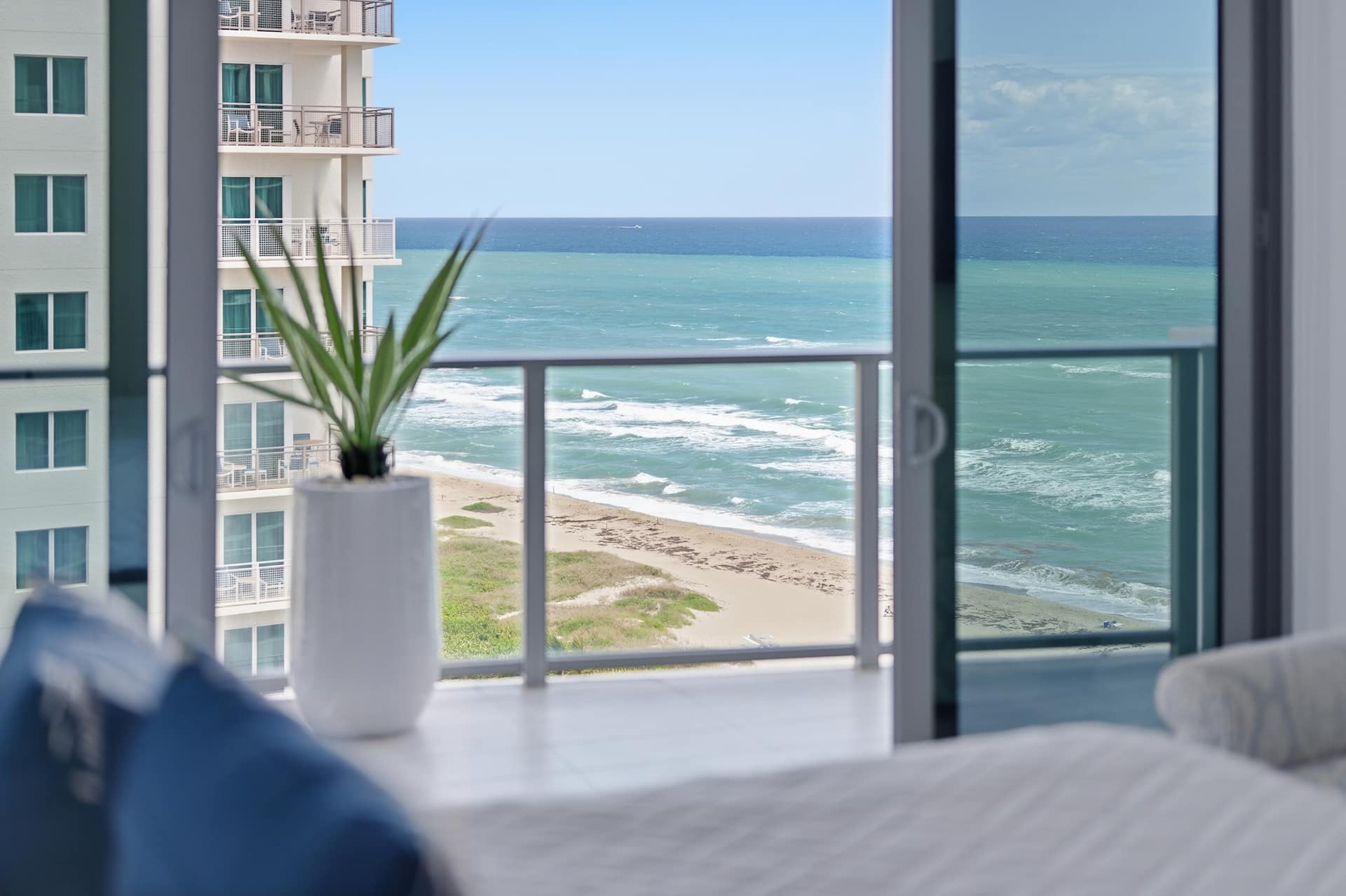
OASENA is a private two-bedroom home on the twelfth floor of the Happiness Tower — floor-to-ceiling ocean views, a sweeping balcony, and every guide in this collection within a short drive or a shorter walk.
OASENA is a privately owned residence within Amrit Ocean Resort & Residences and is not operated by, affiliated with, or endorsed by the resort. See credits & notes. Details in this guide are for general orientation and can change; confirm hours, prices and conditions locally before you set out.