
Cryotherapy and Cold-Water Immersion: A Complete Guide
Below the residence, the Aayush circuit keeps cold plunge pools and arctic chill fountains for the moment right after the sauna. Here is what cold-water immersion and whole-body cryotherapy are, where the practice came from, what the science does and does not support, and how to use the cold well and safely.
01What cold therapy is
Cold therapy is the deliberate, brief use of cold to change how the body feels and works. It comes in two main forms that often get grouped together but are not the same thing. Cold-water immersion means lowering yourself into cold water — a plunge pool, an ice bath, a cold tub held somewhere in the fifties Fahrenheit — for a short time. Whole-body cryotherapy is newer and dry: you step into a chamber cooled by refrigerated air or nitrogen vapor to temperatures far below anything in nature, for two or three minutes, your skin exposed but your body never touching ice or water.
It helps to be clear about what this is and is not. Cold therapy is a wellness practice, not a medical treatment. It does not cure anything, it does not melt fat, and it will not fix a bad night’s sleep on its own. What it reliably does is deliver a sharp, controlled dose of cold to the body and let you practice responding to it calmly. The two forms share that headline idea, but they reach the body differently, they have been studied to different degrees, and the research on them does not line up neatly — which is why this guide keeps them apart wherever the difference matters.
The difference is easy to feel once you know to look for it. Water pulls heat out of the skin many times faster than air of the same temperature, so a plunge pool in the low fifties grips you hard and immediately, while a dry cryo chamber that reads much colder on the thermometer feels sharp and prickly but strangely bearable for its two or three minutes. Neither number tells the whole story on its own; what your body registers is the rate at which heat is leaving it, and that is why the mild-sounding cold water can be the more intense experience of the two.
At Amrit, the cold you will meet is the water kind. The Aayush hydrothermal circuit below OASENA includes cold replenishment plunge pools and arctic chill fountains, built to be used against the heat of the saunas rather than as a standalone endurance test. That framing matters. The cold here is one movement in a longer piece of music — warm, cold, rest, repeat — not a solo act of willpower, and it is the better and safer way to use it.
The forms people mean by “cold”
- Cold-water immersion: a plunge pool or ice bath, usually the low fifties Fahrenheit, entered for seconds to a few minutes. The most studied form, and the most intense to sit in.
- Whole-body cryotherapy: a dry, very cold chamber for a couple of minutes, popular with athletes and clinics but harder to study, less regulated, and less available than a plunge.
- Contrast and arctic chill: alternating hot and cold, or using a cold fountain and a cold shower between warm stations — the gentlest and oldest version of the idea, and the one built into the circuit here.
02Where the cold habit came from
People have been getting into cold water on purpose for a very long time. The Nordic and Russian bathing traditions paired a hot sauna or banya with a roll in the snow or a plunge through a hole cut in the ice, and treated the shock as the whole point — the reward that made the heat mean something. Japanese cold-water practice, misogi, used standing under a cold waterfall as a rite of purification and self-discipline. Ancient physicians from Hippocrates onward wrote about cold water for pain and swelling, and nineteenth-century European spa towns built entire cure regimes around cold baths, cold compresses and cold-water walking, prescribed as seriously as any medicine of the day.
The modern chamber version is much younger. Whole-body cryotherapy was developed in Japan in the late 1970s by a rheumatologist looking for a way to calm the joint pain and stiffness of his patients, and the idea spread through European sports medicine over the following decades. Athletes took to ice baths and cold chambers as a recovery tool, and the familiar images of whole teams sitting waist-deep in tubs of ice water after a hard match or a long stage of a bike race did a great deal to make the practice ordinary and aspirational at once.
More recently, one name has carried cold exposure into the mainstream. The Dutch athlete Wim Hof, often called the Iceman, built a method that pairs cold immersion with a specific pattern of breathing, and has drawn a large following with feats of cold endurance — long ice baths, cold-weather climbs, world records for exposure. His popularity is a fair reason the plunge pool now sits in so many spas. It is also a fair reason to be careful, because his own records were set with years of training that no guest should try to copy, and because the breathing he teaches is dangerous if done in the water rather than on land.
What is worth taking from the history is a sense of proportion. Cold has been used across very different cultures for pain, for cleansing, for vigor and for recovery, long before anyone could measure a hormone or run a trial. That deep cross-cultural habit is a point in cold’s favor — people rarely keep doing an unpleasant thing for centuries unless it does something for them — but tradition is not proof, and the modern claims still have to stand on modern evidence. It is also worth remembering that most of those old traditions paired the cold with heat and community: a hot room, a plunge, a rest, and company through all of it. The isolated, competitive version — the longest possible plunge, done alone, chasing a number — is a very recent invention, and not the wisest part of the inheritance.
The short version of a long story
- Old and cross-cultural: Nordic ice-holes, Russian banya, Japanese misogi and European hydrotherapy all reached for cold long before the science did.
- Sports medicine made it modern: ice baths and, from the late 1970s, the cryo chamber entered athletic recovery and stayed.
- The current wave: the Wim Hof method and social media turned the cold plunge into a wellness fixture, for better and, sometimes, for worse.
03How the cold is thought to work
The body has a fast, dramatic answer to sudden cold, and most of what cold therapy does grows out of that answer. The first thing that happens is the cold shock response: within seconds of hitting cold water you gasp, your breathing speeds up, your heart rate jumps, and your blood pressure rises. Blood vessels near the skin clamp down — this is vasoconstriction — pulling blood inward toward the core to protect your central temperature and your vital organs. This is a powerful, involuntary reflex, evolved to keep you alive in cold water, and it is also the reason cold has to be met with respect rather than bravado.
At the same time, cold exposure drives a large release of norepinephrine, a signaling chemical tied to alertness, focus and mood. Studies that have measured it during cold immersion have found substantial rises — several times baseline in some cases — and this is the most plausible explanation for the sharp, clear-headed lift many people describe after a plunge. The cold also blunts the transmission of pain signals and, by narrowing and then reopening blood vessels as you rewarm, is thought to influence local blood flow and swelling. That flushing action is the traditional logic behind pressing an ice pack on a fresh sprain, and it is the same logic athletes borrow when they climb into an ice bath after a hard effort.
Two more ideas come up often and are worth naming. Cold habituation is real and well documented: do it regularly and the initial gasp and panic shrink, so the same water that felt like an emergency on the first day feels merely cold and manageable by the tenth. And the practice of staying composed while every instinct says get out is, in part, a form of deliberate stress training — a chance to keep slow, controlled breathing under a strong, real physical stressor, which some people find carries over into how they handle stress on dry land.
There is one more piece of physiology worth naming, because it explains a lot of the appeal. Cold slows nerve conduction and dulls pain locally, which is why an aching joint can feel better wrapped in ice and why a plunge can quiet a body that is sore and overheated. That numbing is temporary and it is not the same as healing the underlying tissue, but the relief is genuine while it lasts, and it is a large part of why cold has always been reached for in the hours after hard physical effort.
It is worth being honest that some of the more mechanical claims run ahead of the evidence. Ideas about cold “flushing toxins,” permanently revving up metabolism, or building lasting immunity are far shakier than the basic story of shock, vasoconstriction and a norepinephrine surge. The solid core is simple: a strong reflex, a hormonal jolt, a change in blood flow, a brief dulling of pain, and a body that learns to stay calm through all of it.
What the cold sets off, in order
- Cold shock: the gasp, fast breathing, higher heart rate and blood pressure in the first seconds.
- Vasoconstriction: surface vessels close and blood moves to the core.
- Norepinephrine surge: the likely source of the alertness and mood lift.
- Rewarming and flush: vessels reopen as you warm up, which is when many people feel the pleasant, tingling glow.
04What the evidence does and doesn't say
This is the section worth reading slowly, because cold therapy is sold with far more confidence than the research can back. The honest summary is that a few effects are reasonably well supported, several are mixed or conditional, and many of the loudest claims are not supported at all.
Mood and alertness hold up best. The norepinephrine story is consistent with what people report and with the studies that have measured it, and short-term boosts in alertness, energy and mood after cold immersion are among the more believable findings. Even here the trials are small and often short, the placebo effect of doing something bracing and deliberate is strong, and no one has shown that a plunge treats depression or anxiety as a condition. So treat this as promising and pleasant rather than proven medicine.
Muscle-soreness recovery is more mixed, and it comes with a genuine trade-off. There is decent evidence that cold-water immersion after hard exercise can reduce the next-day ache known as delayed-onset muscle soreness and help people feel more recovered. But there is also good evidence that routinely plunging straight after strength training may blunt some of the muscle-building and strength adaptations you were training for, because a little inflammation is part of how muscle rebuilds stronger. The practical upshot most sports scientists reach is a compromise: athletes chasing raw size and strength are often advised to keep the ice bath away from their key lifting sessions, while using cold more freely during heavy competition blocks, tournaments, or a congested in-season schedule where feeling fresh tomorrow matters more than a marginal training gain.
Two more distinctions matter a great deal. First, cold-water immersion and whole-body cryotherapy are not interchangeable in the evidence. The chamber has been studied far less, its results are weaker and less consistent, and regulators have publicly cautioned that its broader health and recovery claims are not established — some have warned it has not been shown safe and effective for treating any medical condition. Second, claims that cold cures disease, burns meaningful fat, permanently supercharges metabolism, or reliably “boosts” the immune system are not supported by good evidence, and you should treat them as marketing, not fact.
A fair way to hold all of this is to separate the reliable from the marketed. What the research supports is a pleasant, short-lived shift in how you feel and, in the right situation, a bit of soreness relief. What it does not support is any promise about your long-term health, your body composition, or a disease you may be carrying. If a spa, a brand or an influencer tells you cold water will do the second kind of thing, that is your cue to be skeptical, not to book faster.
None of this means the practice is worthless. It means the fair reasons to do it are the modest, near-term ones, and the extraordinary claims deserve a raised eyebrow.
Where the research stands
- Reasonably supported: short-term lift in mood, alertness and perceived recovery.
- Mixed or conditional: muscle-soreness relief, with a real trade-off against strength and size gains.
- Weaker and less studied: whole-body cryotherapy generally, versus cold-water immersion.
- Not established: fat loss, disease outcomes, permanent metabolic or immune “boosting.”
The cold does not ask you to be brave. It asks you to breathe slowly, stay a short while, and get out before you want to — and most of what people love about it lives in the warm minutes afterward.
On the cold plunge at Amrit
05What a cold plunge is like
The first time is loud inside your head and quiet from the outside. You step down into water that feels far colder than the thermometer suggests, and your body answers immediately: a gasp, a jolt, a strong urge to climb straight back out. That first rush is the cold shock response doing exactly what it is built to do, and there is no way around it — only through it. The whole skill of a good plunge is learning to meet that first wave without fighting it, so it passes rather than takes over.
Most people find the hardest part is the first fifteen to thirty seconds. If you can keep still and keep breathing, the gasping settles, the water stops feeling like an emergency, and you drop into a strange, quiet, focused calm that is hard to describe until you have felt it. A short stay — often just one to three minutes, sometimes less — is plenty. There is no prize for staying longer, and staying too long is precisely where cold turns from bracing to risky, so the discipline is to end early rather than to endure.
Getting out is its own event, and a pleasant one. You will feel a warm, tingling flush as blood returns to the surface of your skin, and many people describe the minutes just after the plunge — not the plunge itself — as the part they crave. Some people also feel a delayed chill several minutes later, as cooler blood from the arms and legs circulates back toward the core; this is the so-called afterdrop, it is normal, and it is a good argument for having somewhere warm and dry to land rather than standing around wet.
The dry chamber is a different animal. Whole-body cryotherapy is colder by the thermometer but feels less crushing, because dry air steals heat more slowly than water; your feet, hands, ears and airway are typically protected, an attendant is present, and the exposure is deliberately brief. It feels sharp, prickly and intense rather than the immediate full-body grip of a cold pool, and because it is short and supervised, the experience is more controlled — though, as noted, the evidence behind it is thinner.
Whichever form you try, expect the mental picture to be worse than the reality. Almost everyone builds the plunge up in their head on the walk over, then finds that the dreaded first shock is loud but brief, and that the thing they were nervous about is over in a breath or two. That gap between the anticipation and the actual experience is part of why people find cold quietly satisfying: you learn, again and again, that the fear was bigger than the moment, and that you can walk calmly through something your body insisted was a catastrophe.
A few things worth knowing your first time
- It feels colder than the number. Low-fifties water is deeply, shockingly cold to sit in, even though it sounds mild on paper.
- Short is the point. A couple of minutes is a full session; watch a clock rather than your willpower.
- Warm up gradually afterward. Dry off, move around, and let your body rewarm on its own; do not leap straight into very hot water.
- Mind the afterdrop. A delayed chill a few minutes later is normal — plan to rest somewhere warm.
06Breathing, timing and how to enter the cold
The difference between a miserable plunge and a good one is almost entirely technique, and technique here means breath. When the cold shock response fires, your breathing wants to run away from you — fast, shallow, ragged. The single most useful thing you can do is take slow, deliberate breaths from the moment you enter: a steady inhale and a longer, calmer exhale, repeated until the panic passes. Regaining control of your breath is the signal that tells the rest of your body this is not an emergency, and it is the one skill that turns cold from something that is done to you into something you are doing.
How you get in matters just as much as how you breathe. Lowering yourself in steadily, rather than diving or jumping, gives your heart and blood vessels a beat to adjust to the sudden load instead of taking it all at once. Keeping your hands and, if you can, your head out of the water makes the first shock more manageable, because the hands and face are especially rich in cold receptors and drive a big part of the gasp reflex. And it is worth being deliberate about time: decide on a short window before you get in, keep a clock in view, and end the session on the clock rather than on how heroic you happen to feel that day.
A simple, cautious approach
- Warm first. The cold feels best and is safest after a sauna or a warm shower, not from a cold, tense start.
- Enter slowly. Lower in step by step; do not plunge headfirst or jump.
- Own the first breaths. Slow inhale, longer exhale; let the gasping settle before you judge anything.
- Keep it short. Begin with well under a minute and build gradually over days, not in one heroic sitting.
- Rewarm gently. Get out, dry off, move around, and let your body do the warming; mind the afterdrop.
One warning deserves its own line, because it is the one that hurts people. A breathing practice like the Wim Hof style of rapid, forceful breaths should never be done in or right before the water. Those breathing patterns lower the drive to breathe and can make you black out with little warning, and a blackout in water is drowning. There have been deaths from exactly this combination. Do any intense breathwork on dry land, well away from the pool, seated or lying down, and treat the breathing and the plunge as two completely separate practices that never overlap.
Finally, listen to the signals your body sends. If your breathing simply will not settle, if you start to feel numb, clumsy or confused, or if the shivering becomes hard and uncontrollable, the session is over — get out and warm up. Those are not signs of weakness to push through; they are the early edges of cold going too far.
07What people get from it
Set aside the bigger promises and cold therapy still earns its place for a handful of honest, human reasons. The most common one people describe is the lift: a clear-headed, awake, faintly euphoric feeling in the minutes and hours after a plunge, most likely the norepinephrine at work. For many guests that alone is the draw — the way a strong coffee or a cold-water swim wakes up the whole day and leaves a clean, energized feeling behind. It tends to arrive quickly and last a while, which is part of why the habit sticks.
The second is a sense of recovery and relief. After a long travel day, a hard workout, a tennis match, or too much afternoon sun, a short cold immersion can leave heavy legs feeling lighter and sore muscles feeling less angry, at least in the short term. As the evidence section noted, this is better supported for the feeling of soreness than for deep muscular repair, and it can even work against you right after strength training — but for a guest recovering from a busy day rather than chasing a personal best, the immediate felt relief is real and useful.
The third benefit is quieter and harder to measure: a kind of trained calm. Choosing to stay composed while your body wants to bolt is a small, repeatable act of self-command, and people who plunge regularly often say that steadiness carries into how they handle ordinary stress — a tense call, a delayed flight, a hard conversation. Whether that is genuine physiology, the confidence of having done a hard thing on purpose, or a bit of both, the effect people report is consistent enough to take seriously.
There is also, for some, a social and ritual pleasure to it that shouldn’t be dismissed. Warming up in the sauna, bracing through the cold together, and resting warm afterward is a shared, unhurried rhythm that gives a morning shape. On a stay built around slowing down, that structure can be as valuable as any measurable effect.
It is worth setting expectations honestly, too. Not everyone loves it, and a fair number of people try the cold once, decide it is not for them, and are entirely right to. There is no health penalty for skipping the plunge and staying in the warm water, and the sauna, the salt room and the rest of the circuit deliver plenty on their own. Cold is one option among several here, not a box you must tick, and the best version of a wellness morning is the one you will enjoy and repeat.
The reasons people keep coming back
- The wake-up: alertness, focus and a mood lift that can outlast the session.
- Short-term relief: lighter legs and less soreness after exertion, travel or heat.
- Better sleep for some: a number of people find an evening warm-then-cold routine helps them wind down, though this varies and cold wires other people up.
- A steadier nervous system: the practiced calm of meeting a strong stress and breathing through it.
Notice what is not on this list: cures, disease reversal, fat loss, reliable immunity. The good reasons to plunge are the modest, immediate, honest ones — and for most people they are more than enough.
08Who it suits — and who should be careful
Cold therapy suits healthy adults who like a strong physical wake-up and are willing to respect a few firm rules. It pairs beautifully with the heat of a sauna, it rewards a patient, breath-led approach over bravado, and it fits naturally into a slow wellness morning. But the same cold shock response that makes it invigorating is exactly why some people should not step into cold water at all, or should ask a doctor before they do. This is the part of the practice where caution is not fussiness; it is the whole point.
The most important cautions center on the heart and circulation. The sudden gasp, the jump in heart rate and the spike in blood pressure put a real, brief stress on the cardiovascular system, and that stress can be dangerous for the wrong body. Cold water has triggered serious cardiac events in people who did not know they were at risk, which is why the honest advice is to clear it with a clinician if any of the conditions below apply to you, rather than to find out the hard way.
Ask a doctor first, or skip it, if you
- Have any heart condition, an irregular heartbeat, or a history of heart attack or stroke.
- Have high or poorly controlled blood pressure.
- Are pregnant — cold immersion has not been established as safe in pregnancy, so clear it with your clinician first.
- Have Raynaud’s, cold urticaria, or a known sensitivity or allergy to cold.
- Have diabetes, nerve damage, or reduced sensation, which can make it hard to tell how cold you are.
- Have epilepsy, or are unwell, feverish, have been drinking alcohol, or feel light-headed going in.
Two rules apply to absolutely everyone, without exception. Never immerse alone. The gasp reflex, the rare risk of cold incapacitation, and the possibility of feeling faint mean cold water is only for shared, supervised settings where someone can help. And do not overstay. More time is not more benefit; it is how you slide toward hypothermia. If your breathing will not settle, if you start to feel numb or clumsy, or if the shivering turns hard, the session is over — get out and warm up.
A sensible general rule sits underneath all of these: cold rewards the cautious and punishes the reckless. The people who get into trouble are almost never the ones who eased in, kept it short and got out early. They are the ones who jumped in cold, stayed to prove a point, mixed it with alcohol or aggressive breathwork, or ignored a body that was clearly telling them to stop. Approach the plunge with a little humility and it is, for a healthy adult, a small and manageable stress. Approach it as a contest and it can bite.
Whole-body cryotherapy carries its own specific cautions on top of these, including the risk of frostbite from skin contact with very cold surfaces and, in nitrogen-cooled units, of oxygen being displaced in a poorly ventilated space. Those are real hazards, which is exactly why the chamber should only ever be used in a properly run, attended facility that manages them — never improvised.
09The cold stations below the residence
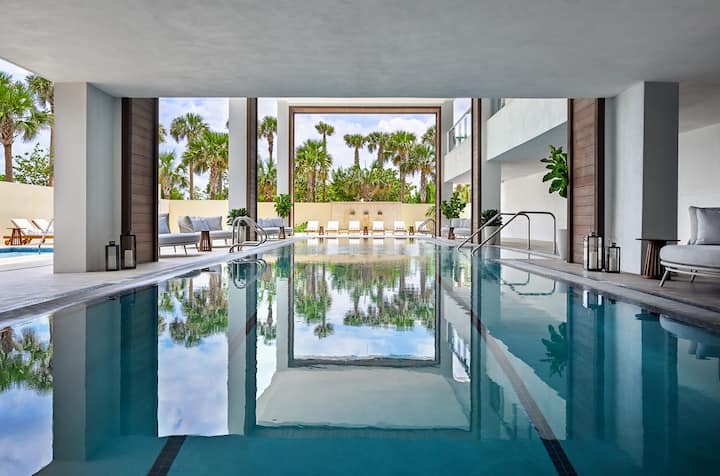
What sets the cold here apart is not extremity but placement. The Aayush Hydrothermal Experience is a self-guided circuit a short elevator ride below OASENA, and the cold is woven into it rather than staged as a stunt. You will find hot and cold replenishment plunge pools and arctic chill fountains sitting alongside the saunas, the effusion shower, the hydro-reflexology aquatic path and the salt inhalation chamber. The design assumes you will warm up, cool down, rest, and repeat — the old contrast-bathing rhythm the Nordic bathhouses were built around — rather than treat the cold as a test to be survived and bragged about.
That layout turns out to be a real gift for using cold well. Because the sauna sits a few steps from the plunge, you arrive at the cold already warm, which is both the safest and the most pleasant way to meet it — the shock is easier to ride when your core is warm to begin with. Because the whole circuit is designed to be moved through at your own pace — the resort suggests about ninety minutes to two hours for the full experience — there is no pressure to stay in the cold a single second longer than feels right. And because it is all downstairs, you can fold a few short plunges into a slow morning without a car, a drive home afterward, or a booking window to beat.
The arctic chill fountains deserve a mention of their own, because they are the friendliest way in. Rather than committing your whole body to a cold pool at once, you can cool your neck, shoulders and arms under the chill, or take a brief cold shower between warm stations. That makes the circuit forgiving for first-timers and for anyone who wants the contrast without the full plunge — a gentler dose that still delivers the wake-up.
Using the cold within the circuit
- Warm before you cool: take a sauna or a warm station first, then the cold plunge or the arctic chill.
- Keep each cold dip short: seconds to a couple of minutes, then straight back to warmth and rest.
- Let the fountains be the gentle option: the arctic chill is a milder introduction than a full plunge if you are new to it.
- Hydrate and rest between rounds: the circuit rewards a relaxed, repeated rhythm over one aggressive effort.
Placement also solves the practical problem that usually keeps cold from becoming a habit. At home, a plunge means a cold tub to buy, fill, chill and maintain, or a drive to a studio and a booking to keep. Here it is downstairs, already cold, already warm beside it, with staff on hand — so the barrier that stops most people from ever repeating a plunge simply is not there. Over a longer stay that changes the character of it: instead of one nervous first-timer’s dip, the cold becomes something you can return to on the second, third and fourth morning, which is exactly the rhythm that lets habituation do its quiet work.
Residence guests reach the wellness centre at preferred rates, and access follows the resort’s terms and hours. If whole-body cryotherapy specifically is something you want to try, ask the spa what is offered and how it is run; the water-based cold of the plunge pools and arctic chill is the heart of the cold experience here, and for most guests it is the better and more accessible place to start.
10Folding the cold into a Singer Island day
The best way to use cold on a stay like this is as one beat in a longer, warm rhythm — not a dare to conquer before breakfast. The classic pattern is contrast: heat, then cold, then rest, repeated a few times. Come down mid-morning, before the beach heat peaks and the day fills up. Start warm in the sauna until you are hot through, step into the cold plunge for a short, breath-led minute, then get out and let the warm flush spread while you rest and drink water. Do that two or three times and finish on warmth, not on cold — you want to leave the circuit comfortable, not shivering.
Cold also has a natural place at the edges of an active day, and Singer Island supplies plenty of those. After a morning snorkeling the Blue Heron Bridge, a hard match on the courts, a long walk at MacArthur Beach, or an afternoon that ran too hot in the Florida sun, a brief plunge can take the heat and heaviness out of your legs before dinner. In the evening, some people find a gentle warm-then-cool routine helps them settle and sleep — but if cold leaves you wired and buzzing, keep it to the mornings and let the sauna do the evening work instead.
A simple contrast round
- Sauna until warm through, without pushing to real discomfort.
- Cold plunge or arctic chill for a short, controlled spell, breathing slow and long.
- Rest warm and dry for several minutes; drink water and let your heart settle.
- Repeat a couple of times, always ending on warmth and rest.
A word on pacing the rest of your day around it: the cold tends to leave you alert rather than sleepy, so it sits better before an active plan than before a nap. It also does not mix well with a heavy lunch or with alcohol, so treat it as a clear-headed, hydrated activity and save the wine for the terrace later. If you are traveling with others, going through the circuit together turns it into something social — the shared bracing and the warm recovery afterward — which is half the pleasure of a bathhouse in the first place.
If you want to make it a genuine habit for the length of your stay, keep it small and keep it consistent. A short plunge on three or four mornings will do far more for you, and feel far better, than one grim marathon attempt on the last day. Let the first morning be an easy introduction — maybe just the arctic chill or a very brief dip — and let each day after that go a touch further only if you want it to. The point is not to accumulate cold-water bragging rights before you fly home; it is to leave feeling clearer, looser and a little more at home in your own skin.
Then go back up. Open the balcony doors, let the Atlantic air finish the job, and give the afterglow time to do what it does. A cold plunge is, in the end, a small and old idea — a shock of cold and the warm calm that follows — and it works best when you let it be exactly that: brief, respected, and bracketed by warmth on both sides.
Common questions
Is a cold plunge safe?
For healthy adults, used briefly and sensibly, cold-water immersion is generally well tolerated. But the cold shock response raises heart rate and blood pressure sharply, so it is <strong>not</strong> for everyone. If you have a heart condition, an irregular heartbeat, high or poorly controlled blood pressure, are pregnant, or have a cold sensitivity like Raynaud’s, ask your doctor first. Two rules hold for everyone: never immerse alone, and never overstay.
How long and how cold should it be?
Short. Most people do well with seconds up to a couple of minutes in water around the low fifties Fahrenheit, and there is no benefit to gritting out longer. Decide on a short window before you get in, keep a clock in view, and end on the clock rather than on willpower. Build up over several days, not in one heroic sitting.
Will cold therapy speed up my workout recovery?
Sometimes, with a catch. Cold-water immersion after hard exercise can ease next-day soreness and help you feel recovered. But plunging right after strength training may blunt some muscle-building and strength gains, so many athletes keep the ice bath away from key lifting sessions and use it more during heavy competition periods. Whole-body cryotherapy is studied less and its recovery evidence is weaker.
What about the Wim Hof breathing before a plunge?
Do the breathing on dry land, never in or right beside the water. Rapid, forceful breathwork can make you black out with little warning, and a blackout in water is drowning — people have died from exactly this combination. In the plunge itself the useful technique is the opposite: slow, deliberate breaths with a longer exhale to settle the cold shock. Keep the two practices completely separate.
A note on wellness & health
This guide is general information about therapies offered at the resort spa, not medical advice, diagnosis or treatment. Wellness services are elective and results vary from person to person. Talk with a qualified healthcare professional before starting any new therapy, especially if you are pregnant or managing a medical condition. OASENA is privately owned and is not operated by, affiliated with, or endorsed by Amrit Ocean Resort & Residences. Spa access is offered to residence guests at preferred rates, subject to the resort’s terms and availability.


Your quiet address above the Atlantic
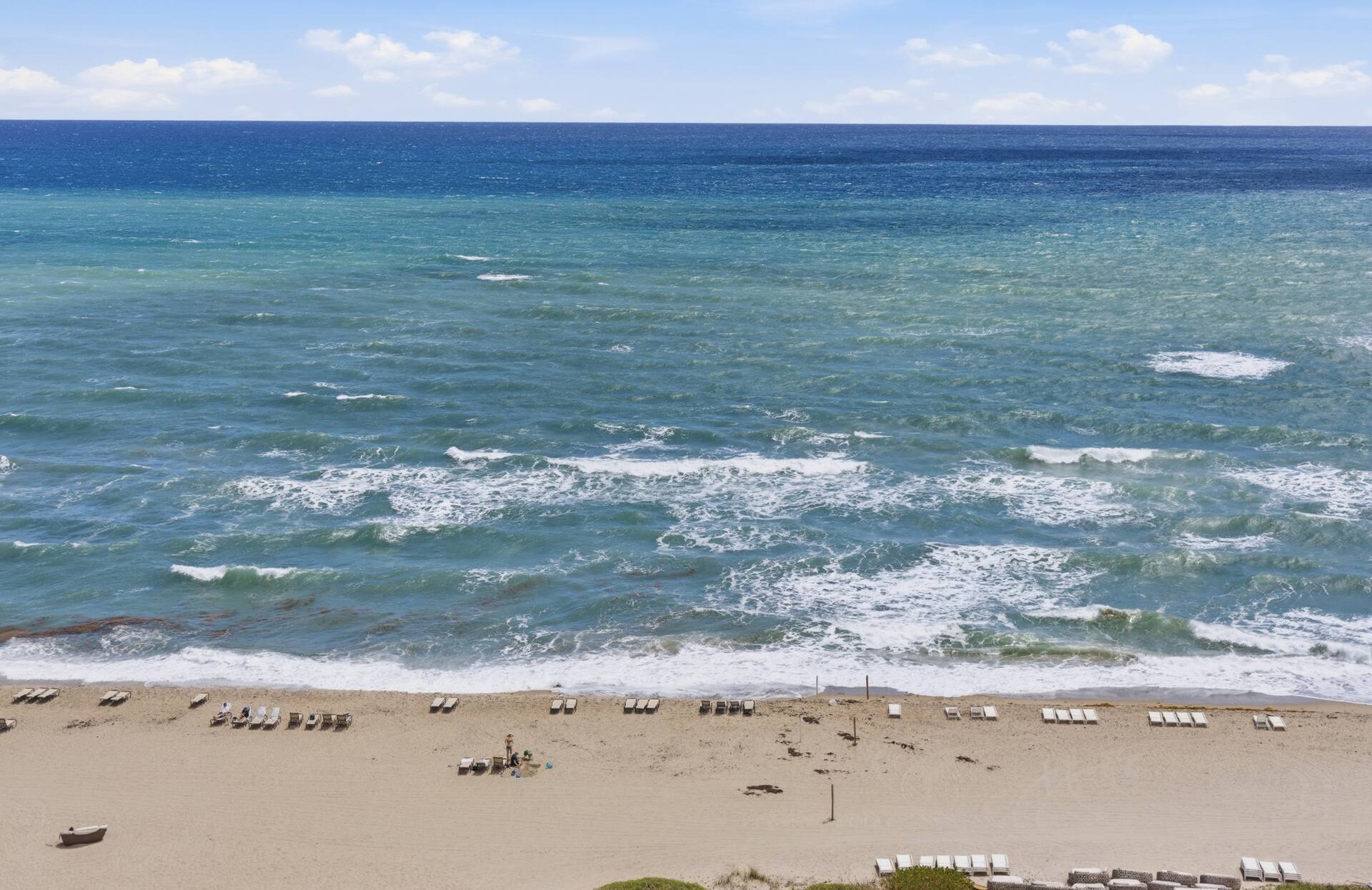
OASENA is a private two-bedroom home on the twelfth floor of the Happiness Tower — floor-to-ceiling ocean views, a sweeping balcony, and this entire wellness world an elevator ride below.
OASENA is a privately owned residence within Amrit Ocean Resort & Residences and is not operated by, affiliated with, or endorsed by the resort. See credits & notes.